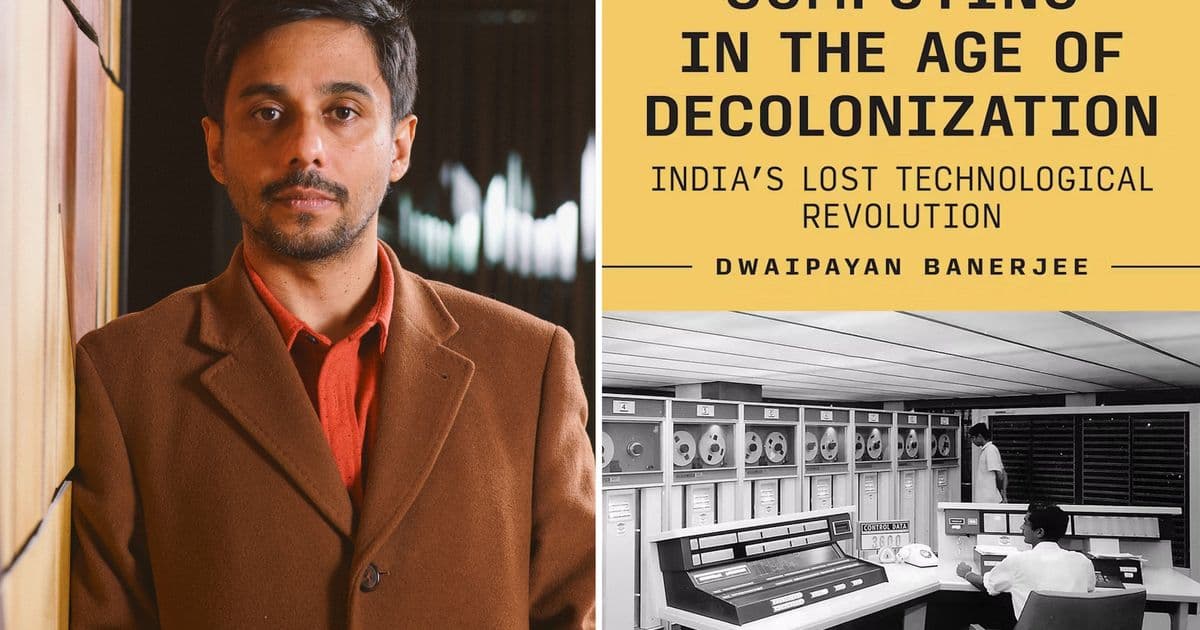
MIT researcher Dwai Banerjee's new book reveals how India's ambitious early computing ambitions were thwarted by global geopolitics, resulting in a services-focused tech industry rather than the manufacturing powerhouse once envisioned.
In 1960, engineers at India's Tata Institute of Fundamental Research (TIFR) achieved something remarkable: they built the country's first working computer with a fraction of the resources available to their Western counterparts. The TIFRAC, as they called it, featured the same type of ferrite-core memory as IBM's world-leading machines and represented India's bold entry into the computing age. Yet this technological achievement would become a historical footnote rather than the foundation of an indigenous computing industry. This is the central narrative of Dwai Banerjee's new book, "Computing in the Age of Decolonization: India's Lost Technological Revolution," which examines how India's vision of becoming an independent computing power was ultimately redirected by global forces.
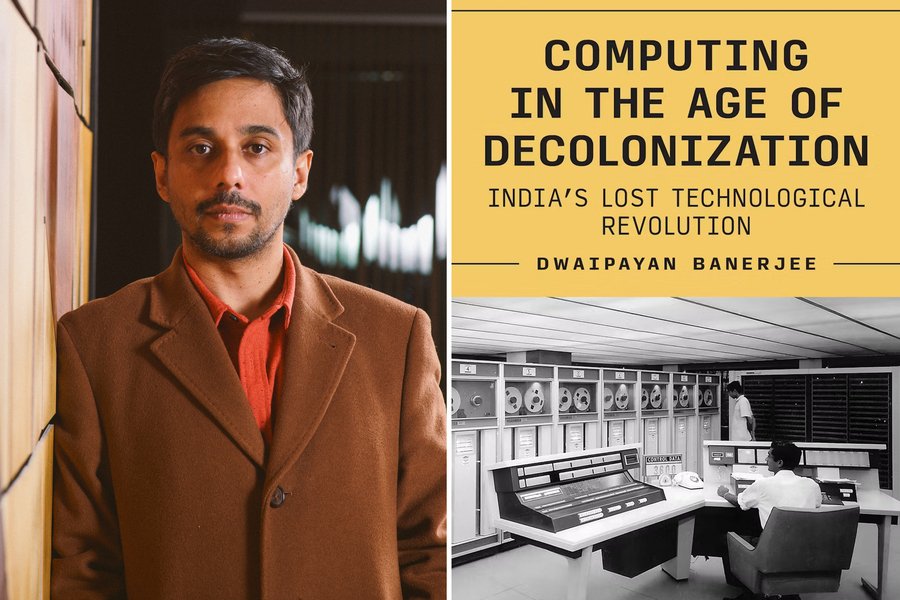
The TIFRAC story exemplifies both India's technical capabilities and the limitations imposed by external constraints. "The people working on it had never really seen an actual functioning computer," explains Banerjee, an associate professor of science, technology, and society at MIT. "You had this ambitious group of engineers building a state-of-the-art machine with very, very limited resources. The fact they could build this is staggering." The achievement was particularly impressive given that a comparable computer in the U.S. would have cost more to run than the entire Indian institute.
The technical approach of Indian engineers was methodical and innovative. They matched the speed of IBM machines while planning to expand the system's capabilities through larger ferrite-core memory stacks. However, technological progress in the West moved rapidly. When IBM released the FORTRAN programming language in 1957, it required four times the memory the TIFRAC was equipped with. This technological leap, combined with India's 1958 foreign exchange crisis—which made importing larger memory stacks unaffordable—rendered the TIFRAC obsolete almost as soon as it was completed.
"It's a geopolitics-of-knowledge question, not that they made a mistake," Banerjee clarifies. "They didn't know IBM was about to reshape software." This limitation wasn't merely technical but reflected the broader Cold War context in which computing was heavily bound up with defense matters. As a newly independent nation not always fully aligned with U.S. political interests, India faced significant barriers to accessing the blueprints and working papers needed to advance its computing capabilities.

The real-world applicability of Banerjee's research extends beyond historical analysis to offer important lessons for today's technological development landscape. When India gained independence in 1947, many leaders believed "rapid technology-driven industrialization was the only way out of centuries of colonial underdevelopment," as Banerjee writes. This vision persisted into the 1970s when India, uniquely, banned IBM from the country in 1978 due to its business practices. This might have created the conditions for a domestic computing manufacturing industry to flourish.
Instead, a confluence of factors redirected India's technological trajectory. "For a moment you have this imagination come to a sort of fruition," Banerjee observes. "But by the late 1970s and 1980s, there is a new group of people arguing for quick profits through software services, saying that this route feels less painful than setting up manufacturing, R&D, and firms for a decade or more." This shift toward private-sector services rather than government-involved manufacturing became decisive in shaping India's current tech sector identity.
The result is that India has become "the world's leading provider of inexpensive outsourcing and offshoring services, yet enjoys minimal benefits from more profitable advances in research, manufacturing, and development," as Banerjee writes. Rather than producing computing equipment domestically, the country exports skilled engineers and executives globally, while global tech firms have successfully promoted the narrative that this services-focused development represents natural progress.
Banerjee's work challenges several prevailing narratives about technological development. "This book suggests we often overplay those stories of individual genius, because you can be a genius with all the right ideas, but if you don't have all the institutions supporting you, it means nothing," he argues. The historical conditions of the mid-20th century, shaped by global power dynamics and economic constraints, proved more decisive than individual technological vision in determining India's computing path.
For contemporary readers, Banerjee's analysis offers a crucial perspective on technological development in post-colonial contexts. "India stands in for a lot of countries in the mid-20th century that had recently gained formal political independence and were thinking of ways to catch up with the rest of the advanced industrialized world," he explains. "But the power structures tied to technological and scientific advancement did not disappear. They were replaced by newer structures, including foreign policy with very specific ideas about what different countries should be doing with regard to technology."
The book has already received significant academic recognition. Matthew L. Jones, a professor of history at Princeton University, has praised it as a "scrupulous accounting of ultimately failed Indian efforts to secure technological sovereignty in the wake of independence," which "joins the best recent accounts of computing worldwide and transforms how we think through diverse national trajectories through the Cold War and beyond."
As technological competition intensifies globally, Banerjee's historical analysis provides important context for understanding how current disparities in technological power emerged. The story of India's lost computing revolution reminds us that technological development is not merely a technical endeavor but is deeply embedded in political, economic, and historical contexts that shape what is possible and what alternatives are foreclosed.
For more information about Banerjee's research and the book, you can visit his MIT faculty page and the Princeton University Press website for details about the publication.
Comments
Please log in or register to join the discussion