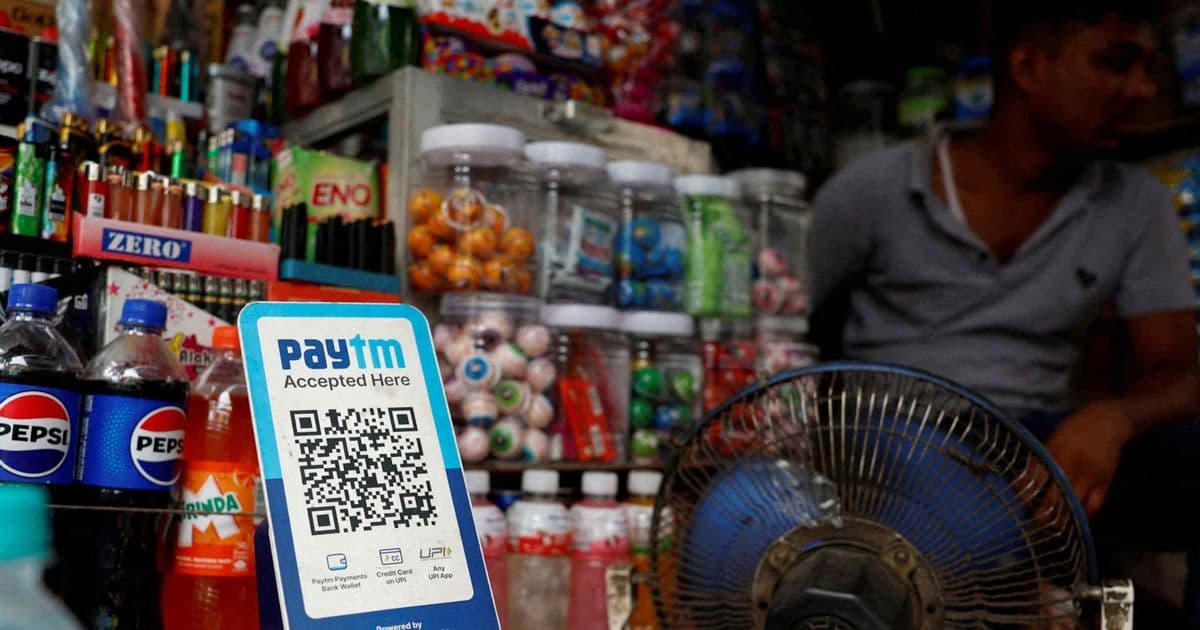
India's Unified Payments Interface (UPI), the world's largest real-time payment system with 185.8 billion transactions in fiscal 2024, is preparing for a trial launch in Japan through a partnership between the National Payments Corporation of India (NPCI) and Japanese IT services firm NTT Data. The move aims to serve the rapidly increasing number of Indian tourists visiting Japan, which saw 315,100 visitors in 2025, up 35% from the previous year.
India's Unified Payments Interface (UPI) is set to establish a foothold in Japan, representing a significant step in the global expansion of the world's largest real-time payment network. The National Payments Corporation of India (NPCI), which develops and operates the system, is partnering with Japanese IT services company NTT Data to enable UPI acceptance in Japan on a trial basis starting in fiscal 2026.
The collaboration aims to connect Japanese and Indian payment networks, allowing Indian tourists in Japan to make payments using their preferred UPI-based apps. When a transaction occurs, the payment will be debited directly from the user's bank account in India. NTT Data, which already processes payments for approximately 6 million stores in India and Southeast Asia, will promote UPI adoption among Japanese merchants.
The Scale of India's Payment Revolution
Launched in 2016 as a government-led initiative, UPI has become integral to daily transactions across India. The system allows users to make payments through a single QR code using any participating payment app, with transactions typically free for users with Indian bank accounts. According to NPCI data, UPI transactions jumped 42% in fiscal 2024 to reach 185.8 billion transactions.
The system's dominance is evident in global payment statistics. A 2023 report from a U.S. payment app company indicated that 49% of all instant-payment transactions worldwide occurred through UPI. The International Monetary Fund characterized it as the "world's largest real-time payment system" in a June 2025 report.
In India itself, UPI accounted for 58% of in-store payments in 2024, with projections from Worldpay suggesting this will reach 76% by 2030. During the same period, cash transactions are expected to decline from 15% to 7% of total payments.
Strategic Drivers for Japanese Expansion
The primary motivation for bringing UPI to Japan is the growing number of Indian tourists visiting the country. Japan recorded 315,100 visitors from India in 2025, representing a 35% increase from 2024, according to the Japan National Tourism Organization.
This trend aligns with broader global travel patterns. McKinsey projects that outbound trips from India will surge from 13 million in 2022 to 90 million by 2040, driven by rising middle-class incomes and increasing appetite for international travel.
Takeo Ueno, CEO of NTT Data Payment Services India, described UPI as "innovative" and "state of the art" during a November event. The partnership with NPCI represents a strategic opportunity for NTT Data to leverage its existing payment infrastructure in India and Southeast Asia to facilitate cross-border transactions.
Global Expansion Context
Japan would become the ninth country to adopt UPI if the trial proves successful. The system has already expanded to Bhutan (2021), Singapore, France, Sri Lanka, and the United Arab Emirates. NPCI International Payments, the subsidiary responsible for global expansion, is actively helping other nations develop payment infrastructure based on UPI's model.
Ritesh Shukla, CEO of NPCI International Payments, stated that many countries are seeking UPI's expertise and technology. The organization aims to expand digital payments worldwide, positioning India as a leader in payment infrastructure technology export.
Competitive Landscape
The move comes as other payment networks are also expanding internationally. China's Ant Group is growing its Alipay+ service, which enables a single QR code to work with multiple payment services across more than 100 countries and regions.
However, UPI's advantage lies in its government-backed, open-standard approach. The system succeeded in India because the government positioned it as a shared payment platform, allowing banks and fintech companies to develop their own payment apps using UPI as a common standard.
The infrastructure was further strengthened by India's Aadhaar identification program, which encouraged even low-income earners to open bank accounts, creating a broad user base for digital payments.
Technical and Strategic Implications
The UPI model represents a significant departure from traditional payment systems. Rather than relying on proprietary networks, UPI creates an open ecosystem where multiple service providers can compete while using the same underlying infrastructure. This approach has proven highly effective in driving adoption and innovation.
For Japan, adopting UPI could provide several benefits. It would offer Indian tourists a familiar payment method, potentially increasing their spending in Japan. It would also introduce Japanese merchants to a payment system that has demonstrated remarkable efficiency and low cost in a large market.
The trial with NTT Data will likely focus on technical integration challenges, including currency conversion, regulatory compliance, and ensuring transaction security across borders. Success in Japan could serve as a model for further expansion into other major tourist destinations.
NPCI's broader strategy involves not just exporting the technology but also helping other countries develop their own payment systems based on UPI's principles. This approach has already been applied in Peru and Namibia, where NPCI is assisting in the development of local payment infrastructure.
As the trial progresses in Japan, the payments industry will be watching closely. A successful implementation could accelerate the global adoption of UPI-based systems and further establish India as a significant exporter of financial technology infrastructure.
Comments
Please log in or register to join the discussion