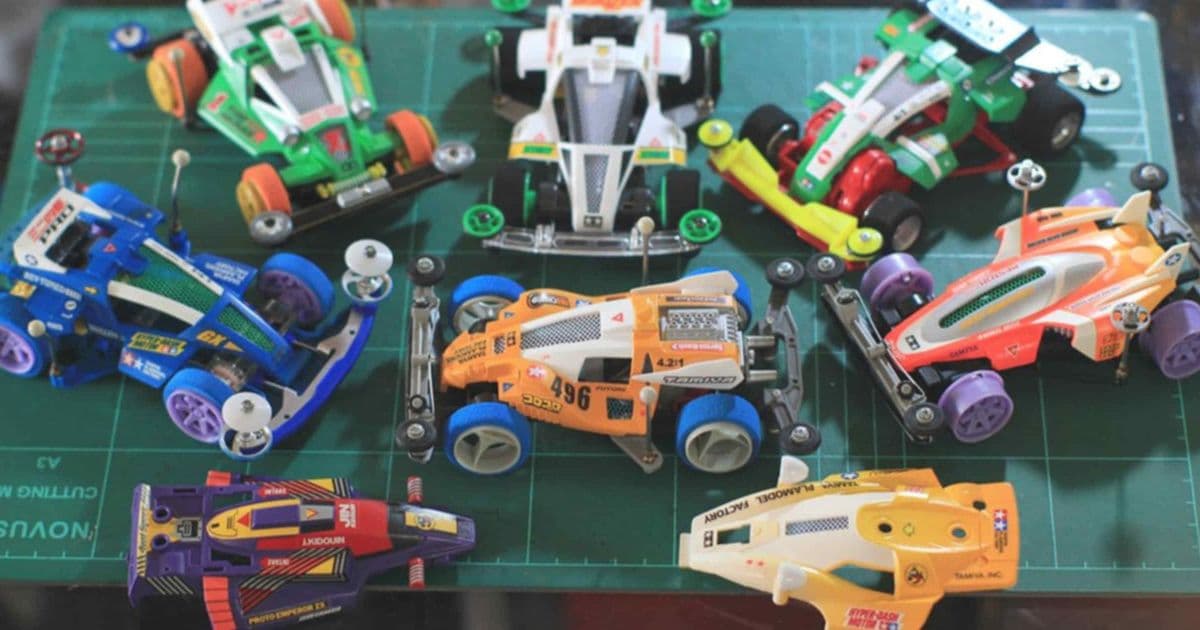
Indonesian hobbyists are transforming their childhood obsession with Japanese Tamiya Mini 4WD cars into a thriving competitive scene, racing the miniature battery-powered vehicles they once couldn't afford.
In the early 1990s, Indonesian children would gather around their boxy analog TV sets every Sunday morning, tuning in to TVRI, the state broadcaster, for a special treat. It was time for "Dash! Yonkuro," a Japanese anime that captured young imaginations with its stories of brotherhood, persistence, and most importantly, miniature racing machines that zipped along plastic tracks at impossible speeds.
For many Indonesian kids, these weren't just cartoon characters on a screen. They were dreams of speed and competition that seemed forever out of reach. The tiny battery-powered racers, known as Mini 4WD cars, were made by Japanese toymaker Tamiya, but they were expensive luxury items in Indonesia's developing economy of the 1990s.
Fast forward to 2026, and those same children are now grown men, and their childhood dreams have evolved into something remarkable. In living rooms, garages, and dedicated racing tracks across Indonesia, adult hobbyists are rebuilding their childhood obsessions into a thriving competitive scene that's capturing the attention of both enthusiasts and casual observers.
The Rise of Adult Mini 4WD Racing
The transformation from childhood fascination to adult hobby has been gradual but significant. Indonesian enthusiasts have formed clubs, organized competitions, and created a community that rivals similar scenes in Japan, where the Mini 4WD phenomenon originated.
These aren't just casual races down a plastic track. Modern Indonesian Mini 4WD competitions feature sophisticated setups with custom-built tracks, timing systems, and even dirt road sections that pay homage to the original anime series. The level of engineering and customization has reached impressive heights, with hobbyists modifying everything from the car's chassis to its battery systems.
More Than Just a Toy
What makes this Indonesian scene particularly interesting is how it reflects broader economic and cultural shifts. The fact that adults can now afford to invest time and money into what was once an unattainable childhood dream speaks to Indonesia's economic development over the past three decades.
But it's not just about having the disposable income. The Mini 4WD community in Indonesia has developed its own culture, complete with shared knowledge, technical innovations, and a competitive spirit that goes far beyond simple nostalgia. Many participants describe it as a way to reconnect with their childhood while engaging in a technically challenging and socially rewarding activity.
The Technical Side
Modern Mini 4WD racing in Indonesia involves significant technical expertise. Enthusiasts modify their cars with custom gears, specialized tires for different track surfaces, and even 3D-printed components. Some have developed their own battery management systems to optimize performance.
The tracks themselves have become increasingly sophisticated. While the basic plastic track system remains the foundation, many Indonesian hobbyists have built custom tracks with elevation changes, banked turns, and even sections that mimic the dirt roads featured in the original anime series.
Community and Competition
The social aspect of Mini 4WD racing has become a crucial element of its appeal. Regular meetups, competitions, and online forums have created a tight-knit community where knowledge is shared freely, and friendly rivalries push the boundaries of what's possible with these tiny machines.
Some Indonesian enthusiasts have even begun competing internationally, representing their country in Mini 4WD championships and bringing back new techniques and ideas to share with the local community.
Looking Forward
As the hobby continues to grow, Indonesian Mini 4WD enthusiasts are exploring new directions. Some are experimenting with augmented reality overlays for races, while others are developing more sophisticated timing and scoring systems. There's even talk of creating dedicated Mini 4WD racing centers that could serve as hubs for the community.
The story of Indonesian Mini 4WD racing is more than just a tale of grown men playing with toys. It's a fascinating example of how childhood dreams, economic development, and community building can intersect to create something entirely new and vibrant. In a world where many hobbies struggle to maintain relevance, the Indonesian Mini 4WD scene demonstrates how passion, when combined with skill and community, can transform a simple toy into a sophisticated and enduring pursuit.
For those who once watched "Dash! Yonkuro" on Sunday mornings, dreaming of racing those impossible machines, the current scene must seem like a dream come true. And for newcomers discovering the hobby today, they're joining a community that's still evolving, still innovating, and still finding new ways to make those tiny cars go faster than ever before.
Comments
Please log in or register to join the discussion