
The new Link 2 Pro and Link 2C Pro models feature significantly larger sensors and improved AI tracking, but the real changes come in how they handle complex lighting and multi-person scenarios.
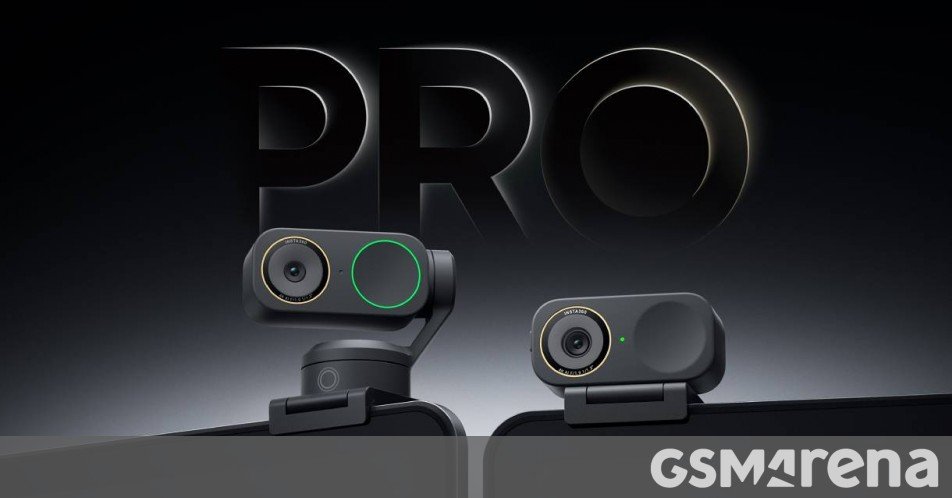
Insta360 has updated its webcam lineup just over a year after launching the Link 2 series, introducing Pro variants that focus on a single hardware improvement: a larger 1/1.3-inch sensor. This change represents more than double the light-gathering area compared to the 1/2-inch sensors in the standard models, which matters more for webcams than you might expect.
Why Sensor Size Matters for Webcams
Most webcams use tiny sensors that struggle in typical home office lighting. The 1/1.3-inch sensor in these new Pro models gives you 2.23x the light-sensitive surface area. That translates directly to cleaner images in dim rooms, better color accuracy, and less noise when you're not sitting under perfect studio lights.
The sensor also uses "2.4µm equivalent pixels," which suggests pixel binning is at work. This technique combines adjacent pixels to create larger virtual pixels that capture more light, though it reduces the effective resolution. The trade-off is worth it for webcams since most video calls happen at 1080p anyway.
Dual Native ISO works with HDR processing to handle tricky lighting situations like backlighting from windows or uneven room lighting. The system can switch between two ISO settings natively rather than digitally boosting signals, which preserves more detail in both shadows and highlights.
Link 2 Pro: AI Tracking with Physical Controls
The Link 2 Pro keeps the three-axis gimbal that automatically tracks your movement. What's new is the ability to define a Tracking Area through the Insta360 app. You can mark off part of your room as "backstage" where the camera won't follow you, useful if you need to step out of frame without the camera swiveling around.
There's also a Pause Tracking Area - when you enter this designated zone, the gimbal locks in place. This solves the problem of automatic tracking interfering when you want to stay static for a moment.
The 84° lens with f/1.9 aperture provides a wide enough view for group calls while letting in substantial light. Real-time bokeh mode adds background blur, though it's limited to 1080p at 30fps - the processing load is apparently too high for 4K.
Link 2C Pro: Fixed Camera with Smart Zoom
The 2C Pro drops the gimbal entirely, relying on in-sensor zoom to crop into the image. This approach maintains image quality better than digital zoom because it's using the full sensor resolution before cropping.
The intelligent zoom automatically frames you when you're alone but zooms out if another person joins the frame. This works because the camera is constantly analyzing the scene and can detect additional faces. It's not perfect - there's a delay as it recognizes new people - but it eliminates the need to manually adjust framing during calls.
Both models include a physical shutter that closes over the lens for privacy. This hardware solution is more reliable than software-based privacy indicators, and it's something the gimbal-equipped Link 2 Pro lacks due to its moving mechanism.
Video and Audio Capabilities
Both cameras support:
- 4K at 30fps
- 1080p at 60fps
- Two microphones with four pickup patterns
- AI noise reduction
The microphone system adapts based on your use case - single person, multiple people, presenter mode, or far-field pickup. The AI noise reduction processes audio locally to remove keyboard clicks, fan noise, and room echo.
Ecosystem Considerations
Insta360 continues positioning these webcams as part of a broader productivity ecosystem. The Link 2 Pro can pair with the Wave Speakerphone for conference room setups, creating a unified audio-video solution. This lock-in strategy mirrors what Logitech does with its MeetUp system, though Insta360's approach is more modular.
The cameras work with the Insta360 desktop app, which handles firmware updates, tracking configuration, and video settings. This creates a dependency - you need the app for full functionality, though the cameras work as standard UVC devices without it.
Pricing and Availability
The Pro models command a premium:
- Link 2 Pro: $250 / €270
- Link 2C Pro: $200 / €220
Compared to the original models:
- Link 2: $200 / €230
- Link 2C: $150 / €170
The price jump reflects the larger sensor and improved processing, but puts these cameras in direct competition with premium options like the Logitech Brio 4K and Elgato Facecam Pro.
Real-World Implications
For remote workers, the sensor upgrade means you can keep your existing lighting setup and still get cleaner video. The tracking features work well for presenters who move around, though the fixed 2C Pro will appeal to those who want simplicity.
The intelligent zoom on the 2C Pro is genuinely useful for shared workspaces where you might work alone or with colleagues. It's not as smooth as a physical zoom lens, but it's automatic and requires no user input.
Privacy remains a concern with any webcam. The physical shutter on the 2C Pro addresses this directly, while the Link 2 Pro relies on software controls and the gimbal's default home position.
What This Means for the Webcam Market
Insta360 is pushing sensor size as the key differentiator in a crowded market. While most competitors focus on 4K resolution or AI features, the company is betting that better low-light performance will win over users stuck with poor lighting conditions.
The approach makes sense - resolution plateaus when most calls happen at 1080p, but lighting quality varies wildly. A larger sensor helps everywhere, while 4K just gives you more pixels of a noisy image.
The tracking features and ecosystem integration suggest Insta360 is targeting content creators and professionals who need more than basic video. The price point puts them above consumer webcams but below dedicated broadcast equipment.
Insta360 Link 2 Pro product page Insta360 Link 2C Pro product page Insta360 Desktop Software
Comments
Please log in or register to join the discussion