Intel Linux engineers have submitted initial patches enabling Xe3P_LPG graphics support for Nova Lake P mobile processors, building on existing Xe3P_LPM and Xe3P_LPD display infrastructure already integrated into the driver.
Intel Linux engineers have submitted the first patches enabling support for Nova Lake P's Xe3P_LPG graphics engine, marking another milestone in the preparation for Intel's next-generation mobile processors. The patches, sent out this week, build upon existing Xe3P_LPM media and Xe3P_LPD display support already integrated into the Linux kernel driver.
Nova Lake P Platform Architecture
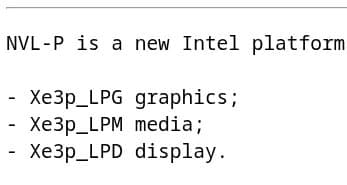
The Nova Lake P (NVL-P) platform introduces several key IP blocks:
- Xe3p_LPG graphics - The new low-power graphics engine
- Xe3p_LPM media - Media processing capabilities
- Xe3p_LPD display - Display engine functionality
The enabling patches follow a logical progression, with the driver team first adding support for the Xe3p_LPG graphics engine before implementing full NVL-P platform support. This staged approach allows for incremental testing and validation of each component.
Current Development Status
While Nova Lake S (NVL-S) desktop processor support has been the primary focus of Linux kernel development so far, Nova Lake P mobile enablement is now gaining momentum. The current patches represent the foundational work needed to bring Nova Lake P graphics capabilities to Linux.
According to the patch series description: "NVL-P is a new Intel platform that comes with the following IPs: Xe3p_LPG graphics; Xe3p_LPM media; Xe3p_LPD display. Enabling patches for Xe3p_LPM and Xe3p_LPD are already integrated in our driver. In this series we add patches enabling Xe3p_LPG and then follow up with patches enabling NVL-P as a platform in our driver."
Graphics Capabilities and PCI IDs
The Xe3P_LPG engine currently carries over features enabled by the previous generation Xe2 graphics, though developers have noted that new features will be introduced in future iterations. The patch set includes nine graphics device PCI IDs for Nova Lake P, though as is typical with Intel's development process, not all of these may correspond to released products. Some IDs are likely reserved for potential future products, engineering samples, or other internal use cases.
Timeline and Integration
With the Linux 6.20~7.0 merge window beginning next week, the Xe3P_LPG/NVL-P driver work is not expected to land until the Linux 7.1 cycle at least, targeting summer integration. This timeline allows for thorough review and testing of the initial enabling patches before they become part of the mainline kernel.
Context in Intel's Graphics Roadmap
This development represents Intel's continued investment in Linux graphics support across its product portfolio. The Xe3P_LPG engine appears to be specifically optimized for mobile platforms, continuing Intel's strategy of tailoring graphics capabilities to different market segments. The separation between Nova Lake S and Nova Lake P enablement reflects the distinct requirements of desktop versus mobile processor architectures.
For Linux users and developers, these patches provide early insight into Intel's mobile graphics strategy and ensure that Nova Lake P systems will have robust graphics support from launch. The incremental approach to driver development, building on existing infrastructure while adding new capabilities, demonstrates Intel's maturing Linux graphics driver ecosystem.

Comments
Please log in or register to join the discussion