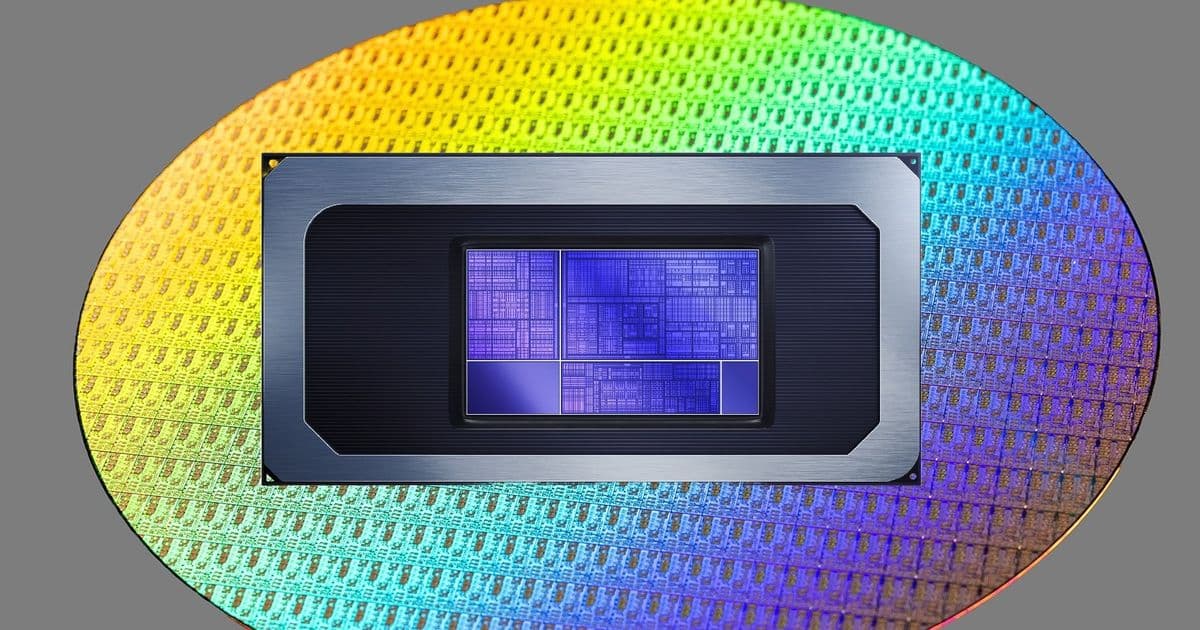
Intel's next-generation CPUs will adopt a Unified Core approach that mirrors AMD's Zen 5/5c strategy, using the same architecture for P, E, and LP E-cores with different power profiles rather than separate core designs.
Intel's next-generation CPU strategy appears to be taking a significant turn as the company reportedly adopts a Unified Core design that closely mirrors AMD's successful hybrid architecture approach. Recent leaks and confirmations suggest Intel is moving away from its traditional separate P-core and E-core designs in favor of a more unified architecture strategy.
What's New: The Unified Core Architecture
The concept of Intel's Unified Core design emerged when the company inadvertently confirmed its existence earlier this week. Initially, speculation suggested this could be the continuation of Jim Keller's ambitious Royal Core Project, which aimed to create CPU tiles capable of functioning as both performance and efficiency cores when needed.
However, new information from reliable leaker Olrak29_ clarifies that the Unified Core design isn't about eliminating P and E-cores entirely. Instead, Intel is adopting a strategy similar to AMD's approach with Zen 5 and Zen 5c cores. The key insight is that Intel will use the same general core architecture and intellectual property across all core types, with the primary difference being power consumption profiles rather than fundamental architectural differences.
How It Compares to AMD's Approach
AMD's strategy with Zen 5 and Zen 5c cores provides the blueprint for Intel's Unified Core design. In AMD's implementation, both core types share the same general architecture but differ in size and clock speeds. The larger Zen 5 cores handle demanding tasks while the smaller Zen 5c cores manage lighter workloads more efficiently.
Intel's approach follows this pattern but with a twist: the company is reportedly basing the Unified Core on the efficiency-focused E-core rather than the performance-oriented P-core. This strategic decision makes sense given the remarkable progress Intel has made with its E-core designs.
The E-Core Foundation: Intel's Secret Weapon
The Darkmont E-cores, which will feature in upcoming Panther Lake CPUs, have demonstrated performance that rivals or exceeds Raptor Cove P-cores from 13th-gen Intel CPUs at the same power levels. This represents a significant achievement in Intel's architectural development.
Even more impressive are the power efficiency gains. Darkmont LP E-cores reportedly consume as little as 1W during lighter tasks, showcasing Intel's mastery of power efficiency. By building the Unified Core design on this efficient foundation, Intel aims to maintain these power advantages while boosting raw compute performance.
Strategic Implications for Intel's CPU Roadmap
This shift represents a fundamental change in how Intel approaches CPU design. Rather than maintaining separate architectures for different core types, the Unified Core design allows for greater flexibility and potentially easier optimization across the entire CPU lineup.
The power curve strategy is particularly noteworthy. P-cores will be allowed the highest power consumption, followed by E-cores, with LP E-cores consuming the least power. This tiered approach maintains the performance hierarchy while simplifying the underlying architecture.
What This Means for Future Performance
For consumers and enterprise users, this architectural shift could translate to several benefits:
- Improved power efficiency across all core types
- Better thermal management due to unified architecture
- Simplified software optimization as developers deal with fewer architectural variations
- Potential for better performance-per-watt ratios
Intel's decision to build upon the E-core foundation suggests the company is confident in its ability to scale performance while maintaining the efficiency gains that have made E-cores so successful.
Looking Ahead: The Next Generation
As Intel moves forward with this Unified Core strategy, the tech industry will be watching closely to see how it compares to AMD's implementation. The success of this approach could determine Intel's competitive position in the CPU market for years to come.
The Unified Core design represents Intel's acknowledgment that AMD's hybrid architecture approach has merit and that the future of CPU design may lie in architectural unification rather than specialization. Whether this strategy will give Intel the competitive edge it needs remains to be seen, but the foundation appears solid given the proven performance of the Darkmont E-cores.
For now, enthusiasts and industry watchers alike will be eagerly anticipating the first CPUs to feature this Unified Core design, which could mark a new chapter in Intel's processor development strategy.
Comments
Please log in or register to join the discussion