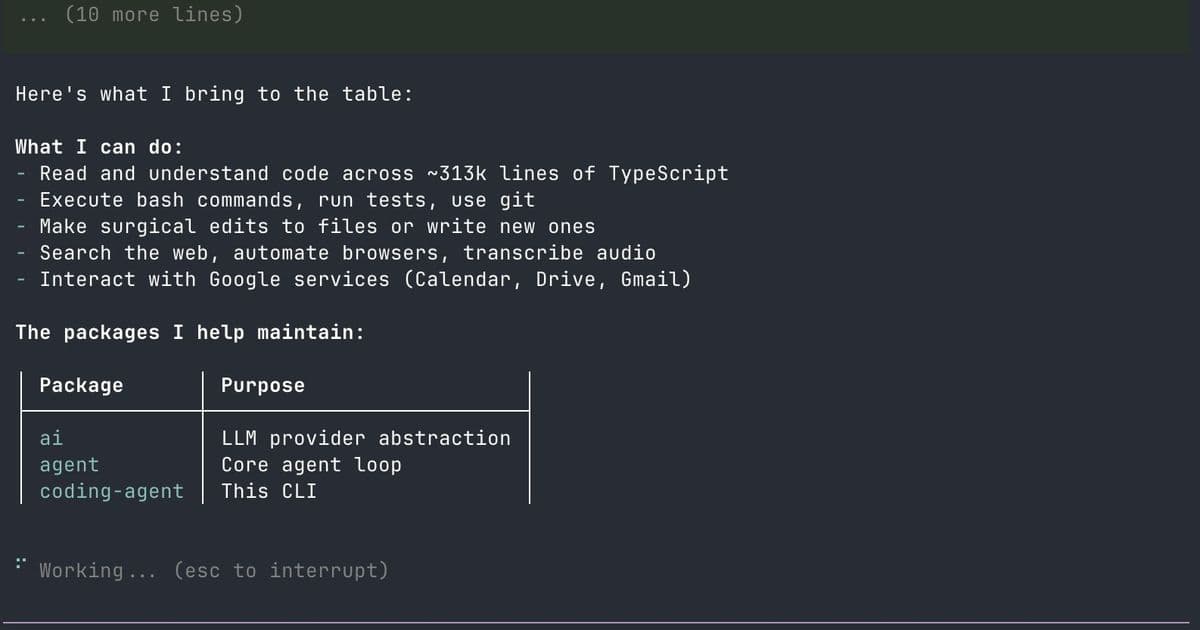
pi.dev launches a minimal terminal coding agent that prioritizes extensibility over built-in features, letting developers shape their own workflows with TypeScript extensions, skills, and packages.
In a market crowded with coding agents, pi.dev takes a different approach: it's minimal by design, extensible by philosophy. The new terminal coding harness, created by Mario Zechner and contributors, ships with powerful defaults but deliberately skips features like sub-agents and plan mode, betting instead on its extensibility model.
Why pi? The Philosophy of Minimal Extensibility
Pi's core premise is simple: adapt the tool to your workflows, not the other way around. Rather than baking in every possible feature, pi provides primitives that developers can extend with TypeScript modules, skills, prompt templates, and themes. These can be bundled as pi packages and shared via npm or git.
This approach means pi doesn't need to be everything to everyone. Want sub-agents? Build them with extensions or install a package that does it your way. Need plan mode? Write plans to files or create an extension. The philosophy is aggressively extensible so the core stays minimal while letting you shape pi to fit how you work.
Four Modes for Every Workflow
Pi supports four distinct modes:
- Interactive: The full TUI experience
- Print/JSON:
pi -p "query"for scripts,--mode jsonfor event streams - RPC: JSON protocol over stdin/stdout for non-Node integrations
- SDK: Embed pi in your apps
This flexibility makes pi suitable for everything from interactive coding sessions to automated scripts and application integration. The clawdbot project demonstrates real-world RPC integration.
Context Engineering at Its Core
Where pi truly shines is in its approach to context management. The tool's minimal system prompt and extensibility let you do actual context engineering—controlling what goes into the context window and how it's managed.
Key context features include:
- Tree-structured sessions: Navigate to any previous point and continue from there
- AGENTS.md: Project instructions loaded at startup from
~/.pi/agent/, parent directories, and current directory - SYSTEM.md: Replace or append to the default system prompt per-project
- Compaction: Auto-summarizes older messages when approaching context limits
- Skills: Capability packages with instructions and tools, loaded on-demand
- Dynamic context: Extensions can inject messages before each turn or implement RAG
Provider and Model Flexibility
Pi supports 15+ providers and hundreds of models including Anthropic, OpenAI, Google, Azure, Bedrock, Mistral, Groq, Cerebras, xAI, Hugging Face, Kimi, MiniMax, OpenRouter, and Ollama. You can authenticate via API keys or OAuth, switch models mid-session with /model or Ctrl+L, and cycle through favorites with Ctrl+P. Custom providers and models can be added via models.json or extensions.
The Extension Ecosystem
Pi's extensions are where the real power lies. These TypeScript modules have access to tools, commands, keyboard shortcuts, events, and the full TUI. The ecosystem already includes 50+ examples covering sub-agents, plan mode, permission gates, path protection, SSH execution, sandboxing, MCP integration, custom editors, status bars, overlays, and yes—even Doom.
Packages bundle extensions, skills, prompts, and themes for easy sharing. Install from npm or git, pin versions with @1.2.3 or @tag, update all with pi update, and test without installing using pi -e git:github.com/user/repo.
Community and Future
The project is MIT licensed and actively developed. The team welcomes contributions through GitHub issues for bugs and features, with community discussion happening on Discord. Documentation is comprehensive, covering everything from basic usage to advanced extension development.
In a landscape where coding agents often dictate workflow, pi.dev offers something different: a tool that bends to your will rather than the other way around. Whether you're a solo developer or part of a team, pi's minimal core and maximal extensibility might be exactly what you've been looking for.
Explore pi.dev to see how a minimal terminal coding agent can adapt to your unique workflow.
Comments
Please log in or register to join the discussion