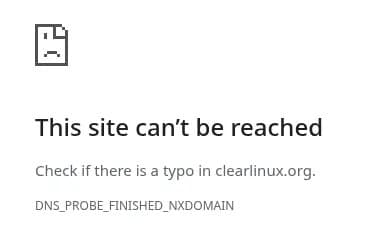
Intel has completely removed the Clear Linux website, eliminating access to the final release and technical documentation of what was once the fastest Linux distribution for x86_64 systems.
Intel has taken the final step in sunsetting its Clear Linux distribution by completely removing the ClearLinux.org website from the internet. The move eliminates what was one of the last remaining resources for accessing the final releases and technical documentation of a distribution that once led Linux performance innovation for a decade.
When Intel announced the end of Clear Linux last July, the company at least maintained the website as an archive where users could download the final ISOs and access technical content. That courtesy has now been revoked, with the entire ClearLinux.org domain returning error messages instead of serving the distribution's final assets.
The timing is particularly frustrating for the Linux performance community. Just weeks ago, I was preparing to run comprehensive benchmarks comparing Clear Linux's final release against current development builds of Ubuntu 26.04 and Fedora 44. The question on everyone's mind was whether the major distributions had managed to close the performance gap that Clear Linux had maintained for years as the fastest out-of-the-box Linux x86_64 distribution.
Those comparisons are now significantly harder to make. While the GitHub repositories containing Clear Linux's packaging scripts and customizations remain archived, the loss of the website means losing access to:
- The final ISO downloads for testing
- Historical performance benchmarks and comparisons
- Forum discussions documenting optimization techniques
- Blog posts explaining the distribution's unique approaches
- Technical documentation for Clear Linux's performance features
The removal feels particularly shortsighted given that the website was already marked as end-of-life and maintained in a read-only state. There was no ongoing maintenance burden, yet Intel chose to eliminate this historical artifact entirely rather than preserve it as a reference for Linux performance development.
For those who relied on Clear Linux's innovative approaches—from its aggressive compiler optimizations to its unique package management system—the website's removal represents the final severing of ties with a distribution that pushed the boundaries of what Linux could achieve on Intel hardware.
At least the GitHub assets remain, allowing developers to study Clear Linux's packaging scripts and customizations. But without the website's context, documentation, and final release access, answering fundamental questions about Linux performance evolution just became considerably more difficult.
Comments
Please log in or register to join the discussion