
The essay argues that the apparent “transparency” brought by sensors, drones and fast networks has not made war easier, but has instead created costly stalemates, new psychological burdens for soldiers, and a false belief among policymakers that technology alone can deliver decisive victories.
The dangerous delusion of modern warfare
By The Economist defence editor – May 28 2026
What the article claims
The piece contends that the rapid spread of drones, high‑resolution sensors and low‑latency data links has produced a “transparency revolution” on the battlefield. This new visibility, it argues, is not a panacea: it has turned conventional manoeuvre warfare into a grinding attrition fight, amplified civilian trauma, and encouraged great powers to launch conflicts they cannot win.
What is actually new?
1. Sensor‑to‑shooter loops are now measured in seconds
- Hardware – modern micro‑drones (FPV racing‑type platforms) cost a few thousand dollars, can carry a 2 kg warhead and are produced in the thousands. Larger MALE/UAVs such as the Turkish Bayraktar TB2, the US Reaper and the Israeli Hermes 450 have become commodity‑grade platforms, with production lines more akin to consumer‑electronics factories than to traditional aerospace supply chains.
- Software – updates are pushed every few weeks; a typical operational cycle now includes a software‑only capability upgrade every 6 weeks, followed by a hardware refresh roughly every 6 months, as noted by Air Vice‑Marshall Simon Strasdin of the UK Integrated Warfare Centre.
- Networks – 5G‑style tactical radios, satellite‑backhaul, and ad‑hoc mesh networks now allow a sensor on a soldier’s helmet to feed a fire‑control solution on a distant artillery battery within sub‑second latency.
2. Drones have become multi‑role tools
- Kinetic – FPV drones account for a significant share of the estimated 1.1–1.4 million Russian casualties in Ukraine (roughly 1 in 25 men under 50). Ukrainian forces have used similar swarms to protect key corridors and to interdict Russian logistics.
- Logistics – uncrewed ground vehicles performed 24 000+ casualty‑evacuation missions in the first quarter of 2026, delivering food, water and medical kits on both sides of the front.
- Electronic warfare – Russia’s rapid jamming of the TB2’s data link in 2022 and the subsequent degradation of US Excalibur GPS‑guided artillery (hit probability fell from 70 % to 6 %) illustrate how quickly the sensor advantage can be neutralised.
3. The “air littoral” concept
Below about 4 000 m the battlefield is increasingly decoupled from traditional high‑altitude air power. Mass‑produced drones and point‑defence systems (laser‑based C‑UAS, radio‑frequency dazzlers) create a shallow‑air zone where strategic air superiority offers limited protection for ground forces. This mirrors the naval “littoral” problem of small craft and mines challenging capital ships.
4. Training gaps are widening
Observations at the US Army’s National Training Centre (Fort Irwin) reveal that even well‑equipped brigades are systematically deficient in counter‑drone tactics and sensor‑fusion workflows. NATO exercises that incorporated Ukrainian drone operators (Exercise Hedgehog, Sweden’s Aurora) reported dramatic failures, underscoring the difficulty of translating hardware into effective doctrine.
Limitations and open questions
| Issue | Why it matters |
|---|---|
| Counter‑drone resilience | Emerging laser systems, directed‑energy weapons and hardened RF links can blunt the cheap‑drone advantage, but fielding them at scale remains costly and logistically complex. |
| Network overload | The UK’s targeting stack runs on 270 applications across 20 systems; data bursts can saturate links, forcing operators into “swivel‑chair” workarounds. Scaling sensor‑to‑shooter pipelines to the 5 000‑target per day ambition (with LLM‑assisted tools like Anthropic’s Claude) will require massive bandwidth upgrades and tighter standards. |
| Human factors | Soldiers in the “kill zone” experience chronic hyper‑vigilance; the psychological toll of constant drone noise is not mitigated by better gear. No amount of sensor data can replace the need for mental‑health support. |
| Cost‑effectiveness of legacy platforms | Tanks and heavy armour are still required to breach fortified “attrition belts”. The “turtle‑tank” example shows that even a swarm of 60 FPV drones struggled to stop a handful of heavily‑armoured, drone‑resistant vehicles. |
| Strategic escalation | The article warns that policymakers treat technology as a “knock‑out blow”. In a Taiwan scenario, the US would likely aim at China’s connective tissue (C2, satellite links) rather than individual platforms, raising the risk of rapid, unintended escalation, especially if autonomous kill‑chains are involved. |
Take‑aways for practitioners
- Invest in sensor‑fusion standards – Interoperability between legacy command‑and‑control (C2) suites and emerging AI‑augmented targeting tools must be codified, not patched with ad‑hoc “swivel‑chair” solutions.
- Balance cheap swarms with hard‑kill assets – While FPV drones are inexpensive, a layered defence that includes laser C‑UAS, electronic‑attack pods and a modest number of survivable high‑value platforms (e.g., survivable loitering munitions) provides a more resilient posture.
- Prioritise human‑centred training – Real‑world exercises that deliberately expose failures (as Sweden’s Aurora did) are essential; they reveal gaps that simulations hide.
- Plan for network saturation – As sensor density grows, bandwidth planning becomes a combat‑critical activity. Edge‑computing nodes that preprocess data before sending it to the shooter can reduce latency and prevent bottlenecks.
- Recognise the limits of transparency – Sensors give a partial picture; adversaries can hide in “sensor shadows” (e.g., underground launchers, hardened shelters). Over‑reliance on ISR can create a false sense of security.
Visual illustration
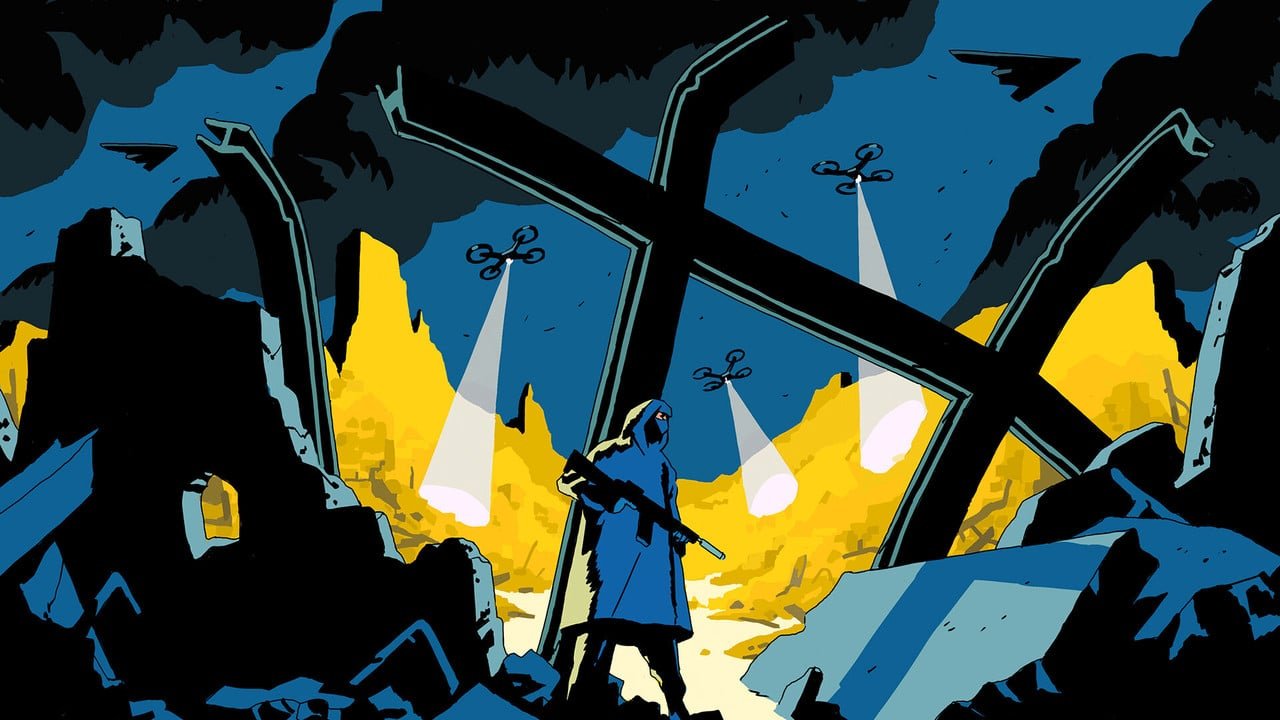
The “air littoral” – dense low‑altitude drone traffic under the traditional air‑superiority envelope.
The essay concludes that technology has not eliminated the fundamental problem of war: the gap between political objectives and the messy, costly reality of fighting on the ground. Believing that better sensors and faster kill‑chains will close that gap is the very “dangerous delusion” the author warns against.
Comments
Please log in or register to join the discussion