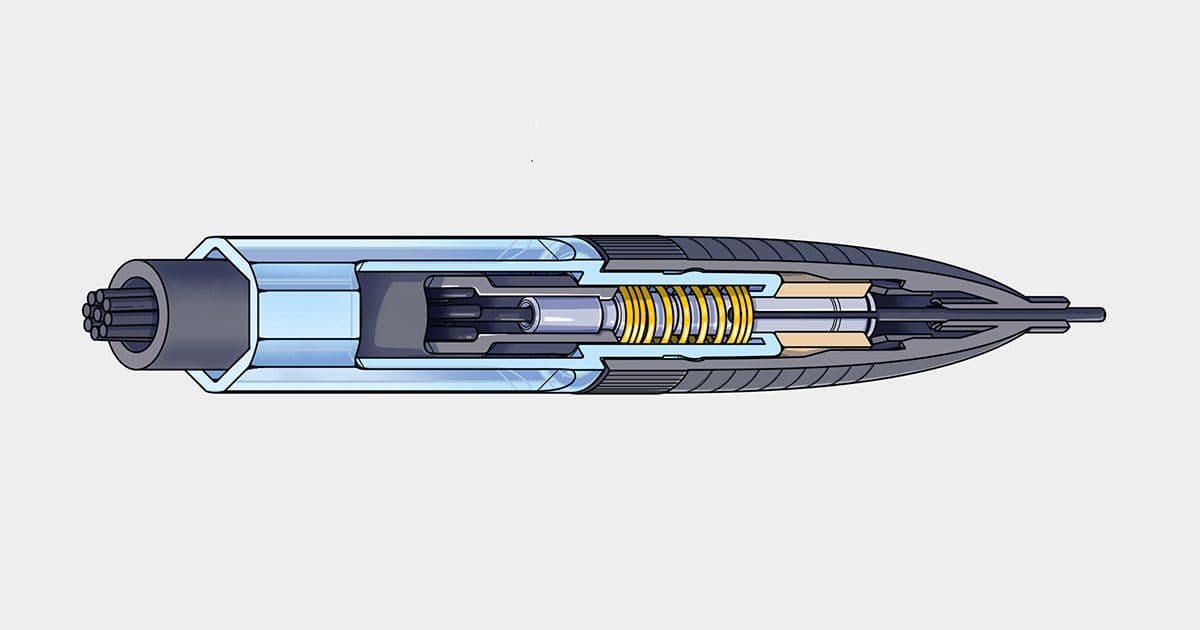
A new website by mechanical engineer and artist Bryan is gaining attention for its detailed teardowns and illustrations of common products, tapping into a growing trend of appreciating the engineering behind everyday items.
In an era dominated by digital interfaces and invisible software, a refreshing trend is emerging: a renewed appreciation for the mechanical engineering that powers the physical objects we interact with daily. The Mechanical Pencil website, created by mechanical engineer and artist Bryan, exemplifies this movement by providing beautifully illustrated breakdowns of everyday products.
The site features detailed teardowns of iconic products like the Pilot G2 Retractable Pen (1997), Zippo Lighter (1933), BIC Mechanical Pencil (1988), and Pez Candy Dispenser (1952). Each breakdown combines technical accuracy with artistic visualization, offering viewers a window into the engineering principles that make these objects function.
"This project came about as a way to blend two worlds: engineering and art," Bryan explains in his site's about section. "I'm hoping this site not only visualizes how things work, but does it in a beautiful way."
The approach resonates with a growing segment of the tech community that values tangible understanding alongside digital innovation. In maker spaces and engineering forums, there's increasing discussion about the importance of understanding mechanical systems as foundational knowledge for those working in increasingly software-focused fields.
"There's something powerful about seeing how a simple mechanism like a mechanical pencil's lead advancement system works," notes Sarah Chen, a mechanical design engineer who follows Bryan's work. "It reminds us that even in our digital age, physical engineering principles still govern much of our interaction with the world."
The creation process Bryan employs demonstrates a meticulous approach: taking products apart, creating CAD models, illustrating each view, and then animating and laying out the results for the web. "It does take me quite a bit of time to create each one," Bryan admits, suggesting that this level of detailed mechanical documentation is a labor of passion rather than mass-market content.
Some industry observers question whether this level of mechanical detail has practical value in an increasingly digital world. "While appreciating the engineering of past products is interesting, our focus should be on future technologies," argues tech commentator Marcus Wellington. "The real innovation is happening in software, AI, and materials science—not in understanding how a 1980s pencil mechanism works."
Counter to this perspective, many educators and engineers argue that understanding basic mechanical principles provides essential context for innovation. "You can't effectively design the next generation of products without understanding the principles of the current generation," explains Dr. Elena Rodriguez, a professor of mechanical engineering. "Bryan's work serves as an accessible entry point to these concepts."
The site's name, "Mechanical Pencil," reflects both Bryan's professional background and personal history. "I'm a Mechanical Engineer who loves to draw," he explains. "A Mechanical Pencil was my go-to drawing medium as a kid, and I probably popped it open countless times, but I never took the time to appreciate how it works."
As the maker movement continues to gain momentum and there's growing interest in STEAM education (Science, Technology, Engineering, Arts, and Mathematics), sites like Mechanical Pencil represent an important bridge between technical understanding and public appreciation. They demystify the engineering that surrounds us, potentially inspiring a new generation to pursue careers in engineering and design.
The growing community around Bryan's work suggests that there's significant interest in this type of content. "I've received emails from teachers using my illustrations in classrooms, hobbyists inspired to take apart their own pens, and even product designers looking for inspiration," Bryan shares. "That's been incredibly rewarding to see."
As technology continues to evolve, the balance between digital and mechanical knowledge may become increasingly important. Projects like Mechanical Pencil serve as valuable documentation of engineering principles that might otherwise be lost in our increasingly digital world.
Comments
Please log in or register to join the discussion