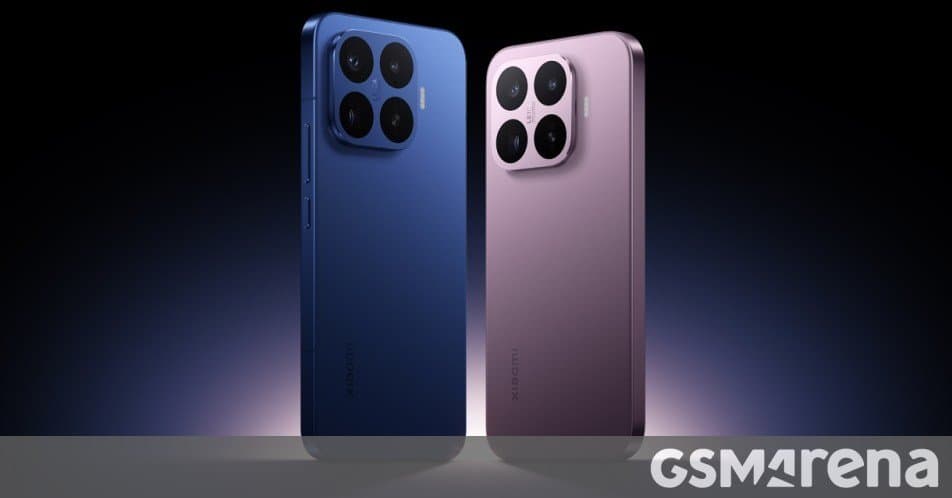
Xiaomi's latest T-series smartphones offer substantial upgrades over their predecessors but come with notable price increases, raising questions about their positioning in the competitive mid-range market.
Xiaomi has officially launched its 17T series, consisting of the standard 17T and the more powerful 17T Pro. Both devices represent a significant evolution from last year's 15T series, bringing notable improvements across the board while also introducing some compromises and a substantial price increase that has caught the attention of mobile enthusiasts.
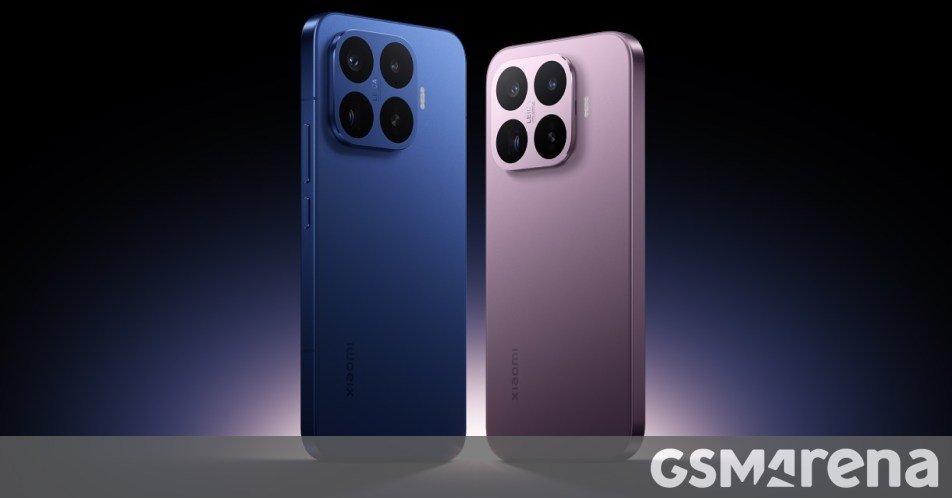
Pricing Strategy and Market Positioning The most striking aspect of the new Xiaomi 17T series is the pricing strategy. The vanilla 17T starts at €750 for the 12/256GB configuration, while the 17T Pro begins at €900 for the same storage and RAM setup. This represents a €100 price increase across the lineup compared to last year's models. For context, the 15T started at €650, while the 15T Pro began at €800.
This price hike places the T-series uncomfortably close to the €1,000 mark, blurring the lines between premium mid-range and flagship territory. Xiaomi traditionally positions the T-series as a sub-flagship option, offering many flagship features at a more accessible price point. However, with the 17T series, this distinction becomes less clear, especially in European markets where Xiaomi doesn't offer its true flagship devices outside of China.
Hardware Specifications: A Tale of Two Devices The Xiaomi 17T and 17T Pro share several design elements and features but differ significantly in their internal specifications.
Xiaomi 17T Pro:
- Processor: Dimensity 9500 chipset
- Main Camera: 50MP with 1/1.31" sensor
- Telephoto Camera: 50MP 5x/115mm periscope
- Battery: 7,000mAh with 100W wired and 50W wireless charging
- Display: 6.59" (exact specifications not detailed in the source)
- Dimensions: 8.3mm thick
- Price: Starting at €900
Xiaomi 17T:
- Processor: Dimensity 8500 chipset
- Main Camera: 50MP with 1/1.55" sensor
- Telephoto Camera: 50MP 5x/115mm periscope (same as Pro)
- Battery: 6,500mAh with 67W wired-only charging
- Display: 6.59" (smaller than the 6.83" display on the 15T)
- Dimensions: 8.2mm thick
- Price: Starting at €750
Notable Design Changes and Their Implications One of the most significant changes between the 15T and 17T series is the reduction in display size. The vanilla 17T features a 6.59" display, down from the 6.83" screen on its predecessor. This change could be seen as both positive and negative depending on user preferences.
On one hand, many consumers have expressed concern that modern smartphones have become excessively large, making them difficult to use with one hand. The smaller display on the 17T addresses this concern, potentially improving ergonomics for some users.
On the other hand, the reduction in screen real estate might disappoint those who prefer larger displays for media consumption and gaming. Additionally, both models in the 17T series are thicker than their predecessors (8.2mm and 8.3mm compared to 7.5mm and 8.0mm for the 15T and 15T Pro respectively), which might impact the overall handling and pocketability.
Camera System Analysis The camera system represents one of the most interesting aspects of the 17T series. While the vanilla model has a smaller main camera sensor (1/1.55" compared to 1/1.31" in the Pro), both devices feature the same impressive 50MP 5x/115mm periscope telephoto camera.
This is a significant departure from last year's models, where the standard 15T had a less capable 50MP 2x/46mm telephoto camera. The inclusion of a high-quality periscope telephoto lens in the vanilla model is a welcome upgrade that narrows the gap between the T-series and true flagships.
However, the Pro model still maintains its advantage with a larger main camera sensor, which typically captures more light and produces better images in challenging lighting conditions. The difference between a 1/1.31" and 1/1.55" sensor might not be immediately noticeable to casual users, but photography enthusiasts will appreciate the Pro's capabilities.
Battery and Charging Capabilities Battery life has always been a strength of Xiaomi's T-series, and the 17T models continue this tradition. The 17T Pro boasts a massive 7,000mAh battery, paired with 100W wired charging and 50W wireless charging capabilities. This combination ensures excellent battery life and rapid charging times.
The vanilla 17T, while still offering respectable battery capacity at 6,500mAh, only supports 67W wired charging and lacks wireless charging capabilities. This represents a significant compromise for the price difference between the two models.
For context, last year's 15T and 15T Pro both featured 5,500mAh batteries, making the 17T Pro a substantial upgrade in terms of capacity and charging speed.
Software and Ecosystem Considerations While the article doesn't provide specific details about the software experience, Xiaomi's devices typically run MIUI, which is based on Android. The company has been working to improve its software offering, reducing bloatware and improving the overall user experience in recent years.
The 17T series will likely benefit from Xiaomi's ecosystem integration, allowing seamless connectivity with other Xiaomi devices such as smart home products, wearables, and tablets. This ecosystem approach can be a significant advantage for users who own multiple Xiaomi products.
Market Context and Competition The Xiaomi 17T series enters a highly competitive mid-range market segment. With prices approaching €1,000, these devices face competition from established flagships from brands like Samsung, Google, and Apple, as well as other premium mid-range options from OnePlus, Nothing, and Realme.
The decision to increase prices significantly while also reducing the display size on the vanilla model is a bold move by Xiaomi. It suggests that the company is attempting to position the T-series closer to flagship territory, potentially to improve profit margins in an increasingly challenging market.
However, this strategy carries risks. If consumers perceive the price increase as unjustified or if the compromises (like the smaller display on the vanilla model) don't align with their expectations, Xiaomi might struggle to replicate the success of the 15T series, where the Pro model easily outperformed the standard version in consumer polls.
Value Proposition and Final Thoughts The Xiaomi 17T series presents an interesting value proposition. The Pro model, with its Dimensity 9500 chipset, excellent camera system, massive battery, and fast charging capabilities, offers flagship-level performance at a relatively accessible price point. For consumers who prioritize these features, the 17T Pro could be an attractive option.
The vanilla 17T, while less powerful, still offers significant improvements over its predecessor, particularly in the camera department with the addition of the periscope telephoto lens. However, the smaller display and lack of wireless charging might make it less appealing for some users.
Ultimately, the success of the 17T series will depend on how consumers perceive the value proposition at these higher price points. Xiaomi has traditionally been known for offering excellent specifications at competitive prices, but this new direction suggests the company is attempting to move upmarket.
For potential buyers, the decision between the 17T and 17T Pro will likely come down to specific needs and priorities. Those who prioritize camera capabilities, battery life, and charging speed might find the Pro model worth the additional €150. Meanwhile, those who are more budget-conscious or don't require the absolute best specifications might find the vanilla 17T to be a more balanced option.
As always, prospective buyers should consider their specific needs, preferences, and budget when making a decision. The 17T series represents an interesting evolution of Xiaomi's mid-range strategy, but whether this new direction will resonate with consumers remains to be seen.
Comments
Please log in or register to join the discussion