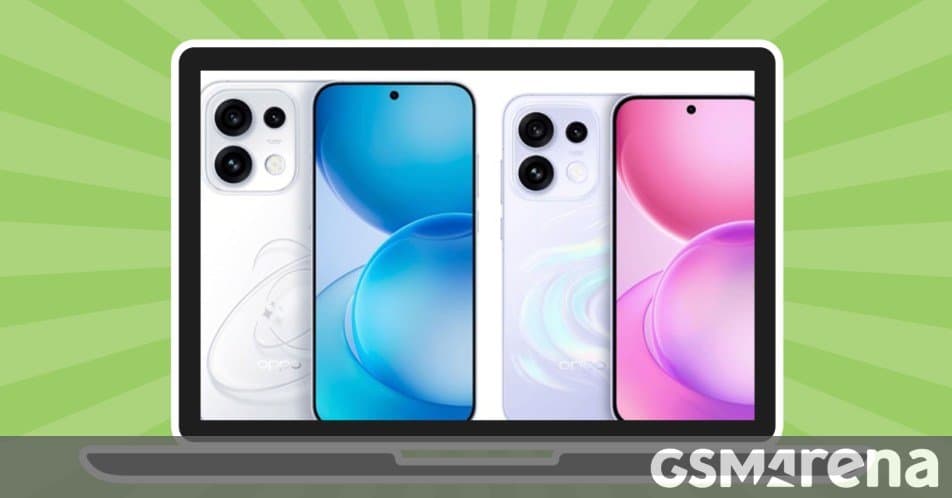
Week 22 brought several significant smartphone launches across different market segments, from Oppo's Reno16 series with its impressive camera arrays to Xiaomi's 17T lineup featuring Leica-tuned optics. Gaming phones like the RedMagic 11S Pro pushed boundaries with cooling solutions, while vivo introduced a battery-focused device with a massive 9,020mAh capacity. The week also saw leaks suggesting Apple's entry into the foldable market.
Major Flagship Refreshes and Battery Innovations Dominate Week 22 Mobile Launches
The mobile tech landscape in Week 22 was marked by several significant launches across different market segments. Chinese manufacturers continued their aggressive product cycles, with Oppo, Xiaomi, and vivo all introducing new devices that showcase different aspects of smartphone innovation - from camera systems and processing power to battery longevity and gaming capabilities.
Oppo Reno16 Series: Camera-Centric Flagships with Differentiated Tiers
Oppo unveiled its Reno16 series in China, continuing the brand's focus on photography and premium mid-to-high-range offerings. Both the Reno16 and Reno16 Pro share an identical triple rear camera setup that emphasizes versatility and high-resolution capture.
The camera configuration includes:
- A 200MP main sensor with 24mm equivalent focal length
- A 50MP telephoto lens with 80mm equivalent focal length (3x optical zoom)
- A 50MP ultrawide lens with 16mm equivalent focal length
For selfies, both models feature a 50MP front-facing camera with 18mm equivalent focal length. This consistent camera approach across the lineup ensures that users won't compromise on photography capabilities regardless of which model they choose.
The key differences between the Reno16 and Reno16 Pro lie in their display, chipset, and battery specifications:
Oppo Reno16:
- 6.32-inch display (likely AMOLED based on Oppo's typical offerings)
- MediaTek Dimensity 8500 Super chipset
- 6,700mAh battery with 80W wired charging
Oppo Reno16 Pro:
- 6.78-inch display (likely with higher resolution or refresh rate)
- MediaTek Dimensity 9500s chipset (a slightly different variant of the flagship Dimensity 9500)
- 7,000mAh battery with 80W wired charging and 50W wireless charging
Pricing for the Chinese market starts at CNY 3,499 (approximately $515) for the base Reno16 and CNY 4,499 (approximately $660) for the Pro model, both in their 12/256GB configurations. This pricing strategy positions the Reno16 series as premium offerings that compete with other mid-to-high-range flagships from Chinese manufacturers.
The Reno16 series represents Oppo's continued investment in camera technology while offering differentiated experiences across the tiered lineup. The inclusion of wireless charging on the Pro model adds a premium feature that justifies the price difference, while the base model still offers substantial capabilities at a more accessible price point.
RedMagic 11S Pro: Gaming Phone with Elite Performance and Advanced Cooling
RedMagic, known for its gaming-focused smartphones, launched the 11S Pro with specifications designed for mobile gaming enthusiasts. The device represents the cutting edge of smartphone performance, particularly for gaming applications.
The standout feature is the Qualcomm Snapdragon 8 Gen 5 Elite Leading Edition chipset, which includes a higher-clocked prime core operating at 4.74GHz. This special edition of the flagship processor is designed to deliver maximum performance for demanding applications and games.
To manage the thermal challenges associated with such a powerful processor, RedMagic has implemented a comprehensive cooling system:
- RedCore R4 gaming chip (dedicated processing for gaming tasks)
- Active cooling fan system
- Vapor chamber cooling
- Liquid cooling technology
This multi-layered approach to thermal management is particularly important for gaming phones, which often push hardware to its limits during extended gaming sessions.
Other specifications include:
- 7,500mAh battery with 80W charging
- 144Hz refresh rate display (typical for RedMagic gaming phones)
- Gaming-focused software features and UI elements
The RedMagic 11S Pro will be available globally starting June 9, with pricing beginning at €799/$849/£709 for the 12/256GB model. This positions it as a premium gaming device that competes with other specialized gaming phones from brands like ASUS ROG Phone and Nubia.
The inclusion of both active and liquid cooling in a smartphone is particularly noteworthy, as these technologies are more commonly associated with high-performance laptops and desktop computers. RedMagic's focus on thermal management addresses a fundamental challenge in mobile gaming: maintaining consistent performance during extended sessions without throttling.
Xiaomi 17T Series: Leica Partnership and Differentiated Battery Strategies
Xiaomi officially launched the 17T and 17T Pro, continuing its strategy of offering tiered flagship devices with differentiating features. The series highlights Xiaomi's continued partnership with Leica for camera systems and introduces different battery technologies across the lineup.
Xiaomi 17T:
- 6.59-inch 144Hz AMOLED display
- MediaTek Dimensity 8500-Ultra chipset
- 6,500mAh battery with 67W charging
- Leica-tuned triple camera system:
- 50MP main camera
- 50MP 5x periscope telephoto camera
- 12MP ultrawide camera
- 12MP front-facing camera
Xiaomi 17T Pro:
- 6.83-inch 144Hz AMOLED display (likely with higher resolution)
- MediaTek Dimensity 9500 chipset
- 7,000mAh battery with 100W wired charging and 50W wireless charging
- Leica-tuned triple camera system with an upgraded main sensor:
- 50MP main camera with larger 1/1.31" sensor
- 50MP 5x periscope telephoto camera
- 12MP ultrawide camera
- 12MP front-facing camera
Pricing starts at €749 for the 17T and €899 for the 17T Pro. Both models were announced on May 28 and are rolling out to global markets immediately, indicating Xiaomi's confidence in the devices' global appeal.
The 17T series showcases several interesting strategies:
- Camera differentiation: While both models share the same telephoto and ultrawide cameras, the Pro model features a larger main sensor, offering improved low-light performance and image quality.
- Battery technology differentiation: The base model focuses on capacity (6,500mAh) with moderate charging speed (67W), while the Pro model balances capacity (7,000mAh) with faster charging (100W wired) and adds wireless charging.
- Display size differentiation: The Pro model features a larger display, likely catering to users who prefer bigger screens for media consumption and gaming.
The inclusion of a 5x periscope telephoto camera in both models is particularly noteworthy, as this level of optical zoom capability is typically reserved for more expensive flagship devices. This positions the 17T series as offering exceptional camera capabilities at a relatively competitive price point.
vivo Y600 Turbo: Battery-Focused Mid-Range Offering
vivo introduced the Y600 Turbo, a device that prioritizes battery life above other features, targeting users who need extended usage between charges. The phone features a massive 9,020mAh battery, which is one of the largest currently available in a smartphone.
Key specifications include:
- 6.78-inch AMOLED display with 144Hz refresh rate
- MediaTek Dimensity 8450 chipset
- 9,020mAh battery with 90W fast charging
- Dual rear camera system:
- 50MP main camera
- 2MP depth sensor
- 16MP front-facing camera
- Available in Black, Silver, and Blue color options
The Y600 Turbo is priced at CNY 1,999 (approximately $275/€240) and went on sale in China on May 31. This pricing positions it as a mid-range device that offers exceptional battery life at an accessible price point.
The combination of a massive battery with 90W fast charging is particularly compelling. While the 9,020mAh capacity ensures extended usage time, the 90W charging capability means users can quickly top up the battery when needed. This addresses a common complaint about phones with large batteries - that they often charge slowly.
The Dimensity 8450 chipset represents a mid-range offering from MediaTek, providing capable performance for everyday tasks and moderate gaming without the power consumption of flagship processors. This choice aligns with the device's battery-focused positioning, as a less powerful processor would contribute to longer battery life.
Market Trends and Ecosystem Considerations
Week 22's launches reveal several interesting trends in the mobile device market:
Camera Differentiation: Oppo and Xiaomi both emphasized camera capabilities, with Oppo focusing on versatile multi-lens setups and Xiaomi highlighting its Leica partnership with specialized telephoto capabilities.
Battery Innovation: While battery capacity increases have been incremental, the focus has shifted to charging technologies. The inclusion of 100W charging (Xiaomi 17T Pro), 90W charging (vivo Y600 Turbo), and wireless charging (Oppo Reno16 Pro) shows manufacturers' emphasis on reducing charging times.
Gaming Specialization: RedMagic's approach with the 11S Pro demonstrates the growing market for specialized gaming phones, with advanced cooling systems becoming a key differentiator.
Tiered Flagship Strategy: Both Oppo and Xiaomi employed tiered strategies with Pro models offering incremental upgrades in display size, chipset performance, and battery technology. This approach allows manufacturers to capture different market segments while maintaining brand positioning.
Regional Variations: The launches were primarily focused on the Chinese market, with global availability for some models. This reflects the continued importance of the Chinese market while acknowledging the global nature of the smartphone industry.
From an ecosystem perspective, these launches highlight the increasing specialization within Android manufacturers. Rather than trying to compete across all segments, companies are focusing on specific strengths - camera technology, gaming performance, battery life, or display quality - to differentiate their offerings in an increasingly crowded market.
Looking Ahead: Foldable Future and Next-Generation Devices
Week 22 also provided hints about future developments in the mobile space:
Apple's Foldable Entry: A leaked case for Apple's foldable iPhone solidified rumors of a book-style foldable design with a vertically aligned dual-camera setup. The leak suggests a relatively thin profile when unfolded and a side-mounted fingerprint scanner. If the rumored $2,000 price point is accurate, Apple would be entering the premium foldable market dominated by Samsung and Huawei.
Samsung's A-Series Expansion: Leaked specifications for the Samsung Galaxy A27 suggest a mid-range device with a 6.7-inch 120Hz AMOLED display, Snapdragon 6 Gen 3 chipset, and a 50MP main camera with OIS. This continues Samsung's strategy of bringing premium features to its mid-range A-series devices.
Honor's Competitive Positioning: The publication of a Honor 600 vs. Honor 600 Pro comparison review highlights the competitive nature of the mid-range segment, where manufacturers must carefully balance features and pricing to maintain market share.
As we move through 2026, these launches and leaks suggest that the mobile market will continue to evolve with:
- Increased focus on specialized devices targeting specific use cases
- Advancements in charging technologies and battery management
- Continued refinement of camera systems with computational photography
- The emergence of foldable devices as a more mainstream form factor
- Greater differentiation between manufacturers' ecosystem offerings
Week 22's launches represent the current state of mobile innovation, where incremental improvements across multiple dimensions (camera, battery, display, performance) combine to create compelling devices for different market segments. As consumers become more discerning, manufacturers must continue to innovate while maintaining clear value propositions across their product lineups.
Comments
Please log in or register to join the discussion