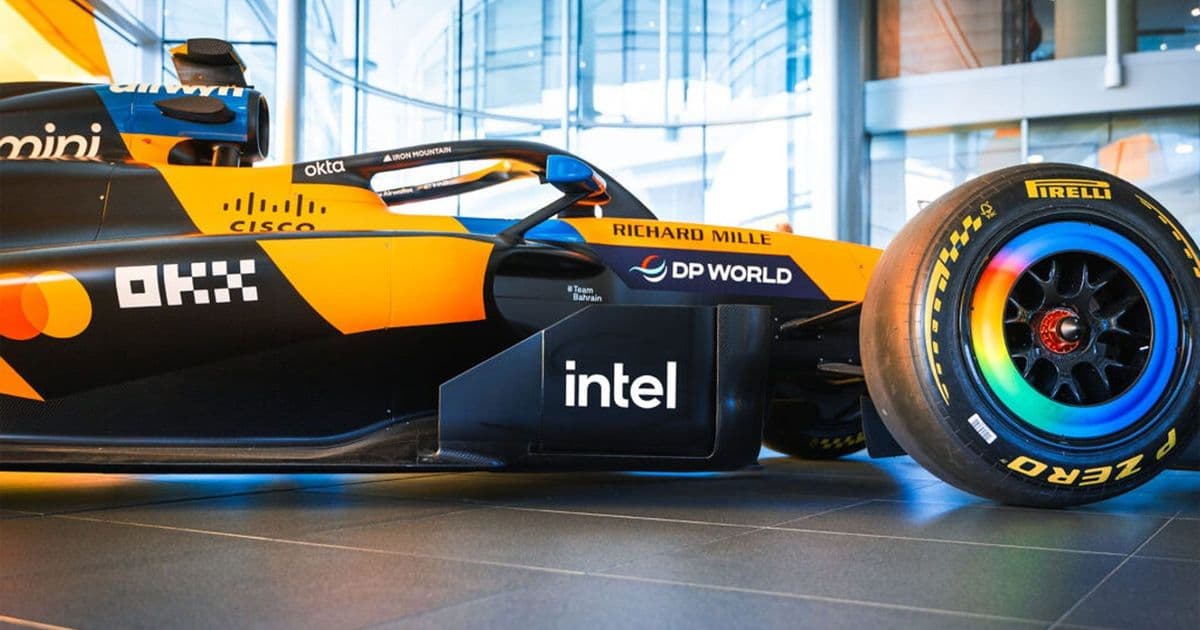
Intel has signed a multi‑year compute partnership with McLaren’s Formula 1, IndyCar and Sim Racing squads. The deal will see Xeon Scalable and Core Ultra processors powering CFD, vehicle‑dynamics, AI‑driven race‑strategy and post‑session analytics, positioning Intel against AMD’s long‑standing Mercedes‑AMG collaboration and highlighting supply‑chain pressures on high‑performance silicon.
Intel’s official compute partnership with McLaren Racing
Intel announced today that it will serve as the Official Compute Partner for the McLaren Mastercard Formula 1 Team, the Arrow McLaren IndyCar Team, and the McLaren F1 Sim Racing Team. The agreement covers a multi‑year rollout of Intel’s latest Xeon Scalable and Core Ultra processors across the team’s design, simulation and race‑operations pipelines.
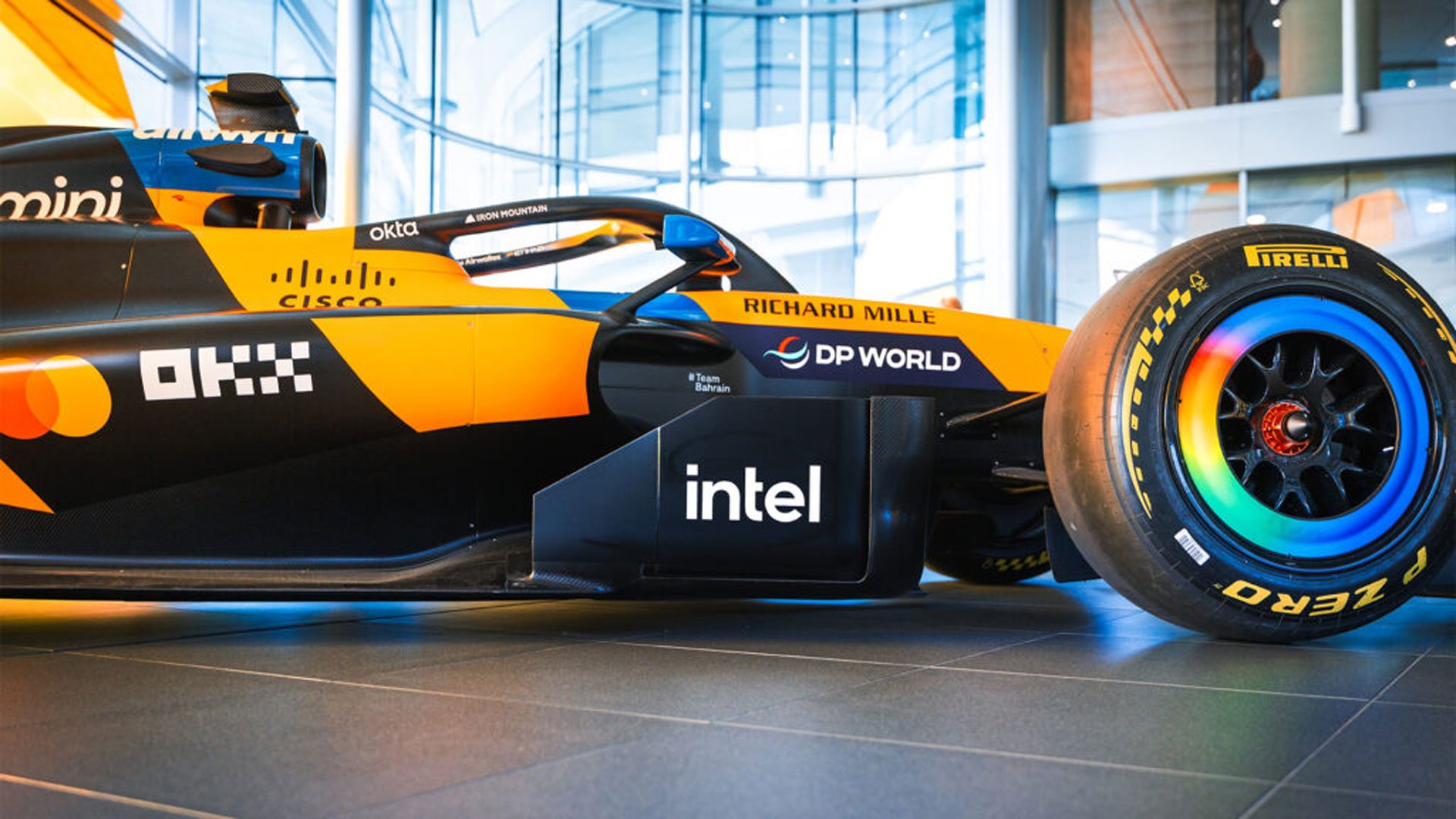 Image credit: Intel
The partnership pits Intel directly against AMD, which continues to supply EPYC and Threadripper silicon to the Mercedes‑AMG Petronas squad. Both manufacturers are now betting that their high‑performance compute stacks can translate into lap‑time advantages on circuits where a fraction of a second decides the podium.
Technical specifications driving the collaboration
| Application | Intel silicon | Process node | Key performance figures |
|---|---|---|---|
| Computational Fluid Dynamics (CFD) & aerodynamic analysis | Xeon Scalable 8475 (Ice Lake) | 10 nm Enhanced SuperFin | Up to 64 cores, 2.6 GHz base, 3.8 GHz boost, 2 TB DDR5 bandwidth per socket |
| Vehicle‑dynamics simulation (multibody, tire‑model) | Xeon Scalable 8480 (Sapphire Rapids) | Intel 7 (10 nm) | 56 cores, 3.2 GHz base, AVX‑512 × 2, 1.8 TB/s memory bandwidth |
| Real‑time race‑strategy analytics (AI inference, edge compute) | Core Ultra 145 H (Meteor Lake) | Intel 7 (10 nm) | 8‑core hybrid (4 P‑cores + 4 E‑cores), 5.0 GHz boost, integrated Xe‑LP GPU, LPDDR5X‑5600 |
| Post‑session data mining (large‑scale ML) | Xeon Scalable 8480 + Habana Gaudi 2 accelerators | Intel 7 + 7 nm | Up to 256 TOPS AI throughput per accelerator |
Why these nodes matter
- The Intel 7 process delivers a 15‑20 % performance‑per‑watt uplift over the previous 10 nm SuperFin, crucial for CFD workloads that push memory bandwidth to the limit.
- Xeon Scalable Sapphire Rapids introduces Advanced Matrix Extensions (AMX), which accelerate tensor operations used in CFD‑based surrogate models and AI‑enhanced turbulence prediction.
- Core Ultra’s hybrid architecture reduces latency for edge‑compute tasks such as on‑track telemetry ingestion, where sub‑millisecond decision cycles are required.
- Integration of Habana Gaudi 2 AI accelerators aligns with Intel’s strategy to bundle CPU‑AI compute, allowing McLaren engineers to run deep‑learning inference on the same chassis that houses the CFD solvers.
Supply‑chain context and market implications
Production capacity constraints
The announcement arrives while Intel’s Intel 7 fab output is still ramping after the recent Fab 42 expansion in Arizona. Quarterly reports show a 12 % YoY increase in wafer starts for the 7 nm node, but the fab is already allocated to client‑PC and cloud‑server orders. To meet McLaren’s demand for dozens of high‑density compute nodes, Intel will likely tap its Fab 24 (Ireland) for Xeon Scalable production, a move that could tighten the already‑strained DDR5‑5600 memory market.
Competitive positioning against AMD
AMD’s EPYC 9004 (Genoa) processors, built on TSMC’s 5 nm, have been the backbone of Mercedes‑AMG’s simulation fleet since 2020. Intel’s approach differs by emphasizing on‑premise AI acceleration and a tighter integration between CPU and GPU (Xe‑LP). If Intel can demonstrate a 10‑15 % reduction in CFD turnaround time, it may shift the perception of “AI‑ready” silicon in motorsport toward the Intel ecosystem.
Ripple effects for enterprise customers
Both the automotive and high‑frequency‑trading sectors watch F1 as a benchmark for latency‑critical compute. Intel’s public commitment to deliver edge‑optimized AI for race‑strategy analytics signals a broader push to market Xe‑LP‑based solutions for real‑time decision engines in finance and autonomous‑vehicle platforms.
Potential bottlenecks
- Silicon shortage: While the overall semiconductor shortage has eased, the high‑bandwidth memory (HBM) modules required for the Gaudi 2 accelerators remain in limited supply.
- Software stack maturity: Intel’s oneAPI toolchain is still gaining parity with AMD’s ROCm ecosystem for CFD packages such as ANSYS Fluent and OpenFOAM. McLaren will need to invest in custom kernels to fully exploit AMX and Xe‑LP features.
What this means for the track
If the Xeon‑based CFD pipeline can shave 0.2 seconds off the aerodynamic iteration loop, McLaren could explore a larger design space within the same testing window, potentially translating to a 0.5‑1.0 % gain in lap time—a margin that often decides podium positions. The real‑time AI analytics powered by Core Ultra may also enable dynamic pit‑stop strategies, reacting to on‑track incidents with sub‑second precision.
Further reading
- Intel’s official press release: https://www.intel.com/content/www/us/en/newsroom/news/intel-mclaren-partnership.html
- OneAPI documentation for CFD acceleration: https://www.oneapi.com/docs/cfd
- AMD’s EPYC partnership with Mercedes‑AMG: https://www.amd.com/en/technologies/epyc-motorsport
The partnership underscores how high‑performance silicon, advanced process nodes, and AI‑centric architectures are becoming as decisive on the racetrack as they are in data‑center workloads.
Comments
Please log in or register to join the discussion