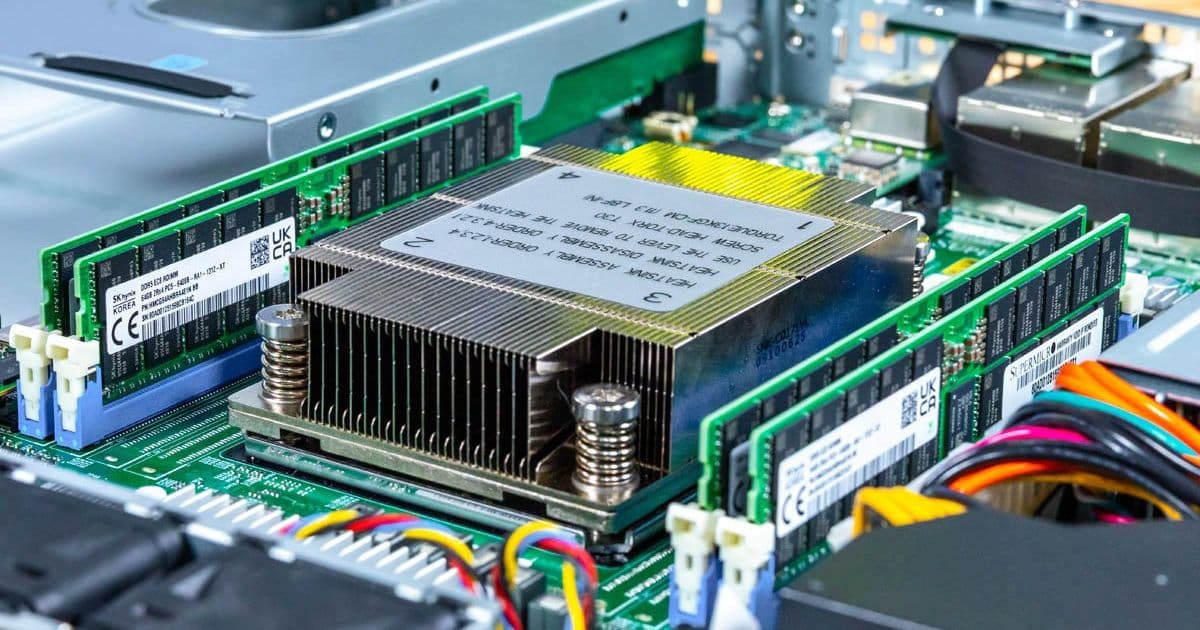
Intel's Xeon 6 SoC family expands with 72-core variants, 8-channel memory support, and enhanced accelerators, transforming the once-low-power Xeon D line into a high-performance powerhouse.
Intel Xeon 6 SoC Family Overview: Granite Rapids-D Gets a Major Upgrade
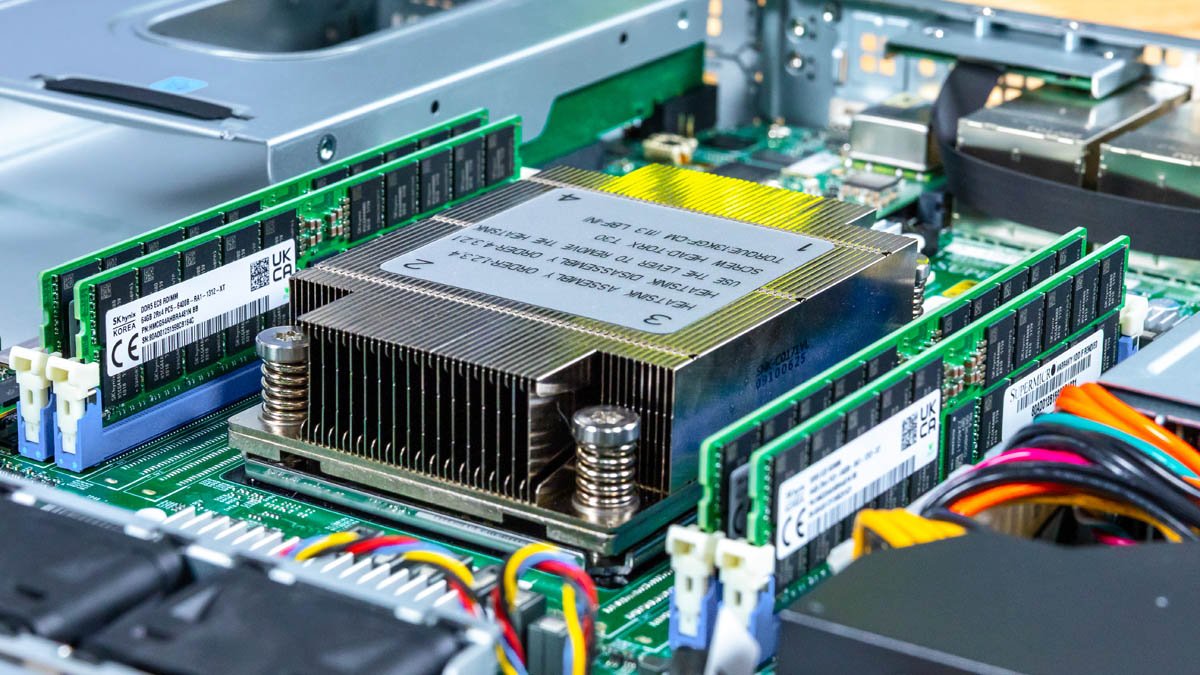
When Intel launched the Xeon 6 SoC family in 2025, many of us at STH immediately recognized it as the spiritual successor to the beloved Xeon D series. For those who've been following our coverage since the Broadwell-DE days, this is essentially Granite Rapids-D - the next evolution of Intel's SoC (System on Chip) approach to server processors.
A Brief History: From Low-Power to High-Performance
A decade ago, the Xeon D-1500 series was known for its sub-45-65W TDPs, making it perfect for edge computing, storage appliances, and other power-sensitive applications. Fast forward to today, and the Intel Xeon 6 SoC series has undergone a dramatic transformation.
The most striking change? Every SKU now exceeds 100W TDP. What was once a low-power family has evolved into a high-performance powerhouse with enhanced accelerators, faster networking, and significantly more cores.
The 2025 Launch: Foundation of the Current Lineup
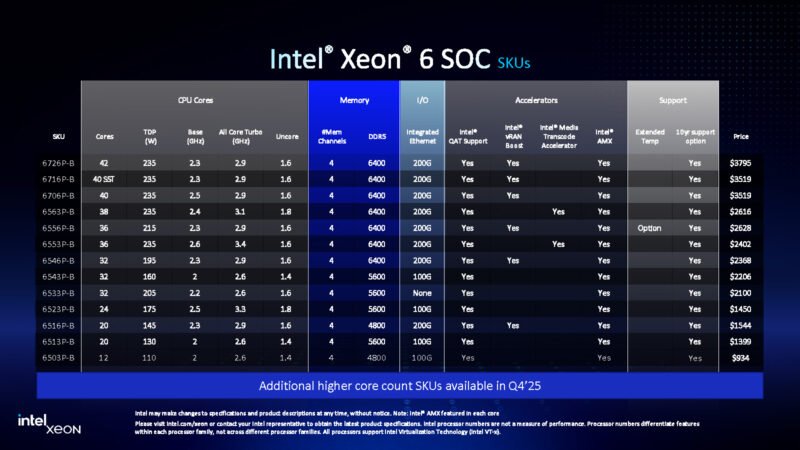
Let's start with the original Q1 2025 SKU list that kicked off the Xeon 6 SoC family:
- Up to 200GbE LAN speeds across the lineup
- Initial core counts starting from lower configurations
- Foundation accelerator suite including QAT, DLB, and DSA
This launch already showed Intel's commitment to expanding the Xeon D concept beyond its traditional boundaries.
2026 Refresh: Major Expansions
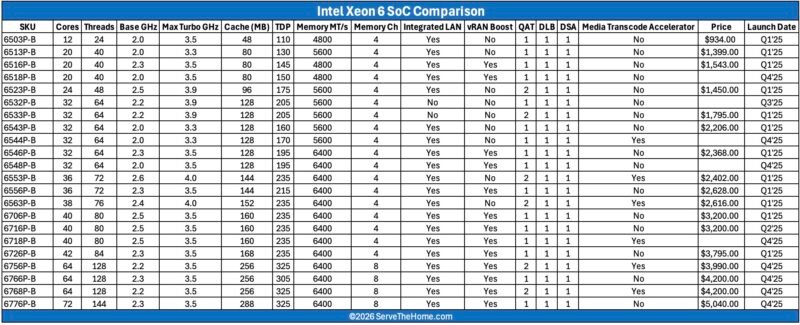
By Q1 2026, Intel significantly broadened the family:
- 72-core variants - doubling down on core density
- 8-channel memory support - a substantial memory bandwidth increase
- Enhanced accelerator options - more flexibility for specialized workloads
This refresh demonstrates Intel's strategy to compete more aggressively in the high-core-count server market while maintaining the SoC advantages.
The Accelerator Story: Built-in Intelligence
One of the most compelling aspects of the Xeon 6 SoC family is its comprehensive accelerator suite. Let's break down what's available:
Intel vRAN Boost: 5G's New Best Friend
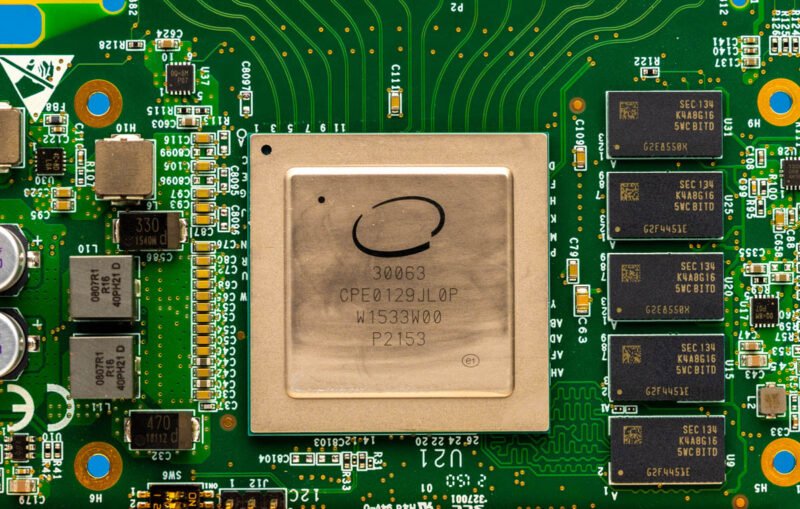
The vRAN (Virtual Radio Access Network) Boost is particularly fascinating. If you saw our recent coverage of the Silicom P3IMB-M-P2 Intel ACC100 card, you witnessed the precursor technology.
What makes vRAN Boost special?
- Previously required a separate eASIC accelerator card
- Now integrated directly into the SoC
- Specifically optimized for 5G operators
- Reduces latency and power consumption for vRAN workloads
This integration represents Intel's understanding that 5G infrastructure demands are growing rapidly, and built-in acceleration provides significant advantages over add-in cards.
Media Transcode Accelerator: The Hidden Gem
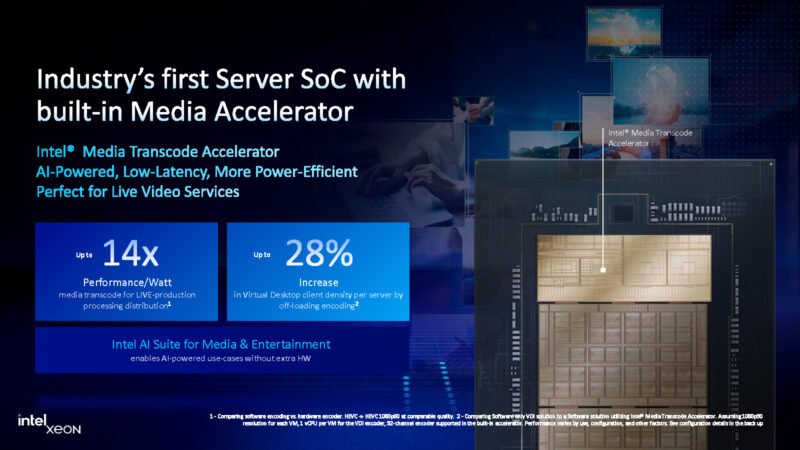
For the STH team, the Media Transcode Accelerator was particularly exciting. In the embedded space, video analytics, surveillance, and media processing are massive applications.
Key considerations:
- Not available on every SKU (check specifications carefully)
- Perfect for NVRs, video surveillance, and streaming applications
- Can significantly offload CPU-intensive video processing
- Reduces power consumption compared to software-only transcoding
This accelerator shows Intel's attention to vertical markets where Xeon D has traditionally excelled.
QAT, DLB, and DSA: The Core Accelerators
Intel maintains consistency with at least one QAT (QuickAssist Technology) accelerator on all SKUs, with some models featuring two. Additionally:
- DLB (Data Streaming Library) - Optimized for data movement and networking
- DSA (Data Streaming Accelerator) - Enhanced for storage and I/O operations
These accelerators have been covered extensively in our onboard Xeon acceleration analyses, and they continue to provide significant performance benefits for their target workloads.
Market Positioning: Higher Prices, Higher Performance
One cannot discuss the Xeon 6 SoC without addressing the elephant in the room: pricing has increased substantially across generations.
This price creep has fundamentally changed the market these chips target:
- Traditional Xeon D applications (edge, storage, embedded) now face cost-benefit analysis
- New opportunities in 5G infrastructure, media processing, and high-density computing
- Competition with standard Xeon Scalable processors in some scenarios
What's Next for Xeon 6 SoC
If the cover image gives it away, we have more in-depth coverage of the Intel Xeon 6 SoC series coming soon. The family continues to evolve, and we're seeing Intel push the boundaries of what an SoC can deliver.
Final Thoughts: A Transformed Family
The Intel Xeon 6 SoC series represents a fascinating case study in how product lines evolve. From humble low-power beginnings to a feature-rich, high-core-count family, Granite Rapids-D shows that Intel isn't abandoning the SoC concept - it's doubling down on it.
For system builders and data center operators, the question isn't whether Xeon 6 SoC is powerful enough - it clearly is. The real considerations are:
- Do you need the specific accelerators offered?
- Is the TDP acceptable for your cooling solution?
- Does the pricing align with your budget and performance requirements?
As always, we'll continue to benchmark, analyze, and provide the data you need to make informed decisions about these processors.
Stay tuned for our upcoming deep-dive reviews where we'll put these new SKUs through their paces and show you exactly what 72 cores and 8-channel memory can do in real-world scenarios.
Comments
Please log in or register to join the discussion