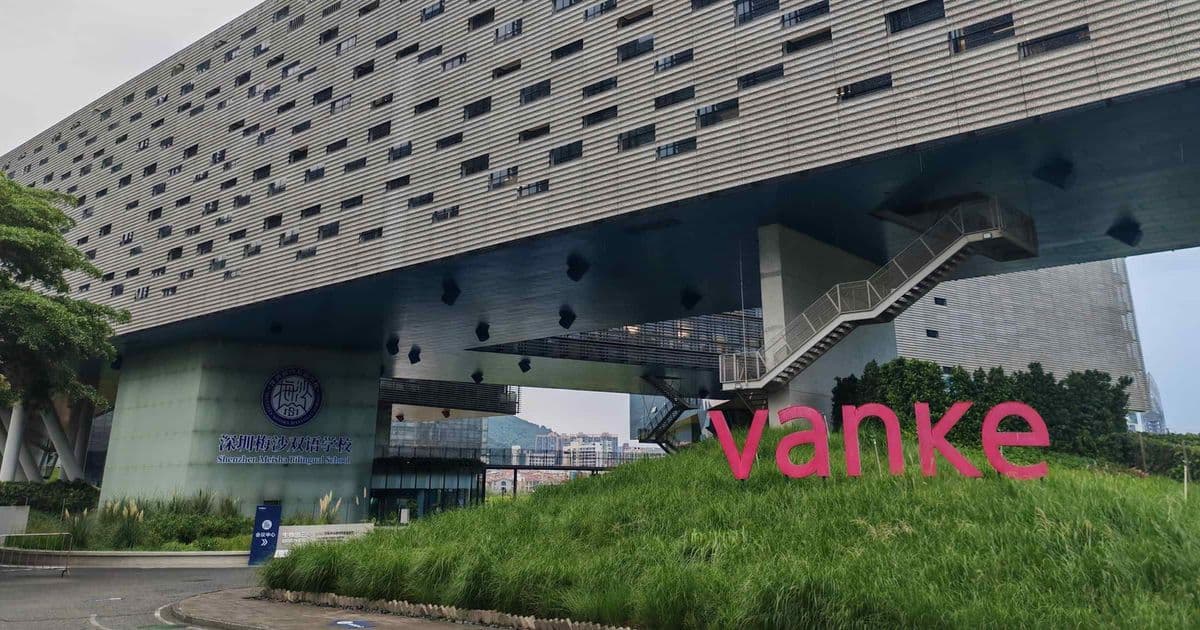
China Vanke secured shareholder approval for a new equity raise and a $339 million loan from Shenzhen Metro, but analysts warn that the state‑backed rescue may not be enough to stem the developer’s mounting losses and debt burden.
Business news
China Vanke, one of China’s largest residential developers, received shareholder approval on May 29 for a fresh share issuance and a syndicated loan package. The equity raise will add roughly RMB 30 billion (about $4.2 billion) to the balance sheet, while Shenzhen Metro agreed to lend RMB 2.4 billion (≈ $339 million) under a three‑year facility. The moves are part of a broader state‑led rescue plan aimed at stabilising Vanke after a year of record losses and a sharp decline in cash flow.
Market context
Vanke’s financial distress mirrors a wider credit crunch in China’s property sector. In 2025 the company posted a RMB 85 billion (≈ $11.8 billion) loss, driven by a slowdown in home sales, higher financing costs and a wave of project delays. Its debt‑to‑equity ratio sits above 200 %, well above the industry average of roughly 150 %. The firm’s exposure to Shenzhen Metro—its former parent’s urban‑rail subsidiary—has deepened after the metro operator recorded a RMB 40 billion loss in 2025, largely linked to Vanke‑related real‑estate write‑downs.
Investors remain wary for three reasons:
- Equity dilution – The new share issue will dilute existing shareholders by an estimated 12 %, reducing earnings per share at a time when profitability is already under pressure.
- State support limits – While the loan from Shenzhen Metro signals government backing, the amount covers only a fraction of Vanke’s cash‑flow gap. Analysts estimate the company needs RMB 70 billion in fresh financing to meet covenant requirements through 2026.
- Sector sentiment – Recent defaults by peers such as Country Garden and the ongoing Evergrande litigation have kept risk premiums high. Benchmark Chinese property bonds now yield 7‑8 %, compared with 4‑5 % before the 2022‑23 slowdown.
What it means
The approval of the equity and loan package shows that Vanke can still marshal state resources, but the scale of the support falls short of the capital needed to reverse its loss trajectory. For investors, the key implications are:
- Short‑term volatility – Expect continued share price swings as the market digests dilution and monitors Vanke’s ability to service the new debt. The stock has already slipped 15 % since the earnings release.
- Potential restructuring – If Vanke cannot close the financing gap, a more extensive restructuring—potentially involving asset sales or a formal bankruptcy filing—could become likely, echoing the path taken by other distressed developers.
- Policy signal – The state’s willingness to provide a loan, rather than a full capital injection, suggests a measured approach to bailouts. Policymakers appear to be testing the limits of support while encouraging market‑based solutions.
Overall, while the share issuance and Shenzhen Metro loan buy Vanke some time, the underlying debt burden and deteriorating earnings raise serious doubts about the effectiveness of the current turnaround strategy. Investors should watch cash‑flow forecasts, covenant compliance reports, and any further policy announcements for clues on whether the state will deepen its involvement or let market forces dictate the outcome.
Comments
Please log in or register to join the discussion