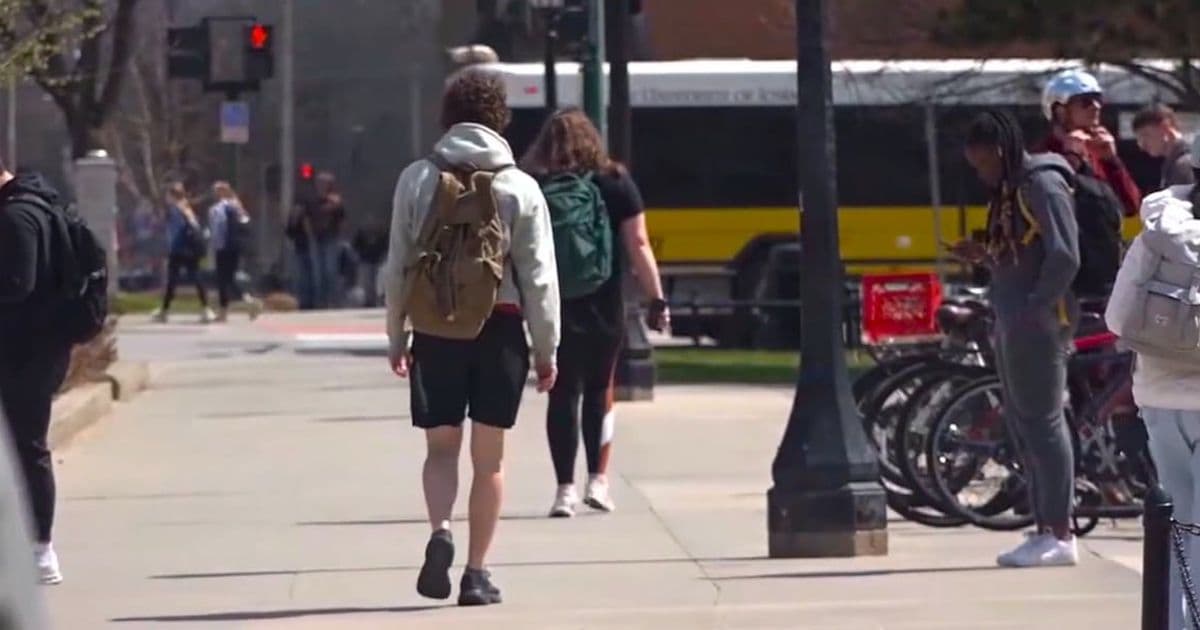
A provision added to Iowa’s 2028 budget would force students at the University of Iowa, Iowa State, and UNI to complete six credit hours of courses tied to the state‑run Center for Intellectual Freedom or American History/Government. While Republicans frame the move as a safeguard against perceived liberal bias, enrollment data shows minimal interest, and Democrats warn of added costs and academic freedom concerns.
A policy push that turns a modest campus program into a graduation prerequisite
During a marathon 35‑hour session, Iowa’s Republican‑controlled legislature slipped a clause into the state’s multi‑billion‑dollar budget bill that would make six credit hours of Center for Intellectual Freedom (CIF) courses a graduation requirement for undergraduates at the University of Iowa. The same provision extends to Iowa State University and the University of Northern Iowa, where students must instead complete six hours of American History and Government courses approved by each campus. The measure now sits on Governor Kim Reynolds’ desk, and Democrats are already calling for a line‑item veto.
Evidence of a top‑down mandate despite tepid demand
Low enrollment numbers – The nonprofit Common Sense Institute, which tracks the CIF’s early performance, reported that the inaugural class attracted only eight students. The center, created by the Iowa Board of Regents with a $1 million seed grant, was intended as a response to what state Republicans describe as “liberal indoctrination” on college campuses.
Legislative intent – The language added to the budget bill explicitly ties the six‑credit requirement to graduation eligibility. If the provision survives, students who opt out of the CIF or the designated history/government courses will be unable to earn a degree, effectively turning a voluntary program into a compulsory curriculum component.
Financial implications – Sen. Janet Petersen (D‑Des Moines) highlighted that the mandated courses will appear on students’ tuition bills, adding to the already high cost of a four‑year degree. The CIF’s tuition rates have not been publicly disclosed, but the requirement would increase the total credit load for every undergraduate.
Counter‑perspectives and the broader context
Academic freedom concerns – Critics argue that forcing a specific ideological curriculum infringes on the principle that universities should determine their own academic requirements. The move echoes similar mandates in other states, where legislatures have sought to insert “civic‑education” or “American‑values” courses into degree programs.
Potential for unintended consequences – Mandating enrollment could backfire by breeding resentment among students who feel their choices are being limited. Low voluntary participation suggests limited perceived value; making the courses compulsory may simply label them as a bureaucratic hurdle rather than a meaningful educational experience.
Cost‑benefit question – While Republicans frame the CIF as a protective measure against bias, the $1 million start‑up cost plus any additional tuition revenue must be weighed against the modest enrollment and the risk of diverting resources from other academic priorities.
Alternative approaches – Some education policy analysts propose that rather than imposing a blanket credit requirement, universities could incentivize participation through scholarships or integrate critical‑thinking modules into existing curricula. This would preserve student choice while still addressing concerns about ideological balance.
What’s next?
The provision is slated to take effect in July 2028, giving campuses a few years to decide which courses will satisfy the requirement. Governor Reynolds has not indicated whether she will sign the bill as‑is, veto it, or apply a line‑item veto to strip the mandate. The coming weeks are likely to see intensified lobbying from both sides: student groups warning of forced ideology, and conservative advocacy organizations urging the governor to let the requirement stand.
Bottom line: Iowa’s latest legislative move transforms a fledgling, low‑interest program into a de‑facto graduation hurdle. While supporters see it as a necessary guard against campus bias, the data on enrollment and the vocal opposition from Democrats suggest the policy could raise costs, spark campus backlash, and reignite the national debate over the role of state government in shaping university curricula.
Comments
Please log in or register to join the discussion