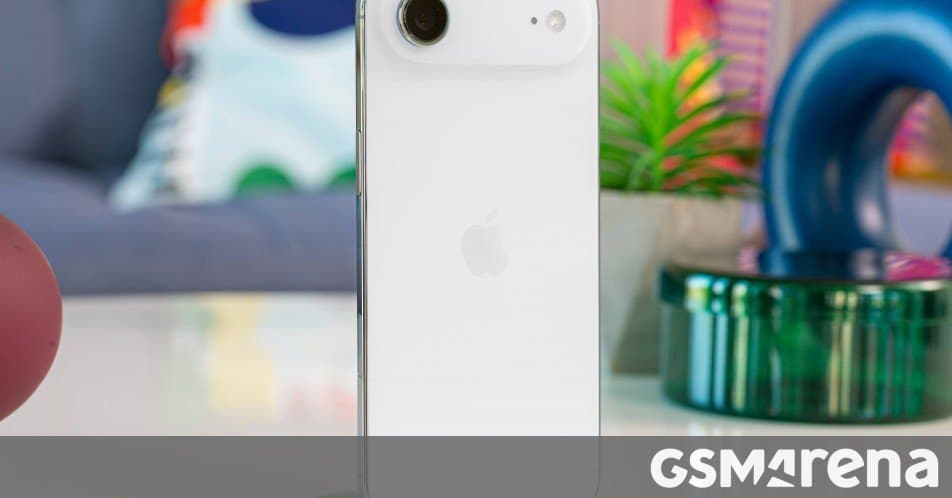
New data reveals the iPhone Air is outselling its Plus predecessor by a wide margin, validating Apple's bet on ultra-thin design and its in-house modem technology.
According to a new report from Ookla, the iPhone Air is about twice as successful as the Plus model it replaced, namely the iPhone 16 Plus. The iPhone Air made up 6.8% of the sales of the iPhone 17 generation, whereas the iPhone 16 Plus only made up 2.9%.
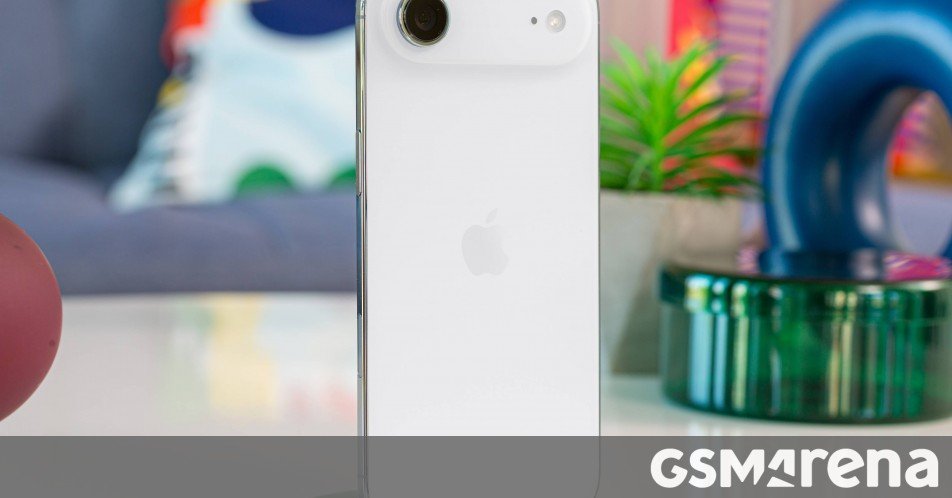
This shift in consumer preference represents a significant validation of Apple's design philosophy with the iPhone Air. While the iPhone 16 Plus was essentially a larger version of the standard iPhone 16, the Air offers something genuinely different - an ultra-thin form factor that stands out in a market where most flagship phones have converged toward similar designs.
The numbers tell an interesting story. The iPhone 17 Air achieved 6.8% market penetration within its generation, compared to the iPhone 16 Plus's 2.9%. This 134% increase in relative success suggests that consumers are responding positively to Apple's thinnest iPhone ever, which measures just 5.1mm in thickness.
What's particularly noteworthy is that the iPhone 17 as a whole is also performing better than its predecessor, capturing 7% of the overall market compared to the iPhone 16's 5.9%. This overall growth, combined with the Air's specific success, indicates that Apple's 2025 lineup is resonating with consumers more effectively than the previous generation.
However, this success story comes with an interesting twist. As the Air and standard iPhone 17 gain traction, the Pro models are seeing their market share decrease compared to the iPhone 16 Pro and Pro Max. The Pro model experienced the biggest drop, suggesting that some consumers who might have opted for the premium model are instead choosing the Air. This could indicate that for many users, the Air's unique selling proposition - its remarkable thinness - provides sufficient differentiation without the need for Pro-level features.
Beyond sales figures, the report highlights another significant development: Apple's C1X modem, featured in the iPhone Air, has "reached a critical maturity point." According to Ookla's analysis, this in-house modem has shifted the conversation from a performance gap versus Qualcomm's offerings to "a strategic equalizer in real-world performance."
When compared to Qualcomm's X80 modem, the C1X achieves very close download speeds across the globe. This represents a marked improvement over the C1 modem that debuted on the iPhone 16e, which could only achieve much slower download speeds. For Apple, this modem advancement is crucial as it reduces dependence on third-party suppliers and potentially improves profit margins on its devices.
The iPhone Air's success extends beyond just Apple's ecosystem. In the US market, the Air outsamples Samsung's Galaxy S25 Edge by a 3-to-1 margin. Interestingly, the S25 Edge's penetration in the UK and Germany remains minimal, with less than 1% market share. This suggests that while there's appetite for ultra-thin devices, Apple's execution with the Air has been more compelling than Samsung's approach with the Edge.
Pricing for the iPhone Air starts at €746.13 for the 256GB model and €934.00 for the 512GB variant, positioning it as a premium offering that's more accessible than the Pro models while still delivering flagship performance.
The data, while not officially verified by Apple, comes from Speedtest by Ookla samples and provides valuable insight into real-world consumer behavior. If these trends continue, they could influence Apple's future product strategy, potentially leading to more emphasis on design differentiation rather than just incremental improvements in processing power or camera capabilities.
For the broader smartphone market, the iPhone Air's success suggests that there remains significant consumer interest in unique form factors and design innovations, even in an era where many phones have become increasingly similar in their core functionality. Apple's ability to create a device that's both thinner than competitors' offerings and commercially successful demonstrates that thoughtful design differentiation can still move the needle in a mature market.
The iPhone Air's performance validates Apple's willingness to take risks on unconventional designs. While the ultra-thin form factor comes with trade-offs - potentially including battery capacity and durability concerns - consumers appear willing to accept these compromises for the device's distinctive aesthetic and feel. This success could encourage other manufacturers to explore more radical design departures, potentially leading to greater diversity in smartphone form factors in the coming years.
Comments
Please log in or register to join the discussion