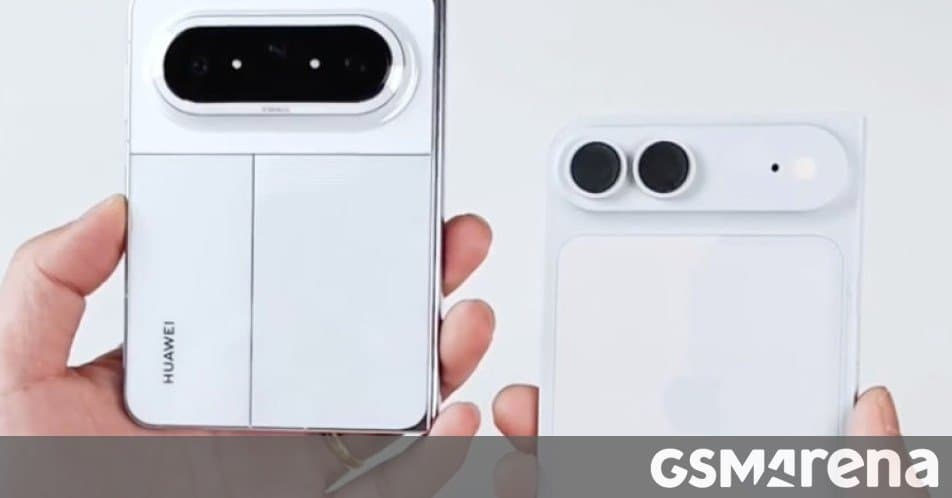
As Apple prepares to enter the foldable smartphone market with its iPhone Ultra, the device faces immediate competition from Huawei's Pura X Max. We examine how these two premium foldables stack up against each other and what this means for the evolving mobile landscape.
The smartphone industry is on the brink of a significant shift as Apple prepares to enter the foldable market with its iPhone Ultra (also known as iPhone Fold). While Apple hasn't officially announced the device yet, recent comparisons with Huawei's recently unveiled Pura X Max give us a valuable glimpse of what the competitive landscape will look like when Apple's device launches later this year.
The foldable smartphone category has evolved significantly since Samsung pioneered the concept several years ago. What we're witnessing now is a maturation of the form factor, with manufacturers converging on design philosophies while still maintaining distinct identities through software ecosystems and camera systems.
Design Dimensions: A Study in Convergence
According to leaked specifications, the iPhone Ultra measures 120.59 x 167.59 x 4.7 mm when unfolded, making it remarkably similar to the Huawei Pura X Max's dimensions of 120 x 166.5 x 5.2 mm. This proximity suggests that manufacturers are converging on what consumers consider the ideal size for a large foldable device.
The Samsung Galaxy Z Fold Wide, also expected this year, allegedly measures 123.9 x 164.4 x 4.3 mm when unfolded. While slightly different in proportions, it still falls within the same general size category, indicating a consensus around the "sweet spot" for foldable displays that balance usability with portability.
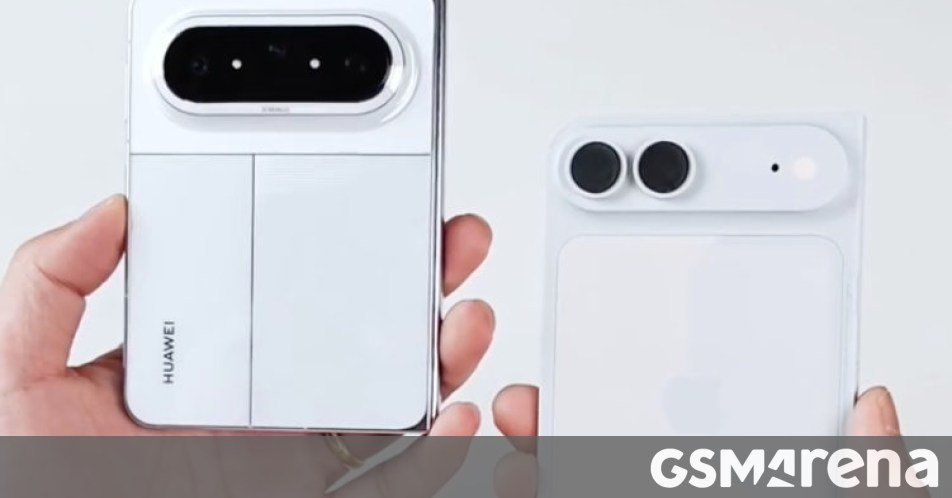
One of the most noticeable differences between the iPhone Ultra dummy unit and the Huawei Pura X Max is their camera island design. While Apple is expected to maintain its distinctive camera arrangement, Huawei has taken a different approach with the Pura X Max. This reflects each company's design philosophy and imaging priorities, with Apple typically focusing on computational photography and Huawei emphasizing hardware capabilities.
Operating Systems: Ecosystems at War
The iPhone Ultra will run on iOS, Apple's proprietary operating system known for its seamless integration with other Apple devices and services. This creates a strong ecosystem lock-in effect, as users with other Apple products will find the transition particularly smooth. The tight integration between hardware and software has been Apple's traditional strength, and this approach will likely extend to their foldable offering.
In contrast, the Huawei Pura X Max runs on HarmonyOS, Huawei's homegrown operating system that has evolved significantly since the company faced restrictions on using Google Mobile Services. HarmonyOS offers a different approach to multi-device integration, focusing on distributed capabilities across various devices. This represents Huawei's strategy to create its own ecosystem independent of Google's services, which has become increasingly important given the geopolitical challenges the company has faced.
The choice between these operating systems represents a fundamental decision for consumers. iOS offers familiarity, consistency, and access to Apple's extensive app ecosystem, while HarmonyOS provides an alternative path with different design principles and service integrations. For existing users of either ecosystem, the transition to a foldable device will be more natural within their current digital environment.
Market Implications: The Apple Effect
The entry of Apple into the foldable market represents a significant shift in the competitive dynamics. While Samsung has dominated this segment, Apple's entry is expected to drive innovation and potentially expand the market as consumers who have been waiting for an Apple foldable device finally have an option.
Historically, Apple's entry into new product categories has had a transformative effect. The iPhone revolutionized smartphones, the Apple Watch transformed wearables, and AirPods redefined wireless audio. The foldable market may see a similar pattern, with Apple bringing its signature attention to detail, user experience focus, and ecosystem integration to a category that has so far been more experimental than mainstream.
The comparison between the iPhone Ultra and Huawei Pura X Max highlights how the foldable market is maturing. We're seeing convergence in form factors while differentiation occurs in software ecosystems, camera systems, and brand positioning. This suggests that the future of foldables will be less about radical form factor experiments and more about perfecting the user experience within established design paradigms.
Future Outlook: What to Expect in 2026
As we move through 2026, the foldable market will likely see increased competition with multiple players offering compelling options. The iPhone Ultra's success will depend not just on its hardware specifications but on how well it integrates with Apple's existing ecosystem and whether it can deliver the user experience Apple customers have come to expect.
For consumers, this competition is beneficial as it drives innovation and potentially improves pricing. The choice between these devices will likely come down to ecosystem preference, brand loyalty, and specific feature priorities. Early adopters will have more options than ever before, with each manufacturer bringing their unique strengths to the foldable category.
The foldable smartphone segment represents one of the most significant evolutions in mobile technology in recent years, and with Apple's entry, we're about to see this market reach new heights of innovation and consumer adoption. The comparison between the iPhone Ultra and Huawei Pura X Max is just the beginning of what promises to be an exciting new chapter in smartphone design.
Comments
Please log in or register to join the discussion