A Nikkei Asia analysis argues that shifting alliances and heightened missile capabilities have created a fragile equilibrium in the Middle East, forcing regional powers to hedge against mutual annihilation while reshaping defense spending and energy markets.
Business news
Iran, Israel and several Arab states are now operating under what Vali Kaleji of the Institute for Iran‑Eurasia Studies calls a “balance of terror.” The term captures a situation in which each side possesses enough long‑range strike capability – primarily ballistic missiles and advanced air‑defence systems – to guarantee a retaliatory blow that would make any full‑scale conflict prohibitively costly. Recent developments, such as Iran’s successful test of the solid‑fuel Shahab‑12 missile (estimated range 1,500 km, payload 2,000 kg) and Israel’s deployment of the David’s Sling interceptor across the Gulf, illustrate how the region’s strategic calculus is now defined by deterrence rather than outright war.
Market context
Defense spending
The emerging deterrence framework is already reshaping defense budgets. According to the Stockholm International Peace Research Institute (SIPRI), Middle‑East military expenditures rose to $119 billion in 2025, up 7 % from the previous year. Iran allocated $12.5 billion to missile development, while Israel’s defense budget reached $24 billion, with a notable increase in anti‑missile programmes. Saudi Arabia and the United Arab Emirates together announced a combined $8 billion investment in next‑generation air‑defence platforms, signalling a willingness to match Iran’s growing strike envelope.
Energy markets
The deterrence dynamic also feeds into oil price volatility. Since the Shahab‑12 test, Brent crude has averaged $84 per barrel, a 4 % premium over the previous six‑month window, reflecting market anxiety over potential supply disruptions in the Strait of Hormuz. Analysts at BloombergNEF estimate that a brief closure of the strait would shave 2.5 million barrels per day from global supply, enough to push prices above $95 for a short period.
Trade flows
Regional trade routes are being re‑routed. The United Arab Emirates’ Jebel Ali port reported a 12 % decline in container volumes originating from Iran in Q1 2026, as shippers favor alternative corridors through Oman’s Salalah hub. Conversely, Israel’s Haifa port saw a 9 % increase in trans‑Mediterranean cargo, driven by heightened demand for high‑tech components linked to defence contracts.
What it means
- Higher capital allocation to missile and interception tech – Companies that supply solid‑fuel propellants, guidance systems and radar arrays stand to benefit. Firms such as Roketsan (Turkey) and Elbit Systems (Israel) have already posted double‑digit earnings growth, with Elbit reporting a 15 % rise in net profit to $1.2 billion in FY 2025.
- Energy price risk premium – Oil‑focused investors should factor a $3‑$5 per barrel risk premium into forward curves for the next 12‑18 months, especially for contracts that involve shipments through the Hormuz corridor.
- Supply‑chain realignment – Logistics providers with capabilities in the Gulf of Oman and Red Sea corridors are likely to capture market share from traditional Persian Gulf routes. Companies like DP World have announced a $250 million expansion of its Salalah terminal to accommodate the shift.
- Geopolitical hedging by multinational corporations – Multinationals with exposure to the region, from aerospace to petrochemicals, are revising scenario analyses. A recent risk‑assessment survey by McKinsey shows that 68 % of surveyed firms now include a “regional escalation” shock in their 2026‑2028 forecasts.
The “balance of terror” is less a stable peace than a high‑stakes stalemate that forces governments and businesses to allocate resources toward deterrence, risk mitigation and alternative logistics. As missile ranges extend and air‑defence networks become more sophisticated, the cost of miscalculation rises, and the market response is already evident in defense‑sector earnings, oil price premiums and shifting trade patterns.
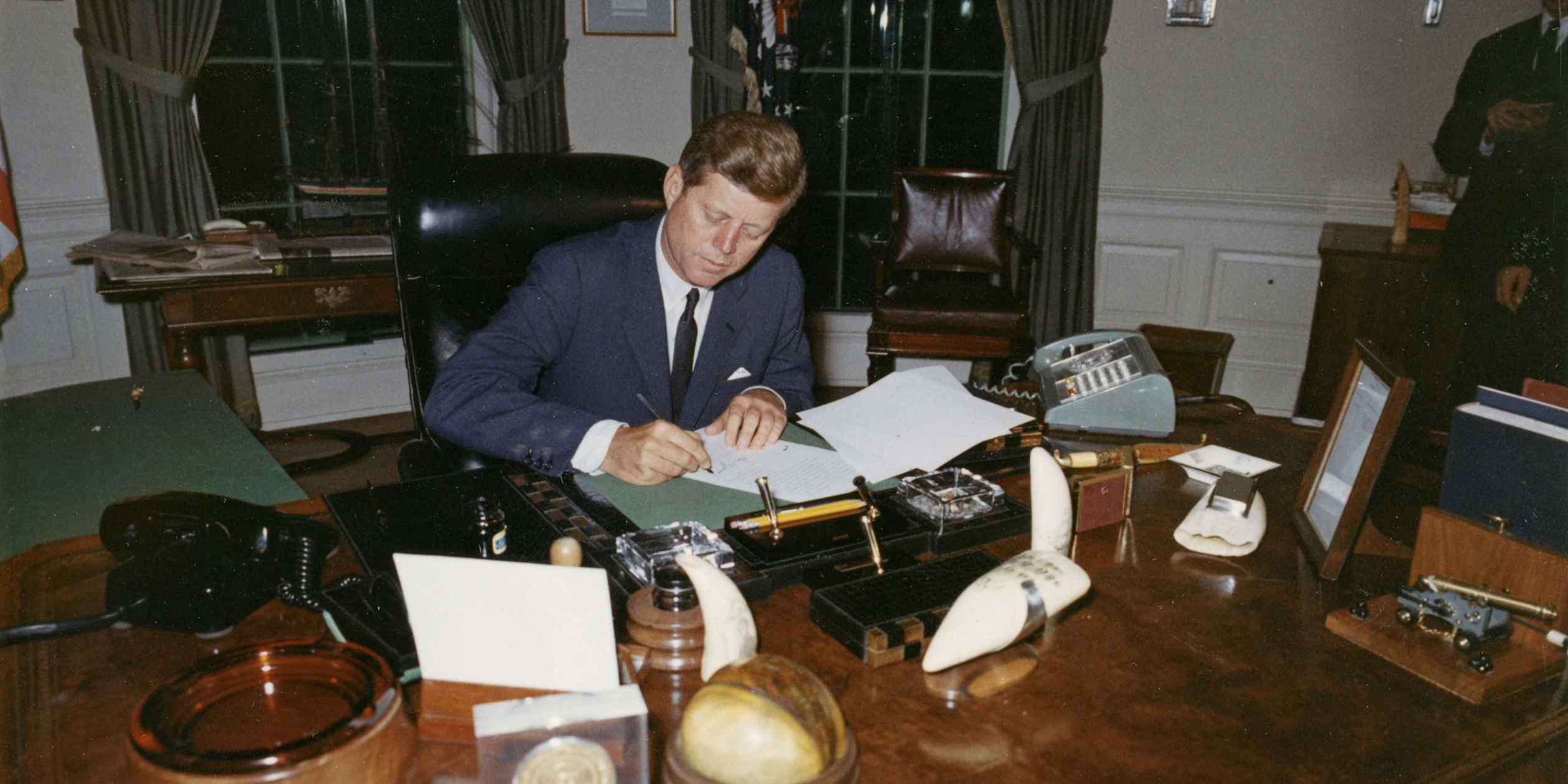
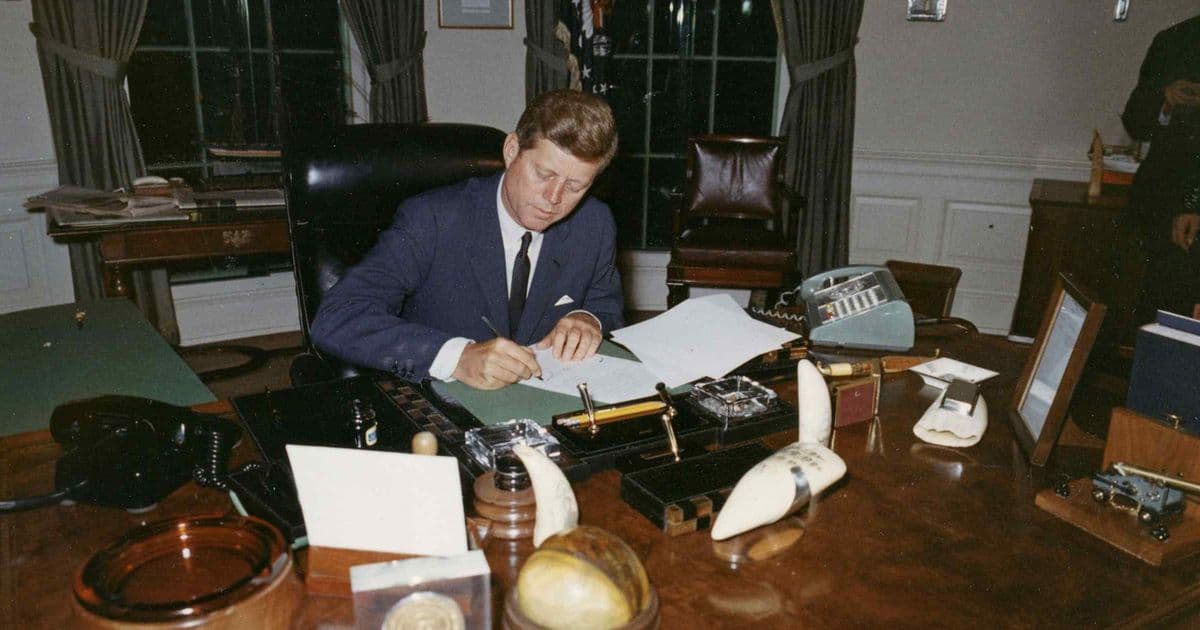
The image above shows former U.S. President John F. Kennedy signing a proclamation during the 1962 Cuban Missile Crisis, a historic reminder of how deterrence can dominate geopolitical calculations.
Comments
Please log in or register to join the discussion