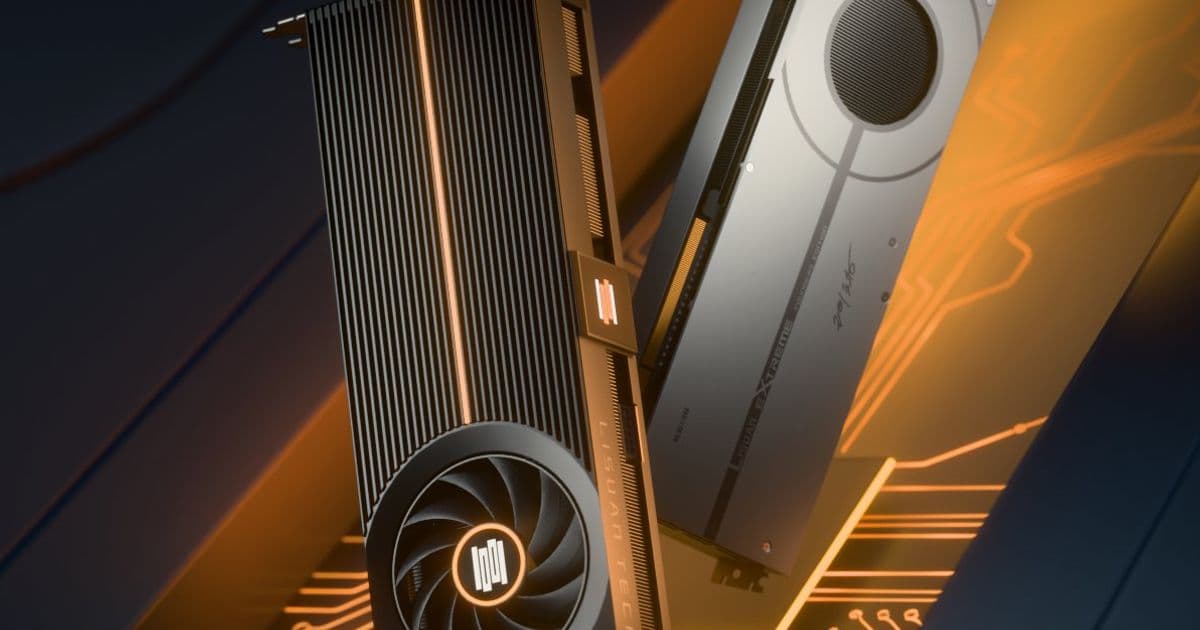
Independent benchmarks show Lisuan’s new 12 GB TrueGPU‑based LX 7G100 can run modern titles at 1080p, but its performance remains 30 % behind Nvidia’s RTX 4060 and Intel’s Arc B580, while driver polish and feature set lag behind the competition.
Lisuan Tech finally let an independent lab put the LX 7G100 through its paces. The card is the first Chinese GPU to ship with full DirectX 12 support and a 12 GB GDDR6 memory pool, built around the in‑house 7G106 silicon fabricated on a 6 nm process. Lisuan markets the board as the fastest home‑grown gaming solution, but real‑world numbers tell a more nuanced story.
What the benchmarks reveal
At 1080p resolution the LX 7G100 delivered the following average frame rates in a mixed suite of AAA and esports titles:
- Black Myth: Wukong – 56 FPS
- The Witcher 3: Wild Hunt – 57 FPS
- Elden Ring – 80 FPS
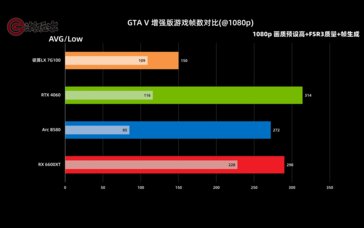
- Grand Theft Auto V – 150 FPS
- Dota 2 – 182 FPS
- Cyberpunk 2077 (FSR 3 Quality + frame generation) – 88 FPS
When stacked against the GeForce RTX 4060 and Intel Arc B580, the LX 7G100 falls roughly 30 % short on average. In titles that lack solid driver support, the gap widens dramatically; the RTX 4060 can push two to three times the frame rate in the same GTA V test scene.
Architecture and feature set
Lisuan’s TrueGPU architecture is a clean‑room design that avoids licensing fees associated with established IP. The 7G106 die houses 2 800 CUDA‑compatible cores (Lisuan’s own compute units) and a 192‑bit memory interface. While the chip can handle DirectX 12, it does not include hardware ray tracing. Lisuan has hinted that ray‑tracing blocks will appear in a future generation, but the current model leaves it out entirely.
Driver experience and software tools
The most noticeable improvement over older Chinese GPUs is basic game compatibility. Most modern releases launch without the month‑long driver updates that plagued earlier cards. However, the driver suite feels unfinished:
- Stuttering and uneven frame pacing appear in longer sessions.
- The control panel offers only a handful of sliders; advanced tuning options are missing.
- Overclock settings revert to stock after each reboot, forcing users to re‑apply tweaks.
These quirks suggest that Lisuan’s software team is still catching up to the mature ecosystems of Nvidia, AMD, and Intel.
Pricing and market positioning
In the Chinese market the Founders Edition retails for about ¥3 500 (≈ $485). That price lands the LX 7G100 in direct competition with the RTX 4060, which regularly sells for $350‑$400 in the same region and delivers substantially higher performance plus ray‑tracing and DLSS support. For buyers who prioritize raw frame rates over feature set, the price gap is hard to justify.
Who might still consider the LX 7G100?
- Budget‑conscious gamers in regions where Nvidia and AMD cards are heavily taxed or scarce.
- Enthusiasts who want to experiment with a non‑Western GPU architecture and are comfortable tweaking drivers.
- Chinese OEMs looking for a domestic supply chain to avoid import restrictions.
For most mainstream gamers, especially those who value ray tracing, AI‑upscaled rendering, and a polished driver stack, the RTX 4060 or an equivalent AMD Radeon 6600 XT remains the safer bet.
Sources: Independent benchmark video by 潮玩客 on Bilibili, accompanying screenshots 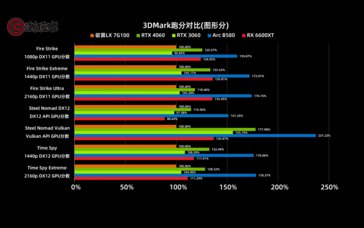 .
.
Comments
Please log in or register to join the discussion