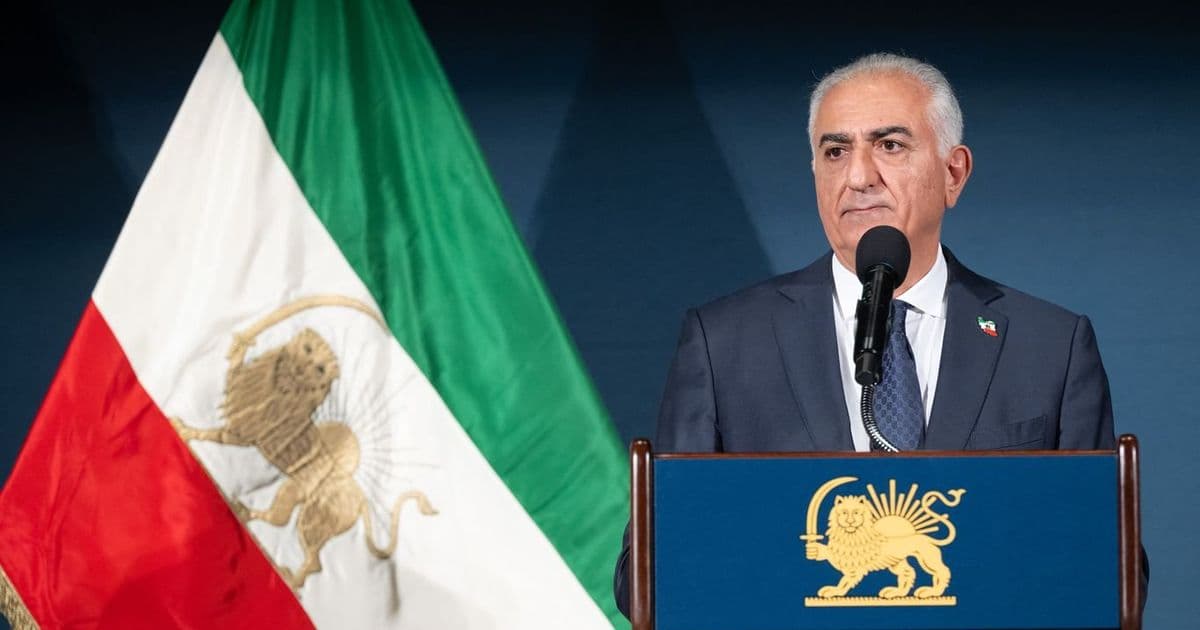
Reza Pahlavi, the exiled son of Iran's last shah, publicly urged former President Donald Trump to consider military action against the Islamic Republic, framing it as a necessary step to support internal opposition and prevent nuclear proliferation.
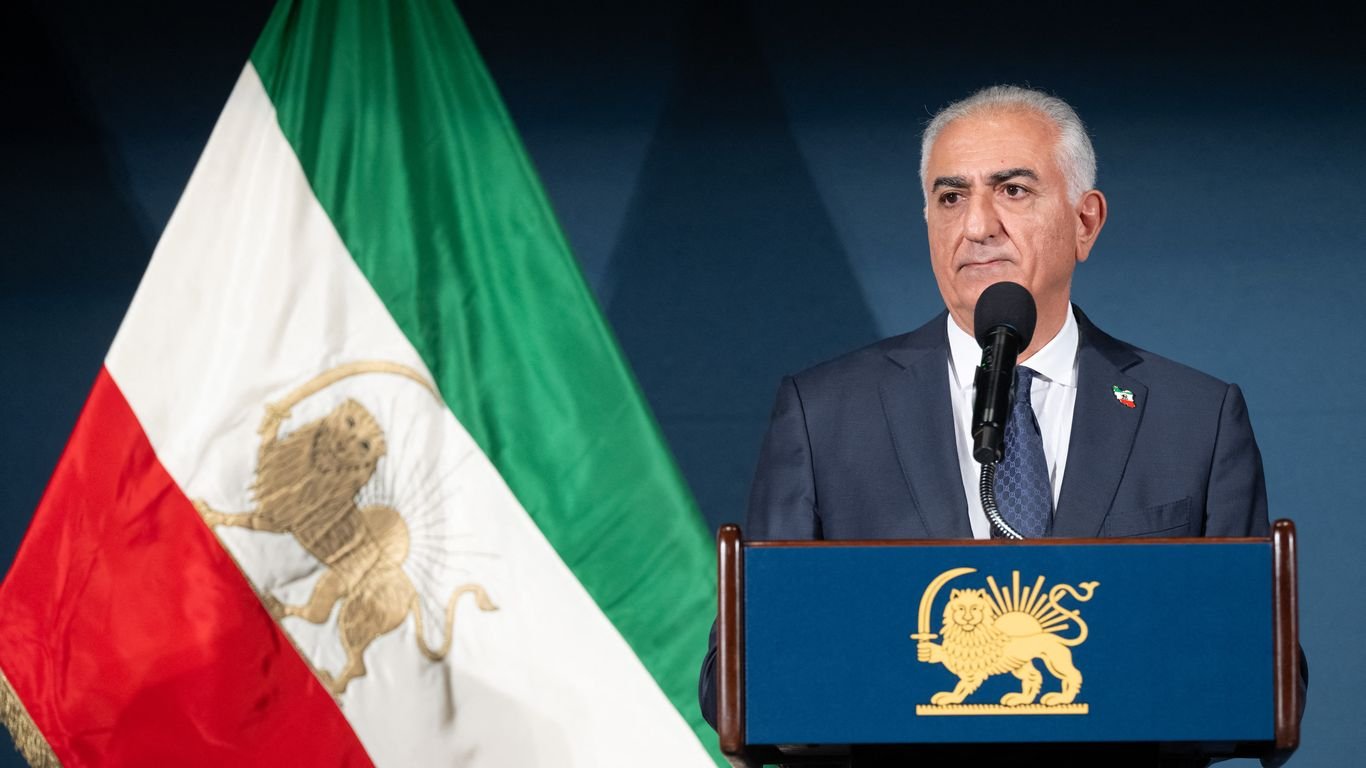
Reza Pahlavi, the exiled son of Iran's last monarch, Shah Mohammad Reza Pahlavi, made a direct appeal to former President Donald Trump, calling for a decisive military strike against the current Iranian regime. The statement, delivered during a press conference, positions the potential action as a critical intervention to bolster the Iranian people's resistance and curb the nation's nuclear ambitions.
Pahlavi's plea arrives amid a period of heightened regional instability and ongoing diplomatic friction between Washington and Tehran. The Islamic Republic continues to face significant internal dissent, exemplified by the widespread protests following the 2022 death of Mahsa Amini, which have been met with a severe government crackdown. Economically, Iran remains under substantial U.S. and international sanctions, which have crippled its oil exports and isolated its banking sector, contributing to high inflation and currency devaluation. The country's nuclear program, a persistent point of contention, continues to advance, with the International Atomic Energy Agency (IAEA) reporting reduced cooperation and increased enrichment activities.
Pahlavi's argument hinges on the idea that external pressure, specifically from a former U.S. president, could catalyze regime change. He contends that the current Iranian government is fundamentally unstable and that a targeted strike could create a strategic opening for internal opposition groups. This perspective aligns with a long-standing hawkish stance among some Iranian diaspora figures and certain U.S. policymakers who view military action as a viable alternative to diplomatic negotiations, which they argue have failed to curb Iran's regional influence or its nuclear program.
The strategic implications of such a move are profound and fraught with risk. A direct military strike on Iranian soil, particularly one perceived as endorsed by a former U.S. president, could trigger a significant escalation. Iran possesses a vast arsenal of ballistic missiles and a network of proxy forces across the Middle East, including Hezbollah in Lebanon, militias in Iraq and Syria, and the Houthis in Yemen. Retaliatory attacks could target U.S. allies in the Gulf, Israeli infrastructure, or American assets in the region, potentially igniting a broader conflict. Furthermore, any military action would likely shatter any remaining diplomatic channels, complicating future negotiations and potentially accelerating Iran's pursuit of a nuclear deterrent as a means of regime survival.
From a market perspective, the mere discussion of military action introduces volatility into energy markets. Iran is a major oil producer, and any disruption to its exports or the Strait of Hormuz—a critical chokepoint for global oil shipments—would likely cause a sharp spike in crude prices. This would have ripple effects on global inflation and economic growth. Tech sectors, particularly those reliant on stable supply chains and predictable geopolitical environments, would also face uncertainty. The cybersecurity domain would be especially alert, as Iran has a history of conducting sophisticated cyber operations against perceived adversaries, including U.S. infrastructure and financial systems.
The appeal also highlights the complex role of exiled political figures in international affairs. Pahlavi, who has lived in the United States since his family's 1979 overthrow, represents a historical lineage but holds no formal power. His advocacy is part of a broader effort to keep the issue of regime change in Iran on the U.S. political agenda, particularly ahead of or during election cycles. However, his call for a strike underscores the deep divisions within the Iranian opposition itself, with many activists and groups advocating for internal, popular revolution rather than foreign military intervention, which they fear could lead to greater suffering and nationalist backlash.
Ultimately, Pahlavi's statement is less a practical policy proposal and more a political signal, aimed at influencing the discourse in Washington. It reflects a persistent belief among some that the Iranian regime is vulnerable and that a decisive external action could precipitate its collapse. Yet, the potential costs—regional war, humanitarian crisis, and global economic disruption—remain immense, making such a scenario a subject of intense debate among security analysts and policymakers. The situation underscores the ongoing challenge of addressing Iran's nuclear program and regional behavior through a combination of diplomacy, economic pressure, and the ever-present specter of military force.
Comments
Please log in or register to join the discussion