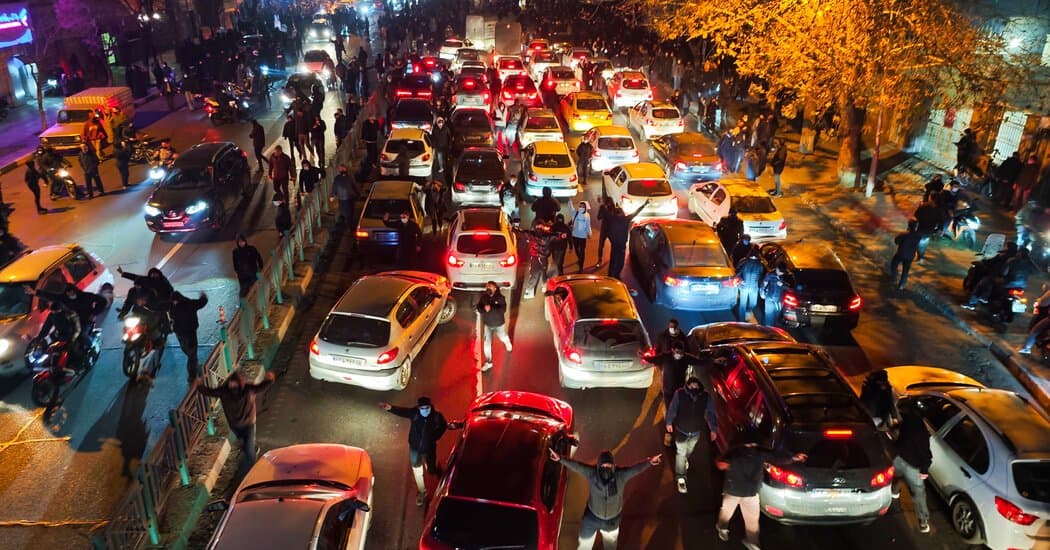
A new report details how Iran has built a comprehensive digital surveillance apparatus spanning communications networks, enabling authorities to identify and locate protesters with unprecedented efficiency.
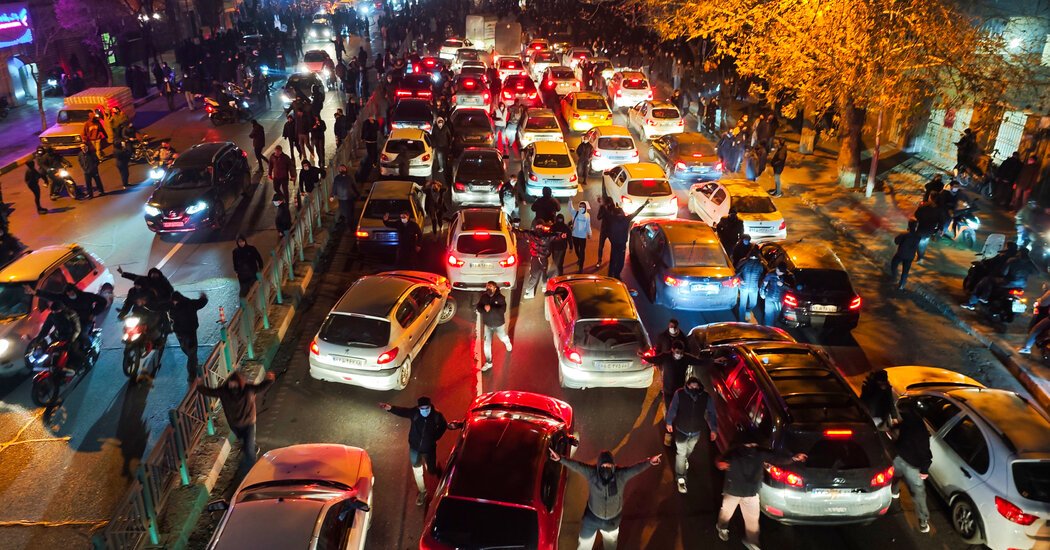
Iran's government has developed an integrated surveillance system that merges telecommunications monitoring, internet activity tracking, and biometric identification into a unified tool for suppressing dissent, according to research published this week. This infrastructure, described in depth by New York Times investigators, represents one of the world's most sophisticated state surveillance operations outside China and Russia, and has been actively deployed against protesters following recent civil unrest.
The system aggregates data from multiple sources including mobile network operators, internet service providers, facial recognition cameras, and national ID databases. When protesters took to the streets in late 2025 following economic reforms, authorities reportedly used this integrated platform to correlate anonymous social media posts with mobile device locations, SIM card registrations, and public transportation records. Within hours of protests emerging in multiple cities, security forces identified participants by cross-referencing protest footage with national biometric databases containing facial images tied to government-issued identification cards.
Technical analysis indicates Iran's surveillance ecosystem relies heavily on deep packet inspection technology installed at internet exchange points, allowing real-time monitoring of encrypted communications through TLS interception. Mobile network data shows authorities selectively throttled connectivity during protests while maintaining surveillance capabilities through government-controlled networks. Evidence suggests Iran obtained key components from domestic technology firms like Rayan Rasaneh Gostar and Afra System Architecture, which have developed indigenous alternatives to Western surveillance tools under sanctions pressure.
Community response has highlighted concerns about the normalization of such capabilities. Digital rights advocates point to Iran's surveillance as part of a broader pattern where governments increasingly treat integrated monitoring as essential infrastructure. "What distinguishes Iran's approach is its holistic integration," notes Marwa Fatafta of Access Now. "Instead of siloed systems, they've created an architecture where telecom data automatically triggers law enforcement alerts when matching protest-related keywords or movement patterns."
Counter-perspectives emerge from Iranian officials who argue these measures maintain national stability. In parliamentary discussions, surveillance proponents cite thwarted terrorist plots and recovered stolen assets as justification. Some infrastructure engineers contend their work focuses on legitimate law enforcement applications like locating missing persons or combating drug trafficking, though internal documents reviewed by researchers show protest monitoring specifically listed as a design requirement.
The effectiveness appears limited by technical constraints. During peak unrest, protesters reportedly circumvented detection using mesh networking apps like Briar alongside burner phones purchased with cash. International tech companies face renewed pressure over potential indirect contributions; investigators found Iranian systems incorporate repurposed enterprise networking equipment originally exported for civilian use. As digital rights groups including the Electronic Frontier Foundation call for stricter export controls, the incident raises difficult questions about balancing legitimate network management with authoritarian misuse.
Ongoing evolution of Iran's capabilities suggests a troubling trajectory. Recent procurement documents indicate plans to incorporate AI-driven behavior analysis similar to China's social credit systems, aiming to automatically flag individuals based on movement patterns and communication habits. With protesters now facing harsher sentences based on digital evidence, the research underscores how surveillance infrastructure built for public safety can rapidly transform into a tool of political control.
Comments
Please log in or register to join the discussion