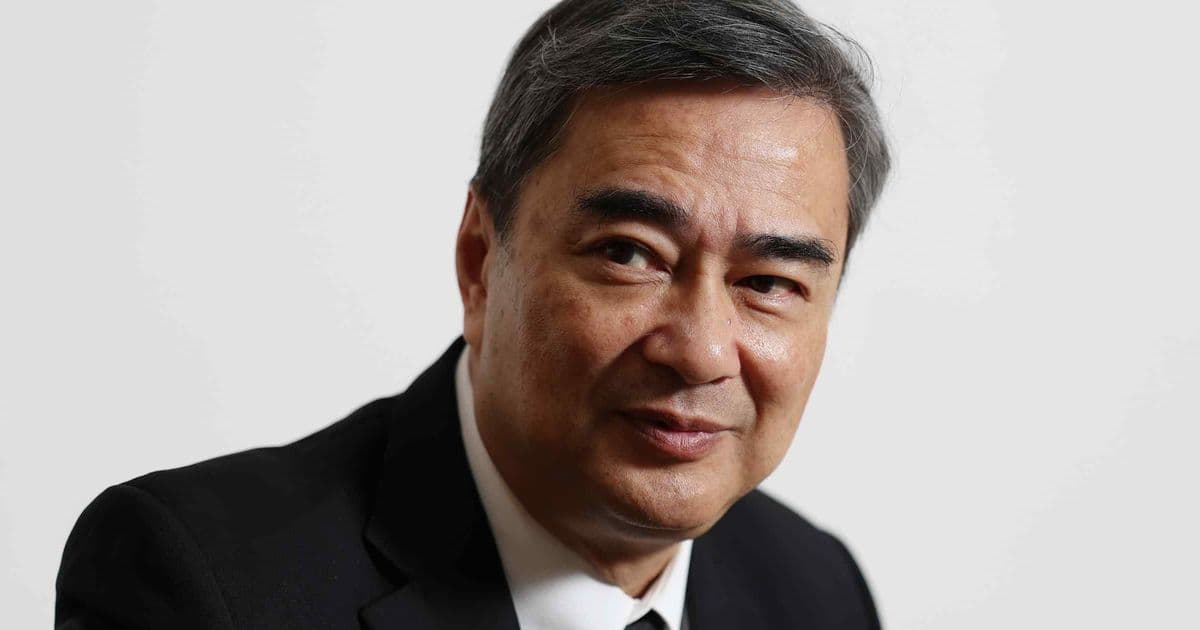
Former Thai PM calls for regional unity as oil prices surge and economic fallout spreads across Asia
The ongoing conflict between the United States and Iran has created unprecedented challenges for middle power nations across Asia, forcing countries to reconsider their diplomatic and economic strategies in an increasingly volatile global environment. Former Thai Prime Minister Abhisit Vejjajiva, in an interview with Nikkei Asia, emphasized that regional middle powers must coordinate their responses to mitigate the widespread disruptions caused by the war.
"Middle power nations in Asia and the rest of the world should come together to deal with disruptions caused by the U.S.-Iran war," stated Abhisit during the interview in Bangkok on April 3. "The repercussions from this conflict are not confined to the immediate combatants but threaten countries around the globe through economic instability and supply chain disruptions."
The economic impact has been substantial, with Brent crude oil prices breaching the $100 per barrel mark for the first time since 2023, according to market data. This surge has immediate consequences for Asian economies, particularly those with high energy dependencies and current account deficits.
The Asian Development Bank projects that developing Asia's growth will slow to 4.8% in 2026, down from 5.2% in 2025, directly attributable to the Iran war's impact on energy markets. Vietnam and Thailand are expected to suffer most among ASEAN-5 countries, with projected GDP reductions of 0.7% and 0.6% respectively, according to World Bank estimates.
"The oil price spike creates a dual challenge for Asian economies," explained Dr. Priya Sharma, an economist specializing in Asian markets at the National University of Singapore. "Countries face higher import bills for energy while simultaneously dealing with reduced export demand from key Western markets that are also feeling the economic strain."
Abhisit specifically urged ASEAN to adopt a more proactive stance in demonstrating regional solidarity. "ASEAN cannot remain passive in this crisis," he emphasized. "The region has demonstrated diplomatic capabilities in the past, and now is the time to leverage that experience to help stabilize the situation and protect our collective economic interests."
The conflict has already triggered significant capital flows in Asian financial markets. Singapore banks have reported substantial inflows of wealth from Middle Eastern and other international investors seeking safe-haven assets, with DBS reporting a 23% increase in high-net-worth client deposits from the Middle East in the first quarter of 2026.
"The safe-hen flows are creating both opportunities and challenges," noted Tan Su Shan, DBS's wealth management head. "While we're seeing increased deposits, we're also navigating heightened volatility in regional markets that requires sophisticated risk management strategies for our clients."
The defense and security sectors are also experiencing shifts. Japan has eased its arms export rules, leading to increased demand for Japanese military equipment in Southeast Asia. Meanwhile, Toyota supplier Denso recently withdrew a proposal to acquire Rohm Aerospace & Defense Industries, citing concerns about regulatory uncertainties in the current geopolitical climate.
Japan is also pursuing expanded warship exports, with the Mogami-class frigate serving as a template for potential international sales. The defense industry is positioning itself to capitalize on regional security concerns that have intensified since the Iran conflict began.
For businesses operating across Asia, the Iran war necessitates strategic reassessment. Supply chains that traverse the Strait of Hormuz, through which 20% of global oil trade passes, remain vulnerable to disruption. Companies are diversifying routes and inventory strategies, with many increasing safety stock levels by 15-25% according to recent supply chain surveys.
The energy transition is also accelerating in response to the oil price volatility. Asia's clean power transition is expected to reduce global fossil fuel consumption by an additional 3.2% through 2030, according to the International Energy Agency. Countries like Vietnam and Thailand are accelerating renewable energy projects to reduce their vulnerability to energy price shocks.
"The Iran conflict has become a catalyst for strategic recalibration across Asia," concluded Abhisit. "Middle powers have an opportunity to demonstrate diplomatic leadership while protecting their economic interests. The challenge lies in balancing regional solidarity with the diverse national interests that exist within ASEAN and the broader Asian community."
As the conflict continues to evolve, Asian middle powers face the complex task of navigating between major power competition while advancing their own economic and security agendas. The coming months will likely determine whether regional cooperation mechanisms can effectively address the multifaceted challenges stemming from this geopolitical crisis.
Comments
Please log in or register to join the discussion