Gas prices are surging in key Senate battleground states as Middle East conflict drives oil prices to their highest levels since 2022, creating political headaches for vulnerable incumbents.
Gas prices are surging in key Senate battleground states as Middle East conflict drives oil prices to their highest levels since 2022, creating political headaches for vulnerable incumbents.

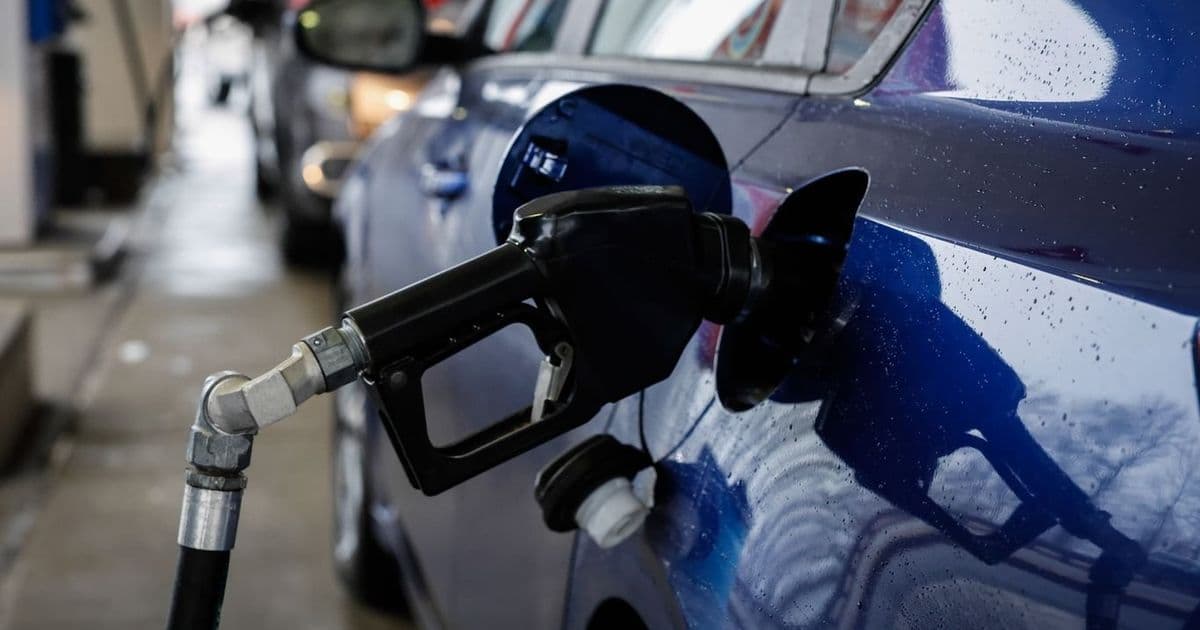
A driver fuels up at a Mobil gas station in Englewood Cliffs, N.J., on March 5, 2026, as oil prices head for their biggest weekly surge since 2022 amid Middle East war disruptions.
Photo: Kena Betancur/Bloomberg via Getty Images
The latest surge in gas prices is hitting hardest in the very states where control of the Senate hangs in the balance this November. As oil prices climb toward their highest levels since 2022, battleground states from Pennsylvania to Arizona are seeing pump prices jump by double digits in just the past month.
According to AAA data, the national average for regular gasoline has climbed to $4.12 per gallon, up from $3.45 a month ago. But the pain is far from evenly distributed. In Pennsylvania, a critical Senate battleground where incumbent Democrat Bob Casey faces a tough reelection fight, prices have jumped to an average of $4.28 per gallon. Ohio, another key state with an open Senate seat, is seeing similar spikes at $4.23 per gallon.
Arizona, where Democratic Senator Kyrsten Sinema is running for reelection as an independent, has seen prices surge to $4.35 per gallon - among the highest in the nation. Michigan, Nevada, and Wisconsin - all states with competitive Senate races - are experiencing comparable increases.
The timing couldn't be worse for Democrats defending their narrow Senate majority. With control of the chamber potentially coming down to a handful of races in these battleground states, the economic pain at the pump threatens to become a major political liability.
Energy analysts point to the ongoing conflict between Iran and Israel as the primary driver of the price surge. Iran's threats to close the Strait of Hormuz, through which roughly 20% of global oil supplies flow, have sent crude oil futures soaring. Brent crude, the international benchmark, has climbed above $92 per barrel for the first time since 2022.
"The market is pricing in a significant risk premium," said Sarah Emerson, president of Energy Security Analysis Inc. "Even the threat of supply disruptions in the Persian Gulf is enough to move prices dramatically."
The impact extends beyond just the cost of filling up. Higher fuel prices are feeding through to other sectors of the economy, from transportation to agriculture. Trucking companies are warning of potential rate increases, while farmers face higher costs for operating equipment.
For Senate candidates in battleground states, the price surge presents a difficult political challenge. Republicans are already hammering Democrats on inflation and economic issues, and rising gas prices provide a tangible example that voters encounter weekly.
"When people go to the gas station and see prices that are 50 cents or a dollar higher than they were a month ago, that's real economic pain," said Republican strategist Alex Conant. "It's the kind of thing that can shift voter sentiment quickly."
Democrats are attempting to counter by blaming oil companies for price gouging and pointing to their investments in renewable energy. But with the conflict showing no signs of abating, the near-term outlook for gas prices remains troubling.
The Energy Information Administration projects that U.S. households will spend an average of $2,350 on gasoline this year, up from $1,750 in 2024. For many families, especially in rural areas where driving distances are longer, these increases represent a significant budget strain.
Political analysts note that while gas prices are just one factor in voter decision-making, they can have an outsized psychological impact. "People see gas prices every week," said Democratic pollster Anna Greenberg. "It's a constant reminder of economic conditions, whether that's fair or not."
As the 2026 midterms approach, both parties are watching the trajectory of gas prices with growing concern. For Democrats defending Senate seats in battleground states, the hope is that prices will stabilize before voters head to the polls. For Republicans, the surge provides a potent economic argument against the party in power.
The intersection of international conflict, energy markets, and domestic politics has rarely been more volatile. In the coming months, the path of gas prices could well determine which party controls the Senate in the next Congress.
Comments
Please log in or register to join the discussion