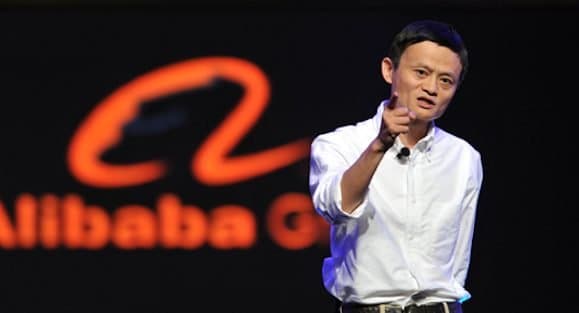
Alibaba founder Jack Ma argues that rural education must adapt to the AI era by teaching children how to use artificial intelligence effectively rather than debating its use, emphasizing creativity and critical thinking over rote memorization.
In a recent online address to a rural education charity foundation, Alibaba founder Jack Ma delivered a provocative message about the future of education in an AI-driven world. Rather than debating whether artificial intelligence should be integrated into classrooms, Ma argued that the conversation must shift to how we teach children to use AI effectively and thoughtfully.
Ma's comments come at a critical juncture for rural education systems worldwide, which often struggle with technological adoption and resource constraints. His perspective challenges the traditional approach to education that has dominated for decades, particularly in developing regions where standardized testing and memorization-based learning remain prevalent.
"In the AI era, the question is no longer whether to use AI, but how to teach our children to use it well," Ma stated during the event. This reframing represents a fundamental shift in how we think about technology's role in education. Rather than viewing AI as a threat to traditional learning or something to be cautiously approached, Ma positions it as an inevitable reality that requires new pedagogical strategies.
The billionaire entrepreneur's vision extends beyond mere technological integration. He argues that education systems must fundamentally reimagine their core purpose. "Education should no longer push students to compete with machines in calculation and memorisation, but instead nurture curiosity, imagination, creativity, judgment and collaboration," Ma explained.
This perspective directly challenges the factory-model education system that has dominated since the industrial revolution. In an era where AI can perform calculations and recall information far faster and more accurately than humans, Ma suggests that human education should focus on uniquely human capabilities that machines cannot easily replicate.
Ma identified what he sees as the true challenge of the AI age: "The real divide in the AI age is not a technological gap, but a gap in curiosity, imagination and creativity." This insight reframes the digital divide conversation. While access to technology remains important, Ma argues that the more significant gap lies in how people think, question, and create.
His vision for education emphasizes divergent thinking over convergent thinking. "It should not be about 1,000 students giving the same correct answer, but about learning to ask 10,000 good questions," Ma said. This approach would transform classrooms from spaces where students compete to provide the single right answer into environments where questioning, exploration, and multiple perspectives are valued.
The implications for rural education are particularly significant. Rural schools often face resource limitations that make technology adoption challenging, but Ma's framework suggests that the priority should be developing human capabilities that transcend technological access. A student with strong critical thinking skills and creativity can leverage whatever technological tools become available more effectively than one who has simply memorized facts.
Ma's comments also touch on the broader societal implications of AI adoption. By emphasizing judgment and collaboration alongside creativity, he acknowledges that AI literacy requires not just technical skills but ethical reasoning and social awareness. Students need to understand not just how to use AI tools, but when to use them, what their limitations are, and how to work alongside them effectively.
This educational philosophy aligns with broader trends in technology education globally. Many experts argue that future-ready skills include adaptability, complex problem-solving, and emotional intelligence—capabilities that complement rather than compete with artificial intelligence.
The challenge now lies in implementation. Rural education systems worldwide will need significant support to transition from traditional models to ones that emphasize the skills Ma describes. This includes teacher training, curriculum development, and assessment methods that value creativity and critical thinking over standardized test performance.
Ma's vision represents a pragmatic approach to an inevitable technological shift. Rather than resisting AI's integration into education or simply adding technology to existing systems, he calls for a fundamental reimagining of what education should accomplish in an age where machines can increasingly perform traditional academic tasks.
As AI continues to advance and become more integrated into daily life, the question of how to prepare the next generation becomes increasingly urgent. Jack Ma's prescription—focusing on uniquely human capabilities while teaching effective AI use—offers a framework that could help bridge the gap between technological advancement and human development, particularly in rural and underserved communities.
Comments
Please log in or register to join the discussion