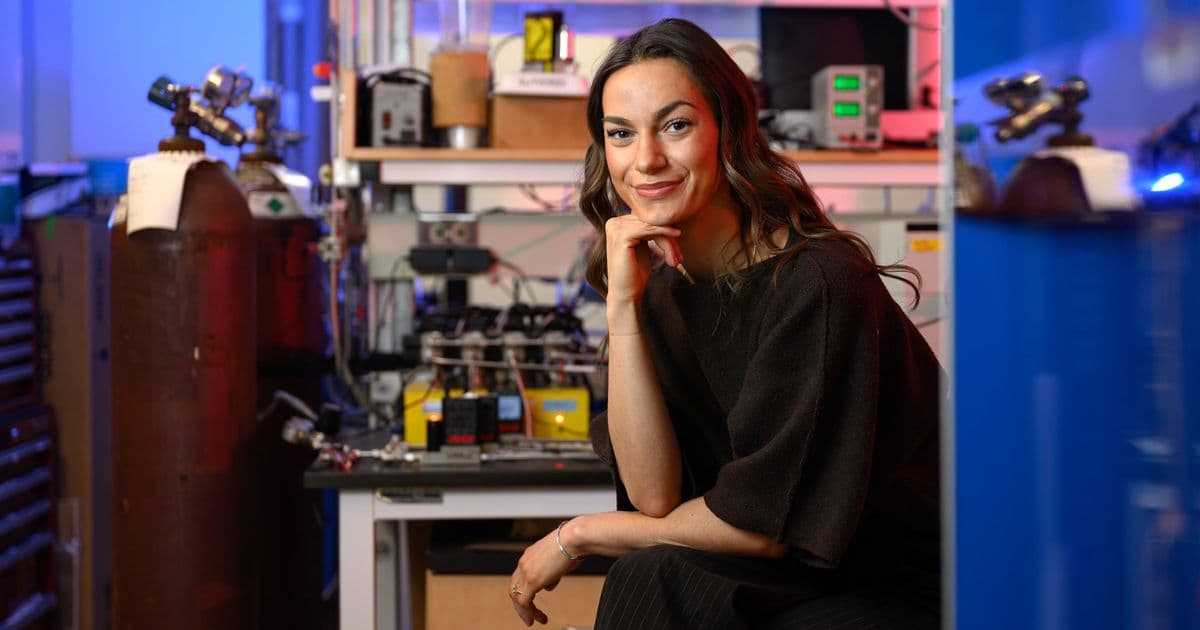
Audrey Parker, a PhD student at MIT, is developing practical technologies to mitigate methane emissions from dairy farms and coal mines, combining materials science with real-world field testing to create scalable climate solutions.
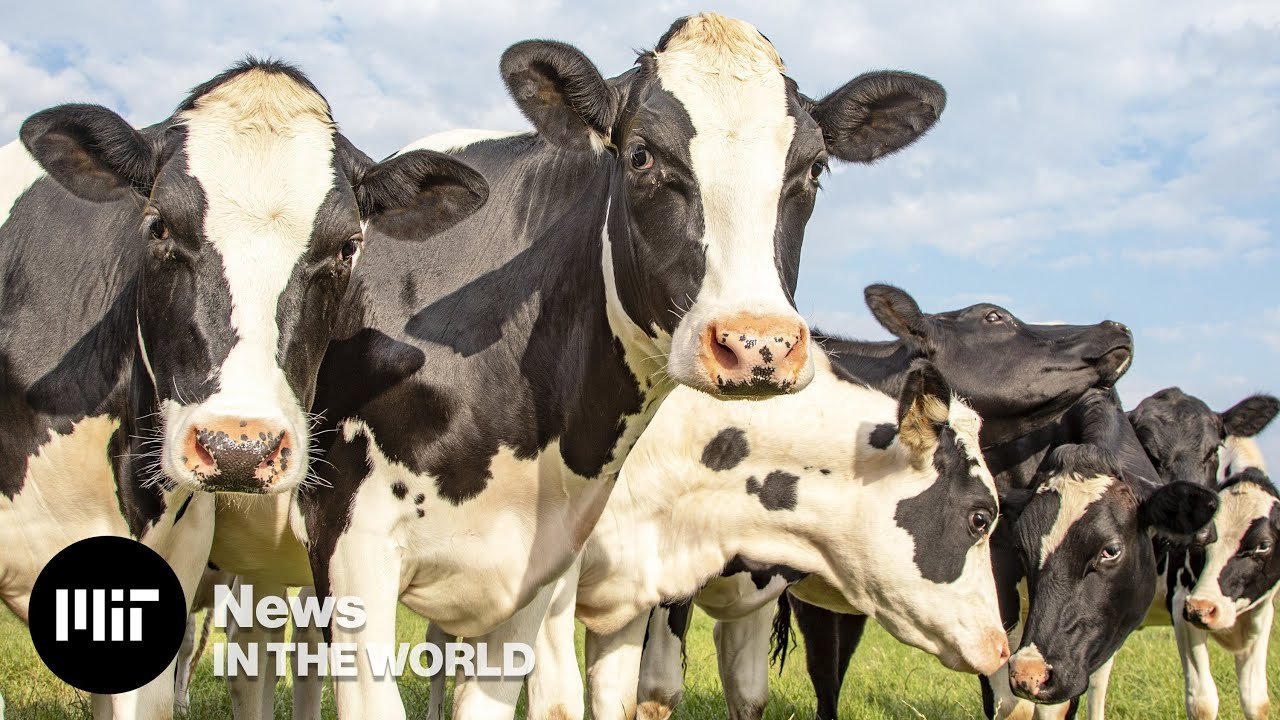
Amid the hum of milking equipment and the shuffle of cow hooves, PhD student Audrey Parker and her collaborators pull a wagon through a dusty path of a dairy barn, measuring an invisible greenhouse gas drifting through the air. Most engineering students wouldn't expect their graduate research to take them to a dairy farm, but for Parker, this is where some of the most impactful climate solutions are hiding in plain sight.
Parker's journey to this point began in Boise, Idaho, where her childhood was filled with backpacking trips, skiing, horseback riding, and otherwise enjoying what her natural surroundings had to offer. "Growing up, we were always outside," she says. "I knew how to cast a fly rod before I knew how to ride a bike."
That early connection to the environment motivated Parker to pursue studies related to preserving the world she loved. She attended Boise State University as an undergraduate, where she studied sustainable materials development under the mentorship of Assistant Dean Paul Davis. In the summer before her senior year, she was accepted to the MIT Summer Research Program (MSRP), which equips students for graduate school by bringing them to MIT to conduct cutting-edge research.
That's where she began working with Professor Desirée Plata, MIT's Distinguished Climate and Energy Professor. "They do a great job bringing in people of different backgrounds," Parker says. "It wasn't until I started working with Desirée that I started applying materials science as a tool to reduce greenhouse gas emissions. That was a profound insight."
Parker graduated Boise State University as a Top Ten Scholar, the highest academic honor granted to graduating seniors, before driving across the country to begin her studies at MIT. She decided to devote her PhD to exploring methane mitigation strategies, building on her experience from MSRP.
Her focus is on methane emissions from two sources: air being vented from coal mines, and dairy farms. These two areas alone account for a large portion of human-driven methane emissions. Both sources are dilute compared to the average oil or gas well, which makes the methane challenging to capture and convert into less environmentally harmful molecules.
Parker also wanted to work with community members in the field during her PhD to ensure whatever technical solutions she developed are practical enough to implement at scale. "Desirée's approach is to make sure industry is aware of affordable and sustainable ways to remove methane from their operations, while also incorporating the nuanced expertise stakeholders offer," Parker says. "I appreciate that she is focused on not just doing work for the chapter of a PhD thesis, but also making our work lead to real-world change."
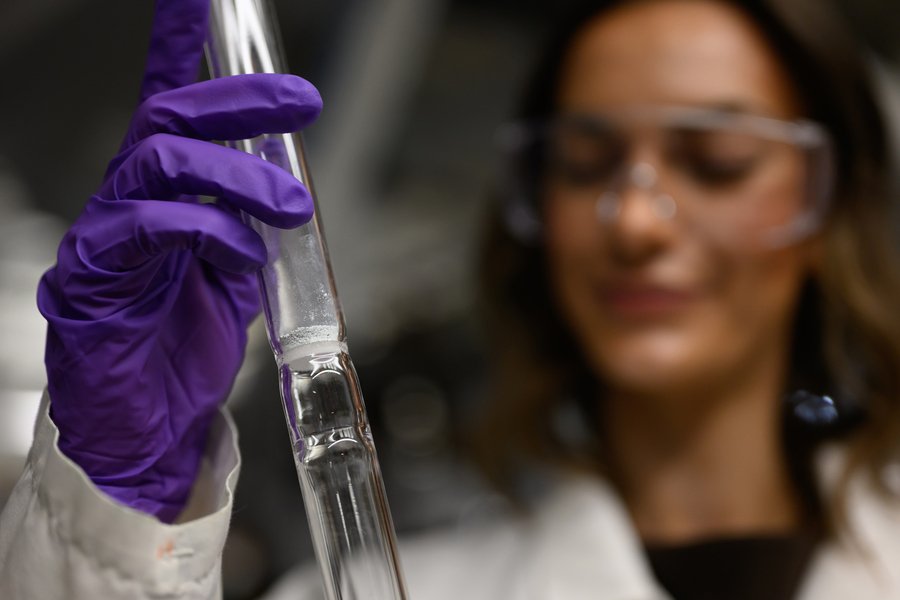
The main technology Parker studies is a catalyst made from zeolites, an abundant and inexpensive mineral with complex internal structures like honeycombs. Parker dopes the zeolites with copper and explores ways to apply external heat to facilitate complete methane conversion. She and her collaborators assess the durability of the material and its performance under different conditions.
Recognizing that real-world deployment environments can often be difficult to replicate in lab, they test catalyst performance in operating dairy farms. In a 2025 paper, she analyzed the use of thermal energy to sustain methane combustion in catalyst materials, detailing when the approach actually brings net-climate benefits.
"If your methane concentrations are low and you're having to provide so much energy into your system, you could become climate-harmful, but there's also a context where it's beneficial," Parker explains. "Understanding where that trade-off occurs is critical to making sure your mitigation technologies are having the benefits you're anticipating."
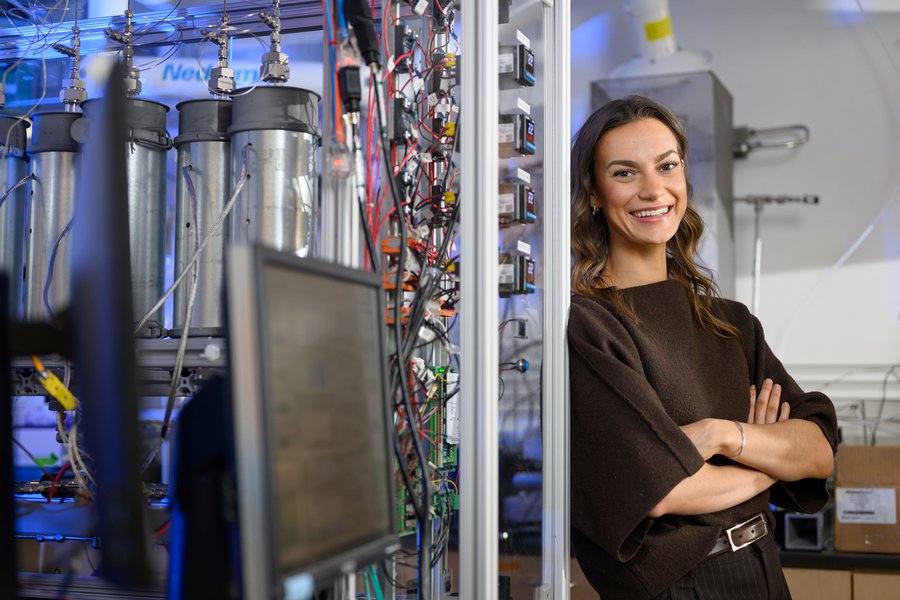
That kind of systems-level thinking is necessary to understand the long-term impacts of interconnected climate systems. "It lays a framework that other people can use for their mitigation technologies," Parker says. "There are trade-offs with every technology, and being transparent about that is important. I think as academics it's easy to get tunnel vision based on our research. There's such limited funding for mitigation technologies overall and so making sure those few funding dollars are allocated appropriately is critical for achieving our climate goals."
Some of Parker's research findings have informed the design of a pilot-scale methane mitigation system in a coal mine, although she hasn't gotten a chance to visit it just yet.
Outside of her research, Parker co-chairs the MIT Congressional Visit Days, a program run by the Science Policy Initiative that sends MIT students to Washington to meet with lawmakers and advocate for science-based policies. "On-the-Hill advocacy teaches you about the policy landscape in unparalleled ways," Parker says. "Those conversations you have with lawmakers can drive transformational change to bridge the gap between science and policy. It is our job as scientists to communicate our findings clearly so policymakers can design regulations that enable effective solutions."
This spring, Parker is also leading a workshop for the MIT Climate and Sustainability Consortium around financing the voluntary carbon market. Here, she plans to leverage industry insights to catalyze private capital at the scale needed to meet our climate goals.
Parker, who expects to complete her PhD next year, says it's gratifying to be able to devote her research to protecting the environment she loves so much. "For me it's about preserving the world I grew up in," Parker says. "Especially in Idaho, where communities are experiencing more frequent wildfires and more intense droughts. As a child, the natural world provided so much wonder. Today, that same sense of wonder is what drives me to protect it."
Parker's work represents a practical approach to climate mitigation that bridges the gap between laboratory research and real-world implementation. By focusing on the two largest sources of dilute methane emissions and developing technologies that can work in these challenging environments, she's addressing a critical gap in current climate solutions. Her emphasis on field testing, stakeholder engagement, and systems-level analysis ensures that her research has the potential for meaningful impact beyond academic publications.
As methane's potency as a greenhouse gas becomes increasingly recognized—it traps about 80 times more heat than carbon dioxide over a 20-year period—technologies like Parker's could play a crucial role in near-term climate mitigation efforts. While carbon dioxide remains the primary focus of most climate strategies, addressing methane emissions could provide more immediate temperature benefits, buying time for longer-term decarbonization efforts.
Parker's journey from the mountains of Idaho to the laboratories of MIT demonstrates how personal connection to environmental issues can drive scientific innovation. Her work shows that effective climate solutions often require not just technical expertise, but also an understanding of the practical challenges of implementation and the willingness to engage with diverse stakeholders from dairy farmers to policymakers.
Comments
Please log in or register to join the discussion