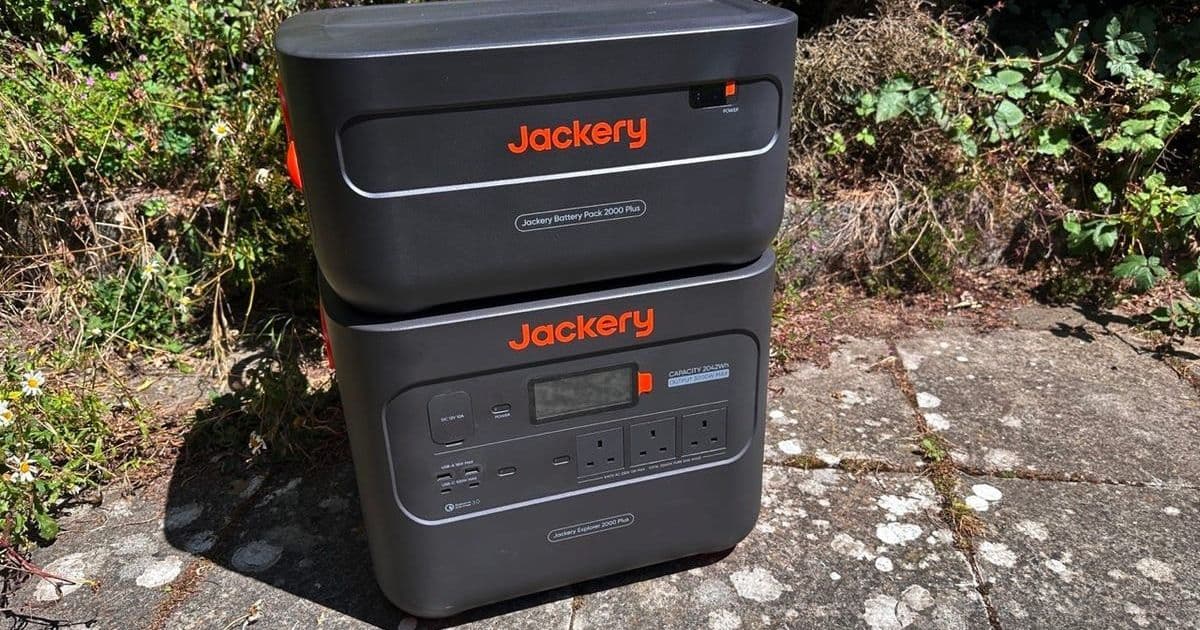
ZDNET's hands-on review reveals how Jackery's expandable Explorer 2000 Plus power station—now $500 off—can sustain household operations for up to two weeks using solar energy. With military-grade durability and modular capacity scaling to 24kWh, this portable powerhouse offers unprecedented off-grid capabilities for tech-savvy homeowners and adventurers alike.
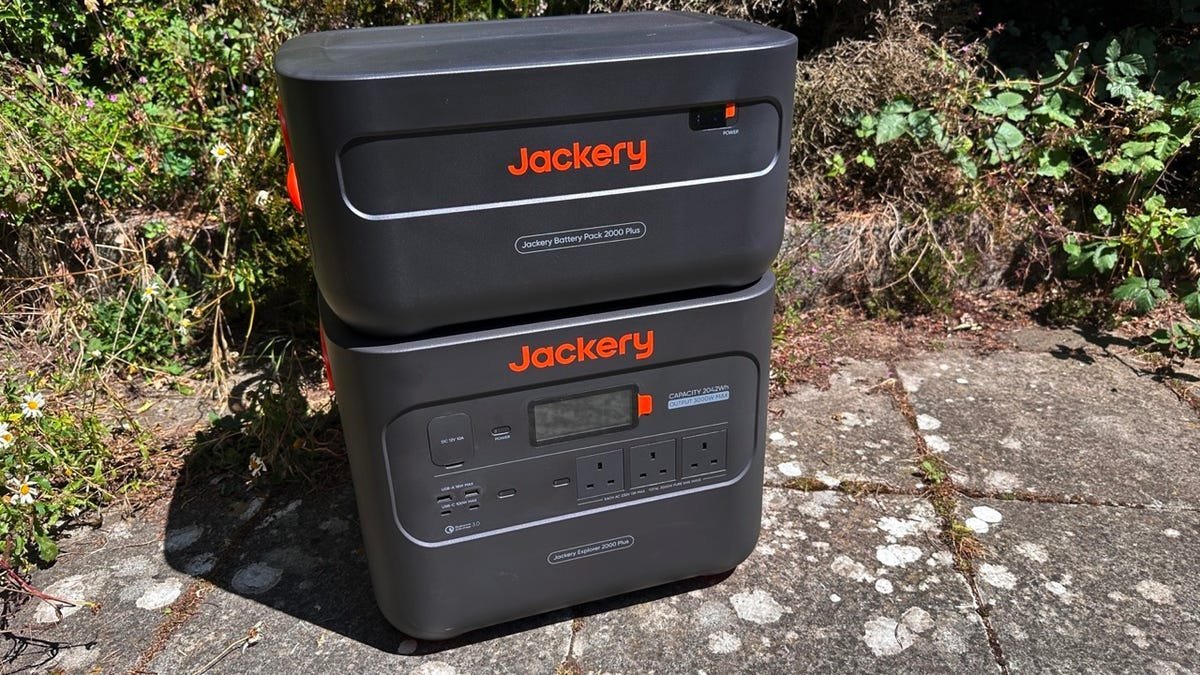
When Adrian Kingsley-Hughes connected six Jackery SolarSaga panels to the Explorer 2000 Plus portable power station, he didn't just run appliances—he powered his entire home off-grid for 14 consecutive days. This milestone in consumer energy technology represents more than convenience; it's a fundamental shift in how developers, remote workers, and preparedness-minded technologists approach energy resilience.
Modular Power Architecture
The genius lies in Jackery's scalable LFP (LiFePO₄) battery ecosystem. The base 2,042.8Wh unit can transform into a 24kWh behemoth by connecting:
- 5× PackPlus E2000 battery modules (each adding 2kWh)
- Dual Explorer 2000 Plus stations in parallel configuration
This modular approach lets users start small for camping trips ($1,499 base unit) then expand incrementally to whole-home backup ($22,500 max configuration). The lithium iron phosphate chemistry delivers 4,000 charge cycles before degrading to 70% capacity—outlasting typical NMC batteries by 3-4x.
Engineering for Real-World Demands
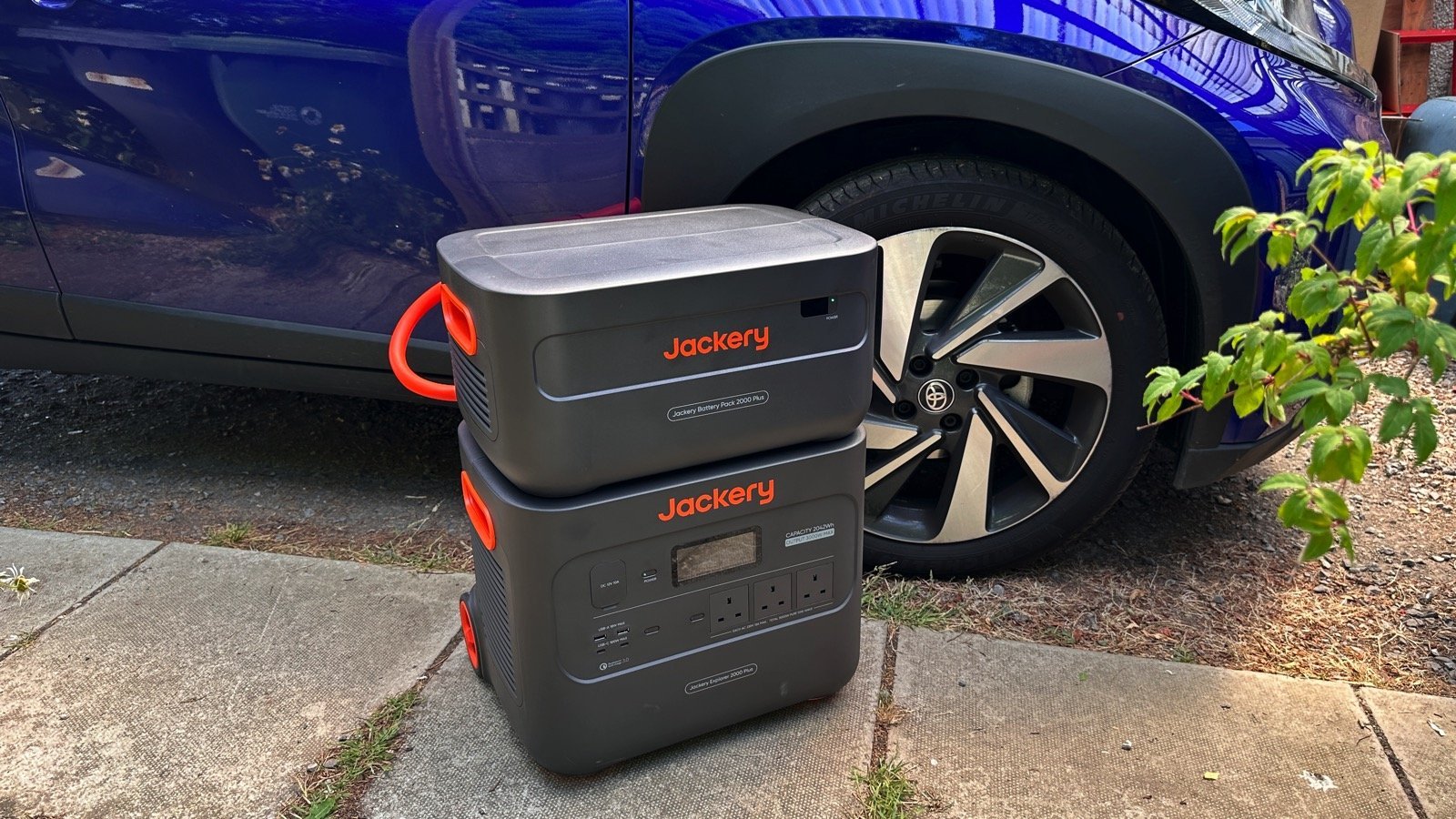
During stress testing, Kingsley-Hughes confirmed critical performance metrics:
• 3,000W continuous / 6,000W surge output (powers heavy loads like AC units)
• 100W USB-C PD ports (supports workstation-grade laptops)
• 30dB active cooling (library-quiet under load)
• MIL-STD-810H ruggedized housing
The integrated trolley system—retractable handle and puncture-resistant wheels—enables mobility despite the 61.5lb base weight. Kingsley-Hughes noted exceptional durability after subjecting units to "repeated rough handling" during field testing.
The Solar Advantage
Recharging flexibility makes this system revolutionary:
| Power Source | Recharge Time | Notes |
|---|---|---|
| AC Wall Outlet | 2 hours | 0-100% rapid charge |
| 6× 200W Solar Panels | 2 hours | Ideal off-grid solution |
| 2× 200W Solar Panels | 7 hours | Portable emergency setup |
| 12V Car Adapter | 25 hours | Mobile charging option |
Why Developers Should Care
Beyond emergency scenarios, this has implications for:
- Edge computing deployments: Power remote IoT hubs/sensors indefinitely
- Field development: Run soldering stations, 3D printers, or test benches anywhere
- Sustainable tech: Reduce grid dependence with solar integration
The 25% discount ($500 off) makes this particularly compelling for tech professionals prioritizing energy resilience. As Kingsley-Hughes concludes: "It's not just about surviving power outages—it's about maintaining productivity when infrastructure fails."
Source: ZDNET, reviewed by Adrian Kingsley-Hughes
Comments
Please log in or register to join the discussion