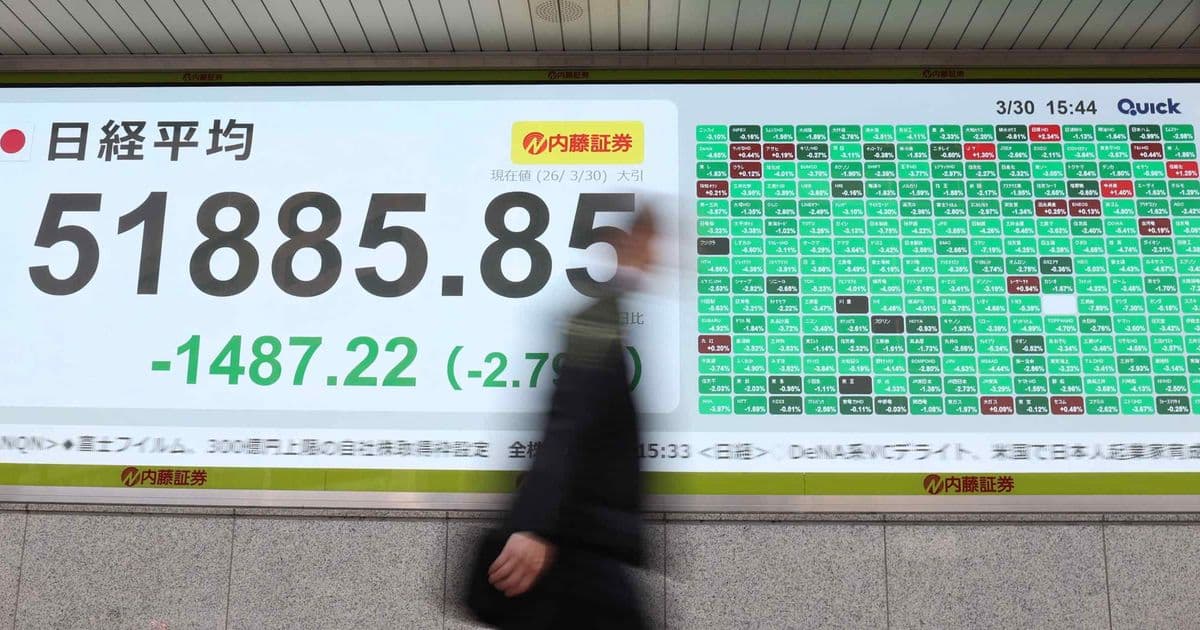
Asian markets tumble as reports of potential US ground operations in Iran trigger sell-off, pushing Nikkei into correction territory and raising intervention concerns.
Japan's Nikkei Stock Average closed down 2.8% at 51,885.85 on Monday, while South Korean shares also fell sharply, as reports of possible U.S. ground operations against Iran sent Asian markets tumbling. The sell-off pushed the Nikkei into correction territory, defined as a drop of more than 10% from recent highs, amid escalating fears of a protracted conflict that has already disrupted Persian Gulf oil supplies for two months.
Market Impact and Currency Concerns
The sharp decline came as investors fled to safety amid mounting geopolitical uncertainty. The yen weakened past 160 against the dollar for the first time in 20 months, raising speculation about potential Japanese government intervention to support the currency. Bank of Japan Governor Kazuo Ueda warned that rising oil prices could drag on the economy, adding to market jitters.
Energy markets have been particularly volatile, with the conflict-driven supply disruptions pushing oil prices higher. This has created a feedback loop affecting both currency markets and stock valuations across Asia's export-dependent economies.
Regional Market Fallout
South Korean shares mirrored Japan's decline, with major technology and manufacturing stocks leading the downturn. The interconnected nature of Asian supply chains means that prolonged Middle East instability threatens production schedules and cost structures for companies throughout the region.
Financial analysts note that the current market correction reflects not just immediate war concerns but also uncertainty about how long the conflict might persist and what broader economic consequences it could trigger. With both Japan and South Korea heavily reliant on energy imports, sustained price increases could force central banks to reconsider monetary policy stances.
Government Response Under Scrutiny
Tokyo's threat of currency intervention highlights the delicate balance authorities face between allowing market forces to operate and preventing excessive volatility that could harm economic recovery efforts. The Bank of Japan's next policy meeting will be closely watched for any signals about how officials plan to address the dual challenges of currency weakness and energy-driven inflation pressures.
The current market turmoil underscores how regional conflicts can rapidly cascade through global financial systems, affecting everything from stock valuations to currency exchange rates and commodity prices. As the situation in the Middle East continues to evolve, Asian markets remain vulnerable to further shocks that could extend the current correction or potentially trigger a more severe market downturn.
For investors, the key question now is whether this represents a temporary market dislocation that will resolve as geopolitical tensions ease, or the beginning of a more sustained period of volatility driven by structural changes in global energy markets and supply chain dynamics.
Comments
Please log in or register to join the discussion