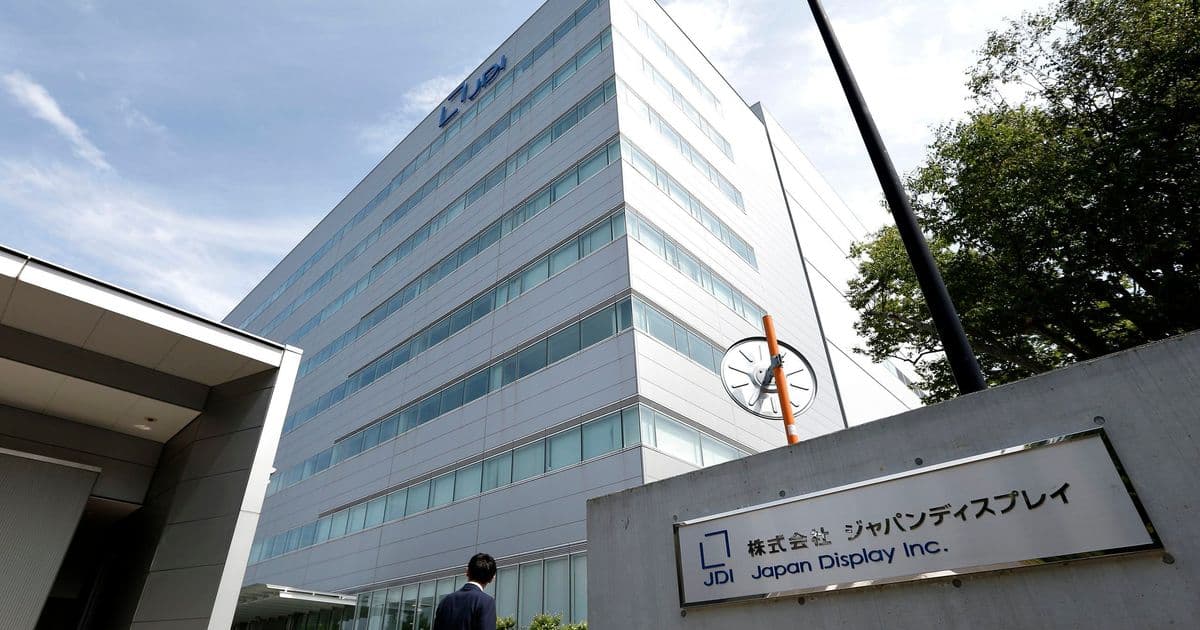
Japan Display Inc. has proposed a $13 billion display manufacturing facility in the U.S. as part of a broader $550 billion investment framework, aiming to counter China's growing dominance in the display industry and revitalize Japan's waning presence in the sector.
Japan Display Inc. (JDI) has proposed a new state-of-the-art display factory to be set up in the U.S., in collaboration with the Japanese and American governments. This factory would be worth up to $13 billion, according to the initial reporting by Nikkei Asia. Reuters has now confirmed that Washington and Tokyo are in active talks to explore this idea.
Just this confirmation made JDI's stock surge 80% on Monday.
The proposed facility comes as part of a broader $550 billion investment framework that Tokyo has planned for the United States. While the U.S. was never a hotspot for display production, Japan was once seen as the industry giant thanks to pioneers such as Sharp, Panasonic, Sony, Toshiba and Hitachi.
In fact, JDI was created in 2012 by merging the LCD units of Sony, Toshiba, and Hitachi with government backing. Since then, JDI has struggled, and even reported net losses for ten consecutive years. The inflection point came when Apple switched to OLED screens on the iPhone, because JDI was the main supplier for its LCDs before.
Neither state, nor JDI itself, has said anything about this publicly, but it's being heavily inferred from industry sources. Both Japan and America lack a modern, large-scale display factory whereas China has become a global superpower in the segment as of late. Market leaders Samsung and LG operate out of South Korea — the other dominant display region — but China holds the likes of BOE, TCL CSOT, and HKC.
Building a new display factory is extremely expensive, so partnering with Washington makes sense from both a financial and geopolitical standpoint. For now, JDI has focused on the automotive sector with innovations in car displays, so only time will tell what this proposed factory produces.
The timing of this proposal is particularly significant given the current geopolitical tensions surrounding semiconductor and display manufacturing. China's dominance in display production has grown substantially over the past decade, with companies like BOE Technology Group expanding their manufacturing capabilities and market share.
According to industry analysts, China now accounts for approximately 30% of global display panel production capacity, with projections suggesting this could reach 40% by 2025. This growth has raised concerns in both Tokyo and Washington about supply chain security and technological independence.

The proposed facility would represent a significant shift in the global display manufacturing landscape. Currently, the vast majority of high-end display production occurs in East Asia, with South Korea and China dominating the market. A U.S.-based facility would provide several strategic advantages:
- Reduced transportation costs and lead times for North American customers
- Enhanced supply chain resilience against geopolitical disruptions
- Potential for government incentives and support in both countries
- Access to advanced manufacturing technologies and research capabilities
JDI's financial struggles over the past decade highlight the challenges facing traditional display manufacturers. The company's net losses for ten consecutive years reflect the intense competition and rapid technological changes in the display industry.
The shift from LCD to OLED technology has been particularly disruptive. While JDI was a major supplier of LCD panels for Apple devices, the company struggled to transition to OLED production at the same scale as competitors like Samsung Display.
This proposal also raises questions about the specific technologies that would be produced at the new facility. Given JDI's recent focus on automotive displays, the factory could potentially specialize in next-generation display technologies for vehicles, including:
- High-resolution HUD (Head-Up Display) panels
- Curved and flexible display solutions for instrument clusters
- Advanced driver monitoring systems with integrated displays
- Augmented reality display systems for enhanced navigation
Alternatively, the facility could focus on traditional consumer electronics displays, potentially including:
- High-refresh-rate gaming monitors
- Professional-grade color-accurate displays
- Large-format commercial displays
- Emerging technologies like microLED or quantum dot displays
The involvement of both Japanese and American governments suggests this project could benefit from various forms of support, including:
- Tax incentives and grants
- Infrastructure development assistance
- Research and development partnerships with universities
- Preferential trade agreements for materials and components
Industry experts note that the success of such a venture would depend on several factors:
- The ability to achieve competitive production costs despite higher labor expenses in the U.S. compared to Asia
- Access to a skilled workforce capable of operating advanced display manufacturing equipment
- Securing reliable supply chains for rare materials and specialized components
- Developing partnerships with major technology companies for guaranteed demand
The proposal comes at a time when both Japan and the United States are seeking to revitalize their domestic manufacturing capabilities. For Japan, it represents an opportunity to reclaim some of its former glory in the display industry. For the United States, it offers a chance to establish a foothold in a critical technology sector currently dominated by Asian manufacturers.
If realized, this $13 billion investment could create thousands of high-skilled jobs and potentially serve as a catalyst for further investment in advanced manufacturing technologies in North America. The facility would likely incorporate cutting-edge automation and quality control systems to remain competitive with Asian counterparts.
The next few months will be crucial as negotiations between JDI, the Japanese government, and U.S. authorities continue. Industry watchers will be closely monitoring developments, as this project could reshape the global display manufacturing landscape and have significant implications for technology supply chains worldwide.
Comments
Please log in or register to join the discussion