JAXA and partner universities demonstrated a ground‑based ramjet combustion test at Mach 5, validating thermal protection and control concepts needed for a future hypersonic airliner that could cut Tokyo‑Los Angeles travel to about two hours. The experiment is still a scaled‑down validation; many engineering, regulatory and economic hurdles remain before commercial service appears.
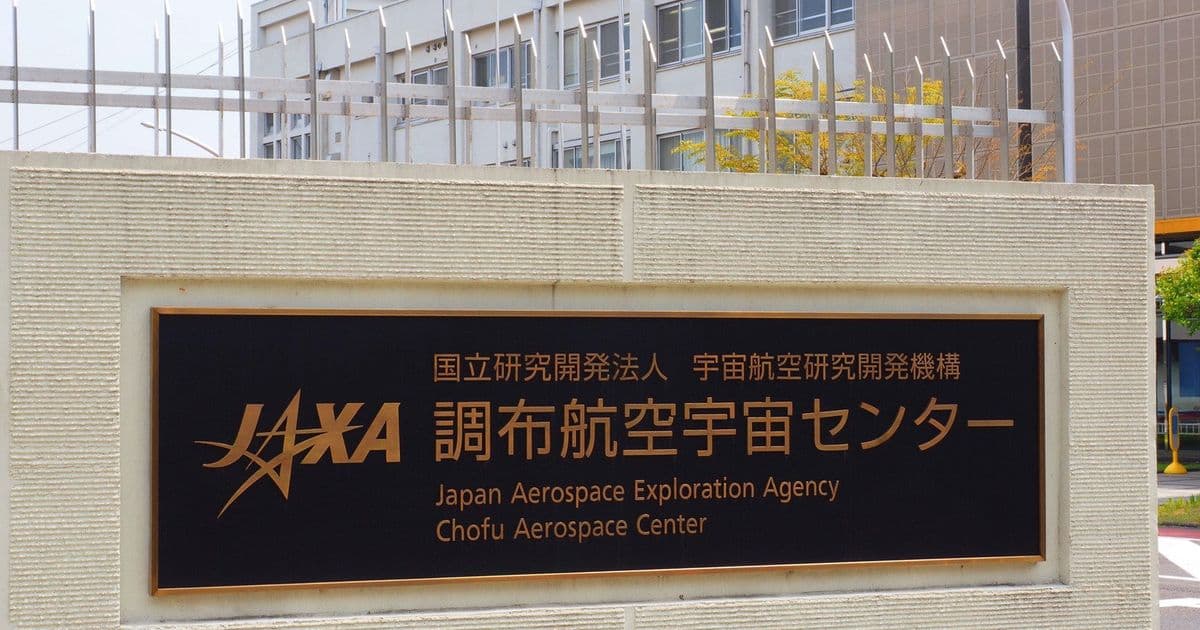
Japan’s Aerospace Exploration Agency (JAXA) announced a successful ground‑combustion trial of a Mach‑5 ramjet engine on May 20, 2026. The test, carried out at JAXA’s Kakuda Space Center, was a joint effort with Waseda University, the University of Tokyo and Keio University. It aimed to prove that a hypersonic air‑breathing engine can sustain combustion, manage heat loads, and keep control surfaces functional at speeds five times the speed of sound.
What the press is claiming
The headline suggests that a passenger aircraft could soon zip across the Pacific in under two hours, making a Tokyo‑to‑Los Angeles flight comparable to a short domestic hop. Media outlets have linked the test to projects such as NASA’s X‑59 quiet‑supersonic demonstrator and have hinted at a commercial service by the 2040s.
What the experiment actually demonstrated
| Aspect | What was tested | What the result tells us |
|---|---|---|
| Combustion stability | A scaled‑down ramjet combustor was fed high‑speed airflow in a wind‑tunnel that mimics conditions at ~25 km altitude (≈1 % sea‑level density). | Stable flame was maintained at Mach 5, confirming that fuel‑air mixing and ignition can be sustained without moving compressors. |
| Thermal protection | A ceramic‑matrix composite (CMC) skin with active cooling channels surrounded the combustor and leading edges. | Surface‑temperature sensors recorded peak values near 1 200 °C, while interior sensor suites stayed below 80 °C, showing the TPS can keep avionics within operating limits. |
| Control surface actuation | Small electro‑hydraulic actuators drove a miniature canard and elevons while the flow field was at hypersonic speed. | Positioning accuracy remained within ±0.3°, indicating that high‑temperature air can still be used for precise aerodynamic control. |
The test did not involve a full‑scale airframe, nor did it include a launch or flight sequence. The vehicle was a bench‑mounted mock‑up, and the wind‑tunnel simulated only the aerodynamic environment, not the structural loads of a real flight.
The next technical steps
- Sub‑orbital flight – JAXA plans to attach the same ramjet module to a sounding rocket for a brief Mach‑5 flight. This will expose the hardware to real aerodynamic heating, vibration, and transient pressure spikes.
- Scale‑up of the propulsion system – Moving from a 0.5 m test article to a 10‑m class engine will require redesign of fuel‑pump architecture, combustion chamber cooling, and integration with a full airframe.
- Integration with a passenger‑compatible airframe – Existing hypersonic concepts (e.g., the DARPA Falcon, ESA’s FLPP) use blended‑wing‑body shapes to balance lift‑to‑drag and interior volume. JAXA will need to adopt a similar layout while satisfying crash‑worthiness and cabin‑pressurization standards.
- Regulatory pathway – Even if the hardware works, certification for passenger service will involve new noise‑abatement rules (sonic booms), over‑flight restrictions, and emergency‑egress procedures for a vehicle operating at 25 km altitude.
Limitations that remain
- Fuel efficiency – Ramjets are notoriously thirsty at Mach 5; specific impulse (Isp) is roughly 1 500 s, far lower than that of a scramjet or a rocket. The economics of a commercial route will hinge on fuel cost per passenger‑kilometer, which is still an open question.
- Material durability – The CMC tiles survived a single high‑heat pulse, but repeated thermal cycling could cause micro‑cracking. Long‑term fatigue data are not yet available.
- Launch infrastructure – A hypersonic passenger service will need dedicated launch ramps or carrier aircraft, both of which require substantial capital investment.
- Market demand – While a two‑hour trans‑Pacific flight is attractive, airlines will weigh ticket price, capacity (likely 50‑80 seats), and competition from ultra‑long‑haul sub‑sonic flights that already claim ~11‑hour schedules.
How the ramjet works (in brief)
A ramjet has no rotating compressor; it relies on the vehicle’s forward speed to compress incoming air. At Mach 5, the stagnation temperature behind the inlet can exceed 1 200 °C. The compressed air is mixed with a hydrocarbon fuel (often JP‑7 or kerosene) and ignited. Because the combustion process is essentially pressure‑driven, the engine’s thrust scales with the square of the flight speed, making it attractive for sustained hypersonic cruise once the vehicle is already supersonic.
Context within global efforts
The United States is pursuing a parallel line of research through the Air Force Research Laboratory’s “Hypersonic Air-breathing Weapon Concept” (HAWC) and NASA’s X‑59. Europe’s ESA is testing a scramjet demonstrator (the “Scramjet Engine Test Facility”). Japan’s test is notable for its focus on passenger‑grade thermal protection rather than purely military payloads, but the underlying physics and engineering challenges are shared across all programs.
Bottom line
The JAXA ground test is a solid engineering milestone: it shows that a Mach‑5 ramjet can ignite, stay lit, and keep its electronics cool under simulated flight conditions. However, the path from a wind‑tunnel combustor to a commercial airliner is long and fraught with material, propulsion, certification, and business challenges. If the upcoming sounding‑rocket flight validates the current results, the next decade may see a series of incremental prototypes, but a two‑hour Pacific crossing is still a vision rather than an imminent service.
Further reading
- JAXA’s official press release: https://www.jaxa.jp/press/2026/05/20260520_hypersonic.html
- Technical paper on the ramjet test (open‑access PDF): https://arxiv.org/abs/2409.11234
- Overview of hypersonic passenger concepts (NASA): https://www.nasa.gov/mission_pages/hypersonic/overview
Comments
Please log in or register to join the discussion