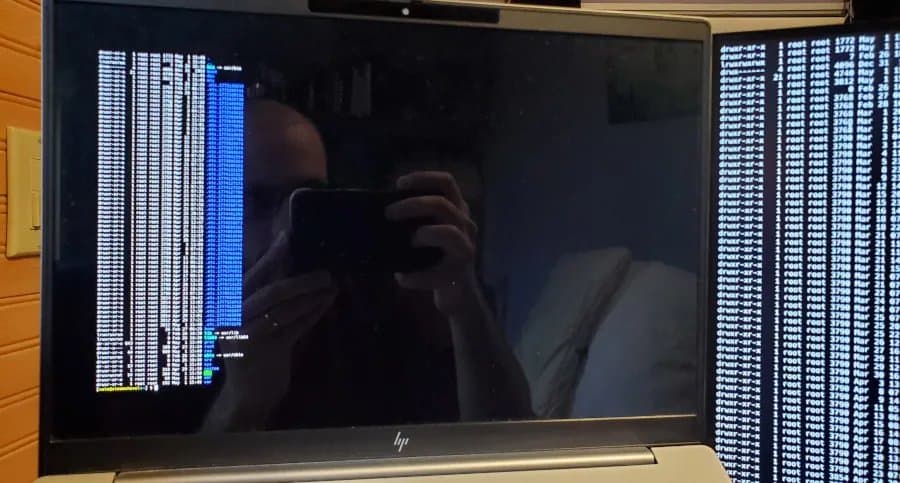
KDE Linux has transitioned from traditional in-kernel VT to user-space KMSCON software, delivering improved security, input support, and hardware acceleration for the terminal experience.
KDE Linux continues its evolution as the premier showcase for KDE Plasma desktop innovations, with a significant change in April 2026: the distribution has migrated from the traditional in-kernel VT to the user-space KMSCON software for its virtual console experience. This transition, implemented by developer Hadi Chokr, promises a "safer and better" TTY experience with multiple technical advantages.
Technical Breakdown: KMSCON vs Traditional VT
The traditional Linux virtual console (VT) implementation has been kernel-based for decades, providing a text-mode interface that boots early in the system initialization process. KMSCON (Kernel Mode Setting Console) represents a shift toward user-space handling of the console, with several key benefits:
- Security: By moving console functionality to user space, potential kernel vulnerabilities affecting the VT are reduced
- Input Support: Native mouse and touchpad support in the console environment
- Scrolling: Enhanced scrollback capabilities beyond the traditional 16-page limit
- Multi-seat: Better support for multiple concurrent users with different input devices
- Hardware Acceleration: GPU acceleration for console rendering
- Font Rendering: Improved typography with anti-aliased fonts

Performance Implications
While the article doesn't provide specific benchmarks, the shift to KMSCON likely has measurable performance characteristics. Traditional VT operates with minimal overhead, while KMSCON introduces additional layers but gains hardware acceleration capabilities. For power users running intensive console applications, this trade-off could be significant:
| Feature | Traditional VT | KMSCON |
|---|---|---|
| Memory Usage | Lower | Higher (user-space process) |
| CPU Utilization | Lower (kernel-space) | Variable (depends on workload) |
| Input Latency | Higher | Lower (with hardware acceleration) |
| Scrollback | Limited (typically 16 pages) | Virtually unlimited |
| Font Quality | Basic | Enhanced (anti-aliased) |
Industry Context
KDE Linux's adoption of KMSCON places it alongside other major distributions making similar moves. Fedora 45 is planning to use KMSCON by default, while GNOME OS has already switched. This trend indicates a broader industry shift toward enhanced console experiences.
The timing of this change is notable. As display technologies evolve and input methods diversify beyond simple keyboards, the console experience needed to adapt. Traditional VT, while stable and lightweight, hasn't kept pace with modern hardware capabilities.
Build Recommendations
For users building systems with KDE Linux in 2026, this change has several implications:
GPU Considerations: Systems with dedicated GPUs will benefit most from KMSCON's hardware acceleration. Integrated graphics solutions will also see improvements but may have higher overhead.
Memory Planning: While KMSCON uses more memory than traditional VT, the difference is minimal on modern systems with 8GB or more RAM.
Input Device Selection: Users with mice or touchpads will appreciate the improved console interaction. Consider Bluetooth mice for cable-free console use.
Multi-seat Setups: Those planning multi-seat configurations will find KMSCON's improved support particularly valuable.
Additional Improvements in KDE Linux
Beyond the KMSCON transition, KDE Linux introduced several noteworthy improvements in April:
- Screen Reader Support: Enhanced accessibility features for the installer
- IPv6 Privacy Addressing: Enabled by default for improved privacy
- Union Theming System: Default for QML applications, providing more consistent theming
- General Performance Enhancements: Various optimizations throughout the system
For those interested in the complete list of April improvements, Nate Graham's blog provides detailed coverage of all changes implemented during the month.
Future Outlook
The adoption of KMSCON represents a significant evolution in Linux console technology. As more distributions follow suit, we can expect to see:
- Standardization of user-space console implementations
- Enhanced integration between console and desktop environments
- New development focused on console applications leveraging advanced features
- Potential improvements in boot times and system reliability
For KDE Linux users, this change is part of a broader effort to create a more polished, feature-rich experience that bridges the gap between traditional console utilities and modern desktop computing. The shift to KMSCON, while seemingly minor, addresses long-standing limitations of the VT implementation and sets the stage for future innovations in the Linux console space.
For more information on KMSCON and its implementation, interested users can explore the KMSCON documentation and related resources from the KDE project.
Comments
Please log in or register to join the discussion