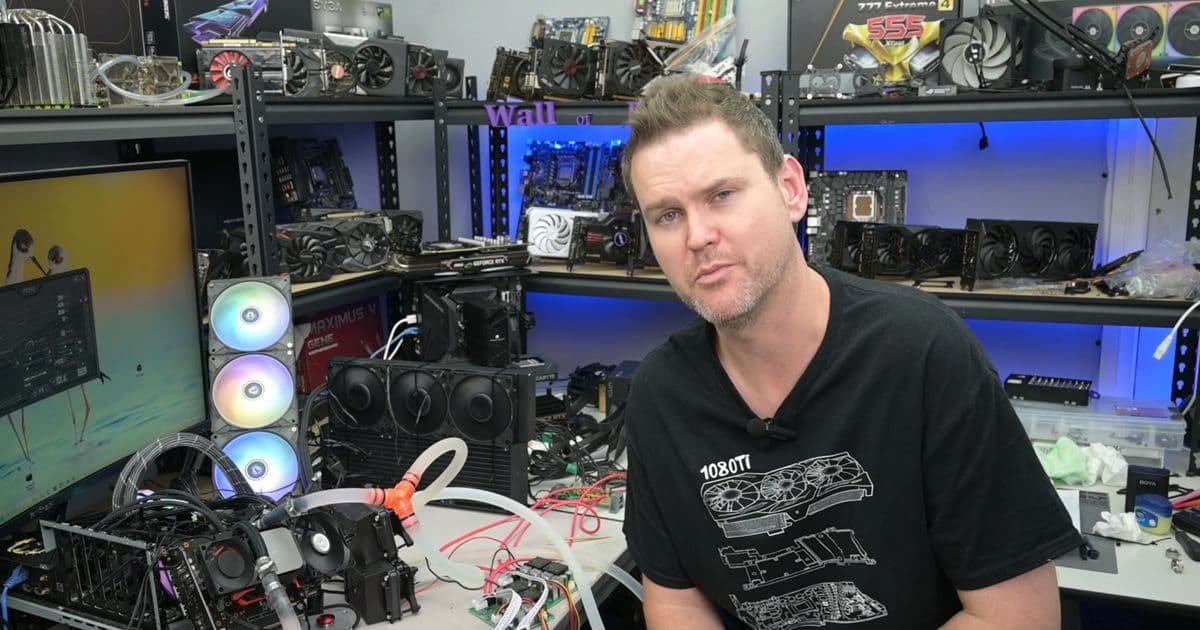
A detailed analysis of a custom Peltier cooling system for GPUs, revealing significant power inefficiencies despite achieving sub-ambient temperatures.
Enthusiast's Peltier Cooling Experiment Reveals Thermoelectric Challenges for High-Performance GPUs
In a recent demonstration of extreme cooling experimentation, YouTube creator TrashBench constructed a sophisticated Peltier-based thermoelectric cooling system for graphics cards, achieving measurable but ultimately impractical temperature reductions. The project highlights both the potential and significant limitations of thermoelectric cooling in high-performance computing applications.
Technical Implementation of the Custom Cooling System
TrashBench's ambitious project involved creating a complete Peltier liquid cooling solution from scratch, incorporating multiple components working in concert:
- Two Arctic 360mm AIO liquid cooling units dedicated solely to cooling the Peltier modules
- Two custom-built DC controllers to precisely regulate power delivery to the thermoelectric elements
- A complex custom loop with waterblocks connecting the GPU to the Peltier units
- Strategic placement of all components to maximize heat transfer efficiency
The entire Peltier cooling system consumed approximately 360 watts of power—nearly matching the thermal output of high-end GPUs it was designed to cool. This power requirement represents one of the fundamental challenges of thermoelectric cooling technology.
Understanding Peltier Thermoelectric Cooling
Peltier cooling leverages the thermoelectric effect, where electrical current passing through a semiconducting material creates a temperature differential. In practical implementation:
- One side of the semiconductor material becomes cold, absorbing heat from the target component
- The opposite side generates heat proportional to the electrical input
- The liquid cooling system must then dissipate this additional heat along with the original thermal load
This creates a cascading thermal challenge where the cooling system itself generates significant heat that must be managed.
Performance Testing Methodology and Results
TrashBench conducted comprehensive testing with both NVIDIA RTX 4060 and RTX 3070 graphics cards to evaluate the effectiveness of the custom Peltier cooling solution:
RTX 4060 Performance
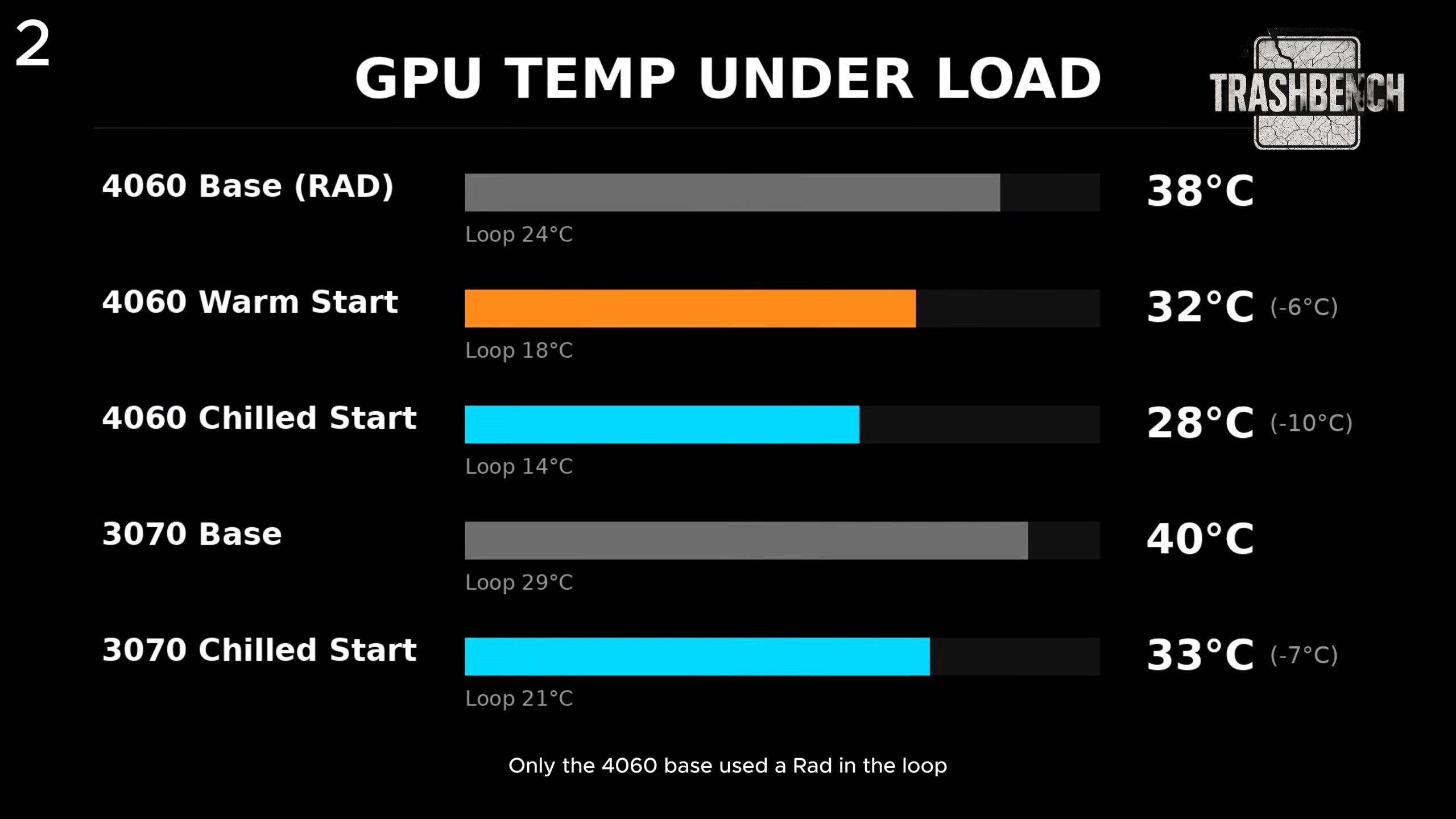
- Baseline temperatures: 38°C GPU core, 24°C liquid temperature
- With Peltier active: 28°C GPU core, 14°C liquid temperature
- Temperature reduction: 10°C improvement in both GPU core and liquid temperatures
- Testing protocol: 20-minute cooldown period before GPU stress test in 3DMark Time Spy
RTX 3070 Performance
- Baseline temperatures: 40°C GPU core, 29°C liquid temperature
- With Peltier active: 33°C GPU core, 21°C liquid temperature
- Temperature reduction: 7°C improvement in GPU core, 8°C in liquid temperatures
The testing also included a "warm start" procedure where Peltier units were deactivated then reactivated to evaluate recovery performance. This method resulted in slightly higher temperatures (32°C GPU core, 18°C liquid) compared to the cold start, demonstrating the system's limitations in rapid temperature recovery scenarios.
Market Implications and Commercial Viability
Despite achieving sub-ambient cooling, TrashBench's experiment underscores why Peltier technology remains niche in the consumer cooling market. The Cooler Master ML360 Sub Zero, one of the few commercially available Peltier-based CPU coolers, received similarly lukewarm reviews, earning only three stars in professional testing due to:
- Inferior multi-core performance compared to conventional high-end AIO coolers
- Excessive power consumption (nearly 200 watts for the cooler alone)
- Complex installation requirements and premium pricing without proportional performance benefits
The fundamental issue lies in the thermodynamic inefficiency of Peltier cooling. For every watt of cooling power delivered to the GPU, an additional watt (or more) of heat must be dissipated by the secondary cooling system. This creates a diminishing returns scenario where power consumption increases exponentially while temperature improvements remain modest.
Future Prospects for Thermoelectric Cooling
While impractical for current gaming and workstation applications, thermoelectric cooling may find niche applications in specialized scenarios:
- Extreme overclocking competitions where marginal temperature improvements can provide competitive advantages
- Specialized scientific computing requiring precise temperature control
- Future semiconductor applications where power efficiency improves
Current Peltier technology operates at approximately 10-15% efficiency compared to conventional vapor-compression refrigeration systems. Until this fundamental limitation is addressed through material science breakthroughs, thermoelectric cooling will remain a novelty rather than a mainstream solution.
The experiment serves as an excellent demonstration of enthusiast innovation while highlighting the engineering challenges that prevent thermoelectric cooling from competing with conventional solutions in most applications. As GPU power densities continue to increase, the cooling industry must balance temperature reduction against power efficiency, thermal management complexity, and user experience.
For more details on TrashBench's experiment, you can watch the full video on YouTube.
Comments
Please log in or register to join the discussion