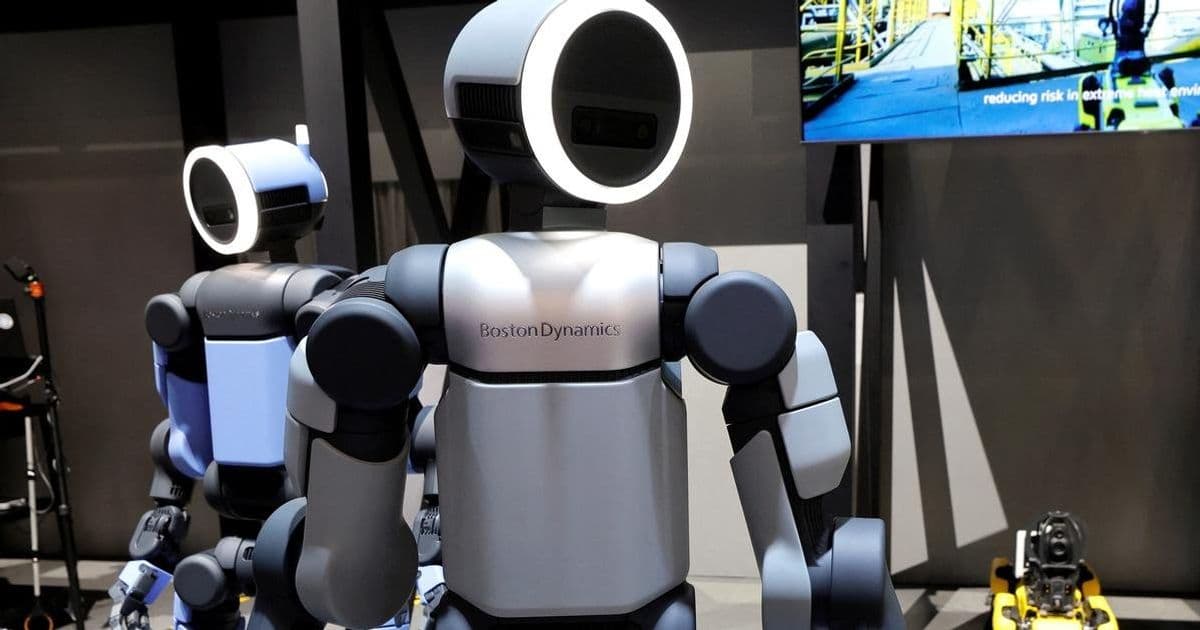
Multiple top executives have departed Boston Dynamics amid growing expectations to accelerate humanoid robot development, raising questions about the company's roadmap under Hyundai ownership.
A wave of executive departures at Boston Dynamics suggests the Hyundai-owned robotics company is facing mounting pressure to deliver on its humanoid robot ambitions. According to sources, several top leaders have left the company in recent months, coinciding with heightened expectations for commercializing advanced humanoid technology.
Boston Dynamics, famous for its Spot quadruped robot and Atlas humanoid, has been under Hyundai's majority ownership since 2021. The automotive giant acquired an 80% stake with the stated goal of accelerating Boston Dynamics' commercialization efforts. However, the recent leadership shakeup indicates tensions between the company's research-oriented culture and Hyundai's demands for faster commercial returns.
"The departure of key executives suggests a fundamental tension between Boston Dynamics' innovative, research-heavy approach and the commercial pressures coming from Hyundai," said robotics analyst Sarah Chen. "Humanoid robots remain largely experimental, and pushing them to market before they're ready could backfire spectacularly."
The company has been working on its Atlas humanoid for over a decade, with impressive demonstrations but limited practical applications. Meanwhile, competitors like Tesla with Optimus and Figure AI with Figure 01 have generated significant buzz with their own humanoid developments, creating competitive pressure on Boston Dynamics.
"Boston Dynamics is caught between two worlds," explained MIT robotics professor Marcus Reynolds. "They have the most advanced humanoid technology, but commercializing it requires completely different expertise and timelines than what got them here. Hyundai wants products now, but the technology may not be ready."
Community sentiment among robotics enthusiasts appears divided. Some view the departures as natural evolution as the company transitions from research to commercialization. Others worry that losing key technical leadership could compromise the innovation that made Boston Dynamics famous.
"The real question is whether Boston Dynamics can maintain its technical edge while meeting commercial deadlines," noted TechCrunch contributor David Miller. "Humanoid robotics remains incredibly complex, and rushing products to market often leads to overpromised and underdelivered solutions."
Hyundai has invested heavily in robotics as part of its broader mobility strategy. The automaker sees humanoids as potential solutions for manufacturing, logistics, and eventually elder care. However, the path from research lab to commercial deployment remains fraught with technical and safety challenges.
Industry observers point to Boston Dynamics' Spot robot as a potential model for commercial success. The quadruped robot has found applications in security, construction, and industrial inspection, generating steady revenue while the company continues developing more advanced technology.
"Boston Dynamics has demonstrated they can build commercially viable robots with Spot," said venture capitalist Elena Rodriguez. "The challenge is scaling that success to humanoids, which introduces orders of magnitude greater complexity. The executive departures may reflect a strategic pivot toward more achievable commercial applications first."
The situation highlights broader tensions in the robotics industry between innovation and commercialization. As venture capital pours into humanoid robotics, companies face increasing pressure to deliver tangible results, even as the underlying technology continues to evolve.
For Boston Dynamics, the coming months will likely reveal whether the leadership changes represent a strategic realignment or a sign of deeper challenges in translating cutting-edge research into market-ready products. The company's ability to navigate this transition could shape the future of humanoid robotics development globally.
Related:
Comments
Please log in or register to join the discussion