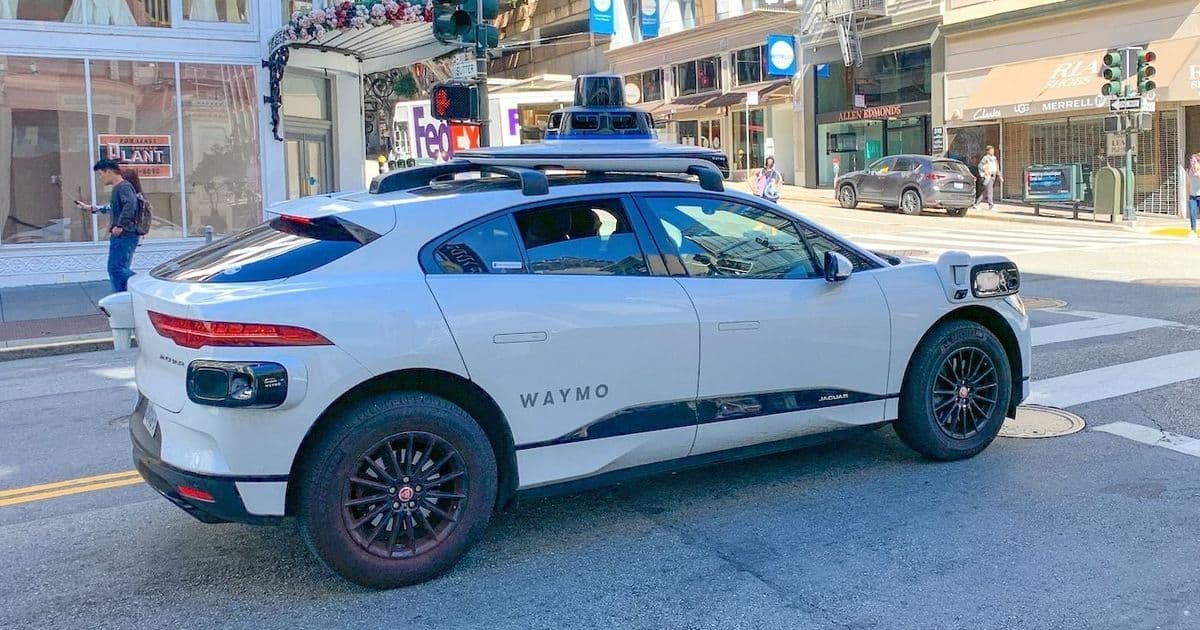
As Waymo expands its autonomous taxi service, a recent incident where a vehicle drove off with passenger luggage underscores the technical and operational hurdles facing self-driving technology at scale.
A Sunnyvale man's recent experience with Waymo's autonomous taxi service has brought attention to the practical challenges of deploying self-driving vehicles in real-world scenarios. Di Jin's first-ever ride with Waymo to San Jose Mineta Airport ended unexpectedly when the vehicle drove away with his luggage after failing to open the trunk, leaving him stranded without essentials for his trip.
This incident isn't isolated. Similar cases have occurred, including an April incident in San Francisco where expensive tennis gear was lost under comparable circumstances. These problems point to persistent technical issues with what should be a straightforward feature in autonomous vehicles.
Waymo, which began offering service to San Jose airport last September, has positioned itself as a leader in the autonomous vehicle industry. The company, originally a Google project before becoming Alphabet's independent subsidiary, has accumulated significant funding and testing data. With backing from Alphabet and other investors including SoftBank, Waymo has raised approximately $5.6 billion to develop and deploy its self-driving technology.
The trunk opening mechanism, according to Waymo's documentation, should automatically open when passengers exit. It can also be activated through the vehicle's physical button or via the app. However, as Jin's experience shows, these systems aren't infallible. The failure of multiple redundant systems—automatic opening, physical button, and app control—suggests either a software glitch or a deeper integration issue between the vehicle's various systems.
"It doesn't make any sense at all, because it's not my mistake," Jin told NBC Bay Area, highlighting the frustration many customers might feel when technology fails in ways that disrupt their plans and responsibilities fall on them.
Waymo's response to Jin—offering either paid shipping or two complimentary rides to retrieve his luggage—has drawn criticism for placing the burden on the customer. The company's policy that it's not responsible for lost items raises questions about liability frameworks for autonomous services, an increasingly important issue as these technologies move from limited testing to widespread commercial deployment.
From a technical perspective, the incident highlights the complexity of integrating autonomous driving systems with vehicle features that passengers expect to function reliably. Unlike human drivers who can verify that luggage is loaded before driving away, autonomous systems must rely on sensors and software to confirm these actions, introducing potential failure points.
Waymo's expansion into airport transportation represents a significant milestone for autonomous services, but incidents like Jin's demonstrate that the technology still faces challenges in handling edge cases that human drivers might intuitively manage. The company has operated in the San Francisco area since 2021 and recently expanded to Los Angeles, but scaling these services while maintaining reliability remains a significant hurdle.
The autonomous vehicle industry has seen billions invested in developing the technology, with companies like Waymo, Cruise, and Argo AI competing to establish market dominance. However, incidents that erode consumer confidence can slow adoption and create regulatory challenges that may impact the entire sector's growth trajectory.
As autonomous vehicles become more common in urban environments, how companies handle these inevitable failures will be crucial to building trust with the public. The technical solution to the trunk opening issue may be straightforward, but the operational and customer service challenges surrounding such failures are more complex and will determine whether autonomous services can achieve widespread acceptance.
For more information about Waymo's technology and services, you can visit their official website. The company has also published details about their safety framework which addresses how they approach various operational scenarios.
Comments
Please log in or register to join the discussion