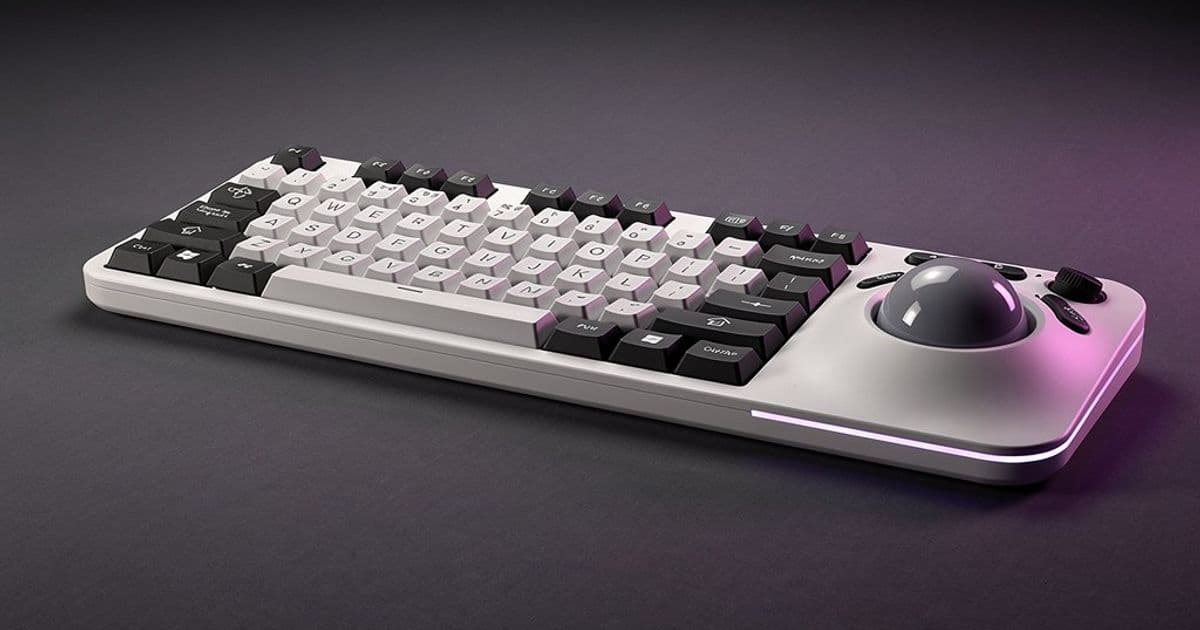
Keychron's Nape Pro integrates a thumb-operated trackball directly alongside mechanical keyboards, eliminating mouse reach while offering programmable controls and open-source customization.
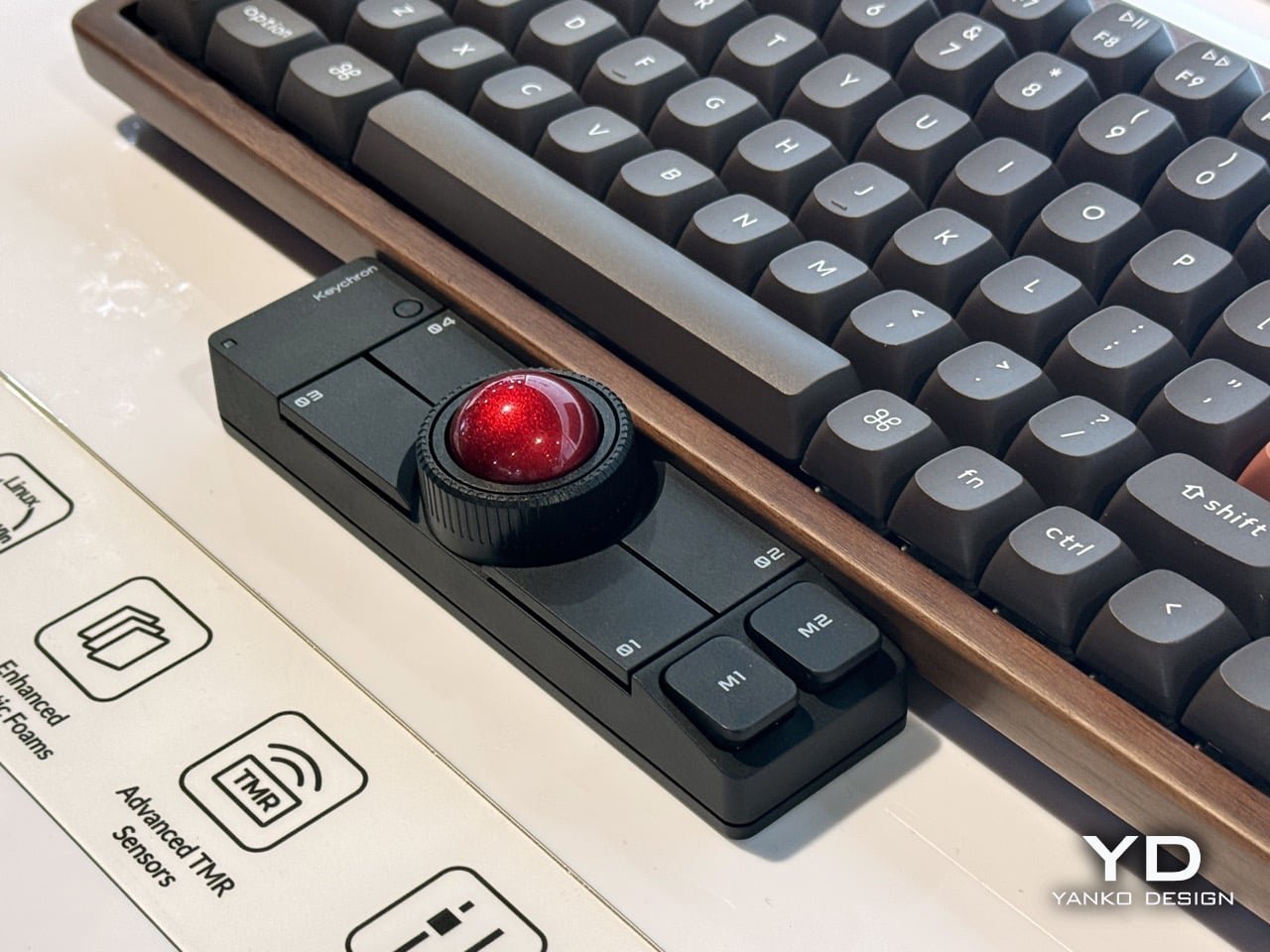
Traditional desktop setups force an inefficient workflow: keyboards centered, mice pushed aside, requiring constant repositioning between typing and pointing. Keychron's Nape Pro rethinks this dynamic by embedding a precision pointing system directly adjacent to mechanical keyboards. Unveiled at CES 2026, this 135.2mm × 34.7mm aluminum bar houses a 25mm thumb-operated trackball, six programmable buttons, and a scroll wheel—all designed to sit flush against your keyboard's edge.
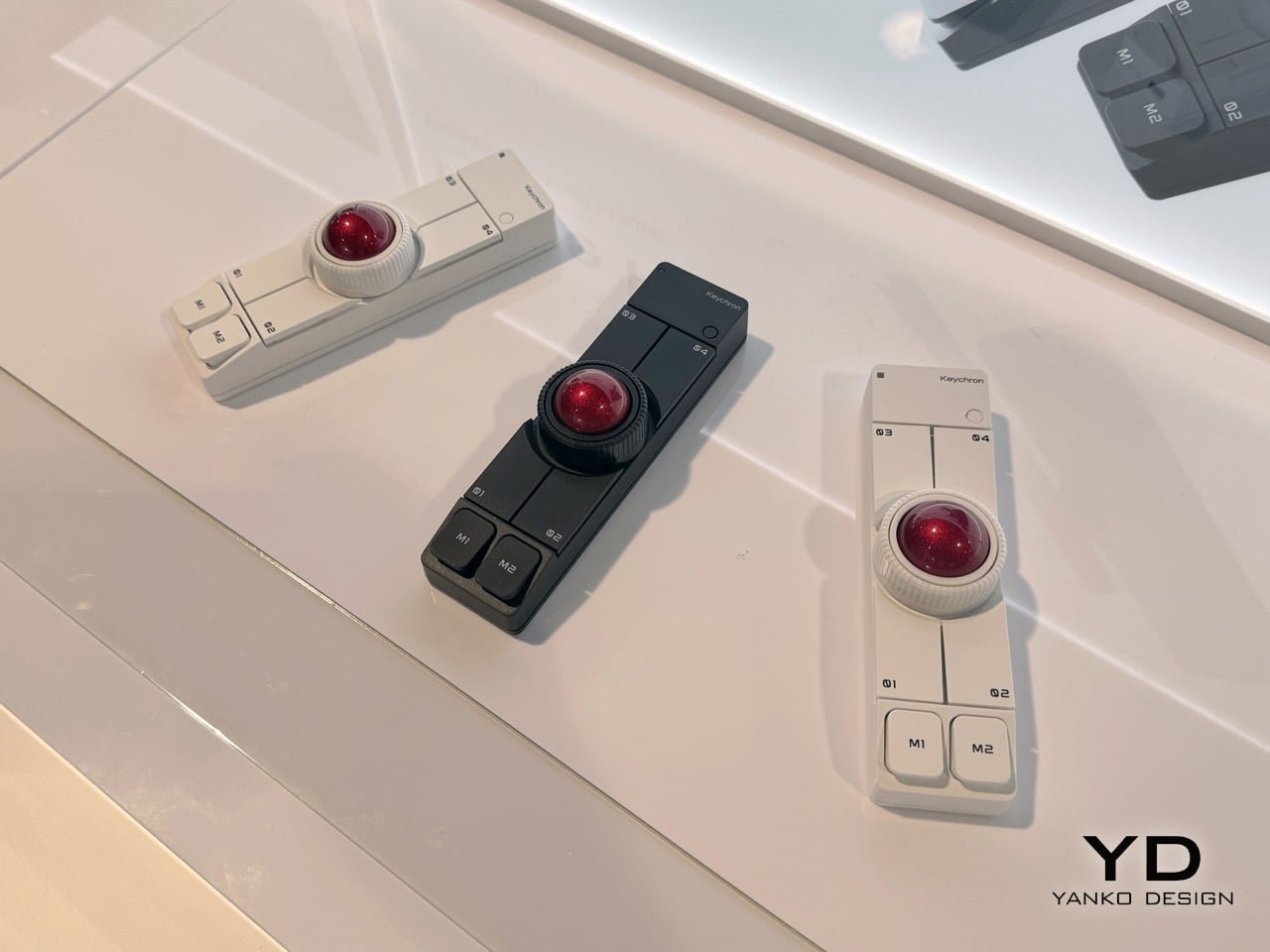
The device operates in two distinct modes. Attached to a keyboard, it functions like a laptop touchpad replacement, enabling cursor control without lifting hands from home row position. When detached, it transforms into a standalone wireless macro pad with trackball functionality. This dual personality stems from Keychron's OctaShift technology—an orientation-aware system that dynamically remaps button functions based on physical placement. The outermost M1 and M2 buttons consistently serve as primary clicks whether positioned horizontally, vertically, or angled, while other buttons adapt to context through ZMK-powered layers.
Hardware choices reflect thoughtful ergonomics. Huano silent microswitches prevent disruptive clicks during close-proximity use, while the compact trackball uses PixArt's PAW3222 sensor paired with a Realtek chipset delivering 1kHz polling rates—comparable to entry-level gaming mice. Connectivity includes Bluetooth 5.3, 2.4GHz wireless via USB-C dongle, or wired USB-C operation.
What distinguishes the Nape Pro is its commitment to the custom keyboard community. Unlike proprietary peripherals, it embraces open-source principles: firmware runs on ZMK (an extensible keyboard OS), and Keychron will release 3D case files publicly. This enables enthusiasts to print custom stands, modify button layouts, or redesign enclosures—effectively treating the trackball as another modular component in personalized setups. The approach acknowledges that mechanical keyboard users often invest heavily in programmability and ergonomics, yet tolerate generic pointing devices. By bridging this gap with equal customizability, Keychron targets users who view peripherals as systems to optimize, not merely tools to use.
Available Q3 2026, the Nape Pro represents a convergence point for keyboard-centric workflows. It solves spatial inefficiencies inherent to mouse usage while providing the programmability expected by power users—all without compromising the tactile experience of mechanical switches. For video editors needing shuttle controls beside timelines, developers wanting shortcuts next to code, or writers seeking scrolling without reaching, it offers a template for integrated input design.
Comments
Please log in or register to join the discussion