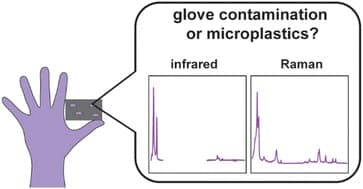
New research reveals that common laboratory gloves release stearate residues that are frequently misidentified as microplastics, potentially leading to overestimation of environmental plastic pollution by up to 2,000 particles per square millimeter.
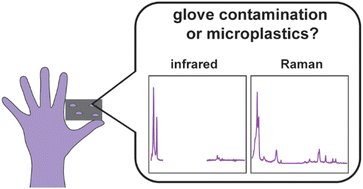
A team of researchers from the University of Michigan has uncovered a significant methodological issue in microplastic pollution research: laboratory gloves used during sample handling are contaminating samples with stearate residues that are being misidentified as actual microplastics. The study, published in Analytical Methods, demonstrates that dry contact with common nitrile and latex gloves can create an average of 2,000 false positive microplastic identifications per square millimeter when using traditional analytical methods.
"To accurately understand and address microplastic pollution, we first need reliable quantification methods," said Anne McNeil, lead researcher and professor of chemistry at the University of Michigan. "Our research shows that a common quality control measure—wearing gloves—is actually introducing significant contamination that skews results."
The contamination occurs because laboratory gloves contain stearate salts used as mold-release agents during manufacturing. These residues exhibit vibrational spectra similar to common microplastics like polyethylene, particularly when analyzed using traditional library matching approaches. The problem is most acute for the smallest microplastics (<10 micrometers), which are most relevant to environmental transmission and health impacts.
The research team tested seven common laboratory glove varieties and found significant variation in contamination rates. While all tested gloves released some stearate residues, nitrile cleanroom gloves performed best with only about 100 false positives per square millimeter. The worst-performing glove released over 7,000 false positives per square millimeter.
"What's particularly concerning is that this contamination affects the most critical size range of microplastics," explained Madeline Clough, first author of the study. "These smaller particles are most likely to be transported between ecosystems and have greater potential health impacts, yet they're also the most difficult to accurately identify."
To address this issue, the researchers developed several solutions:
- Glove selection: Recommending nitrile cleanroom gloves as the best alternative when glove use is necessary
- Modified spectral analysis: Suggesting researchers limit infrared spectral library searches to the extended fingerprint region (980-1800 cm⁻¹) where distinguishing features between stearates and microplastics are more apparent
- Conformal prediction: Implementing a statistical method that quantifies uncertainty in Raman spectral identifications
- Open-access spectral libraries: Providing reference spectra of various stearate species to help researchers identify contaminants
The team also applied their methods to a contaminated environmental dataset collected from four Michigan locations, demonstrating how their techniques could recover data affected by glove contamination.
Interestingly, the research also revealed inconsistencies in current quality assurance guidelines across microplastic literature. The team reviewed 26 review articles published between 2018 and 2024 and found that 81% recommended glove use as a quality control measure, with only 7% of articles published after similar findings in 2020 updating their recommendations. There was also no consensus on the best glove material, with latex gloves being most frequently recommended despite evidence showing similar contamination rates across materials.
"This research highlights the importance of methodological rigor in environmental science," said Andrew Ault, co-author and associate professor of environmental health sciences. "As we develop regulations and remediation strategies for microplastic pollution, we need confidence in our measurement methods. This work provides concrete steps to improve that confidence."
The study was funded by the College of Literature, Science, and Arts at the University of Michigan, with additional support from the National Science Foundation Graduate Research Fellowship Program. The researchers have made their spectral libraries and analysis workflows publicly available to help the broader microplastic research community improve the accuracy of their work.
As microplastic research continues to grow—with applications in environmental monitoring, public health, and regulatory frameworks—methodological improvements like those outlined in this study will be crucial for developing effective solutions to plastic pollution. The team's work not only addresses a specific analytical challenge but also demonstrates the importance of continuously questioning and improving research practices, even in well-established fields.
For researchers working with microplastic samples, the findings suggest a need to reevaluate laboratory protocols. The team recommends avoiding glove use when possible, selecting cleanroom-grade alternatives when necessary, and implementing the new analysis workflows to identify and account for potential contamination. These steps could significantly improve the accuracy of microplastic pollution data, leading to better understanding and mitigation of this environmental challenge.
The research team's findings have significant implications for environmental monitoring programs and regulatory efforts aimed at addressing plastic pollution. By improving the accuracy of microplastic quantification, this work could help ensure that policies and interventions are based on reliable data, ultimately leading to more effective environmental protection strategies.
Comments
Please log in or register to join the discussion