The Washington Post's unprecedented decision to shutter entire departments during peak news cycles marks a fundamental shift from traditional newspaper downsizing, reflecting owner Jeff Bezos' disengagement with journalism's core mission.
For generations, newspapers operated like complex machinery—removing a gear might slow the mechanism, but the engine kept turning. Last week, The Washington Post didn't remove gears; it dismantled entire assemblies. During one of the busiest sports weeks in recent memory—days before the Super Bowl and Winter Olympics—the paper shuttered its entire sports desk. Simultaneously, it gutted its Metro section, reducing a team of two dozen local reporters to a skeleton crew. This wasn't restructuring; it was amputation.
The Everything Store That Stopped Selling Everything
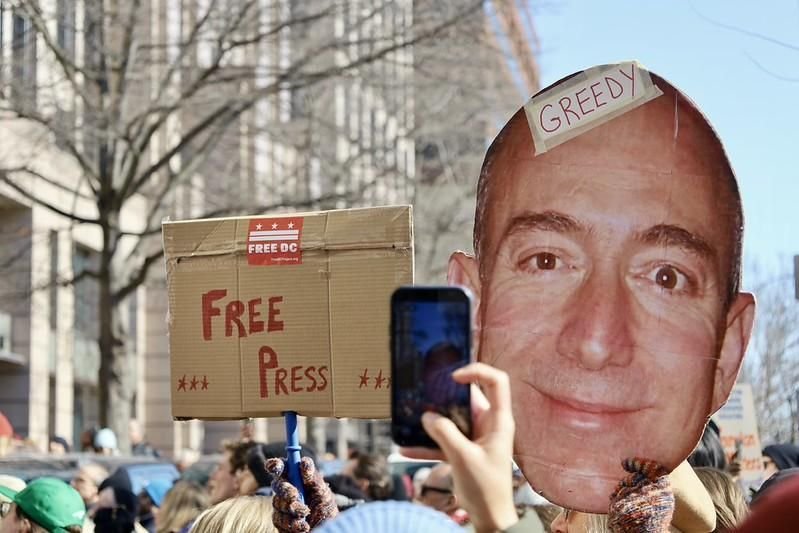
Newspaper layoffs have been tragically routine since the 2008 financial crisis. Historically, cuts followed patterns: trimming overlapping beats, offering buyouts, or consolidating copy desks. The Post’s approach defies this logic. As media critic Parker Molloy observed, these cuts feel like "curation" by owner Jeff Bezos—an intentional narrowing of scope to transform America's most storied political paper into "a larger version of Politico with legacy baggage." The timing was particularly jarring: Sports vanished hours after the Washington Wizards acquired superstar Anthony Davis, leaving readers without local coverage during a major franchise moment.
A Personal History of Newspaper Collapse
I know this trauma intimately. In 2008, my entire newspaper—a Virginian-Pilot subsidiary—closed abruptly. That rupture scattered our tight-knit team like shrapnel. Ironically, the Post saved me then. After my layoff, they hired me for their Express edition, pulling me from Virginia to Washington D.C. That move changed my life: I met my wife, and the severance money funded a risky laptop purchase that birthed my blog, ShortFormBlog. Disruption bred reinvention—but only because the Post still valued journalism's breadth.
The Broken Safe Harbor
For decades, certain newspapers seemed immune to journalism's economic storms. The Post, with its Watergate legacy and Pentagon Papers courage, was a beacon. When legendary news designer Charles Apple published his "Layoff Survival Guide" in 2009, it was for journalists at other papers. The Post was where you rode out the turbulence. That perception died this week. Bezos—who built Amazon as "The Everything Store"—has decided his newspaper shouldn't be for everyone. Sports fans? Casual metro readers? No longer served.
What Vanishes When Sections Die

Local TV stations and digital upstarts like The 51st will try filling the Metro gap, but institutional memory evaporates. Sports desks build reader loyalty that subsidizes investigative work; their removal weakens the entire foundation. As former Post reporter Wesley Lowery noted, these cuts "make no sense by any journalistic math." They signal disinvestment in the messy, expensive work of local accountability reporting—the very journalism that distinguishes newspapers from content mills.
The Post’s retreat feels like a cultural surrender. When Kara Swisher joked about buying the paper from Bezos last year, it seemed fanciful. Today, it reads like an obituary for what newspapers could be. For the laid-off staff, this isn't just job loss—it's the fracturing of a sanctuary. And for readers? A machine that once hummed with purpose now sputters on borrowed time.
Image Credits: Featured image (), Personal archive photo (, Joe Flood/Flickr), Newspaper collage ()
Comments
Please log in or register to join the discussion