
AI coding assistants are dismantling the inherent advantage of mature open-source projects by dramatically lowering the barrier to creating new systems.
Philip O'Toole's recent experience with AI coding tools sparked a profound realization about the shifting foundations of open-source software. Drawing parallels to the Star Trek episode The Doomsday Machine, where a once-impenetrable weapon becomes obsolete, O'Toole describes his moment of clarity: "That is roughly how I feel about the moat that surrounded open-source software." 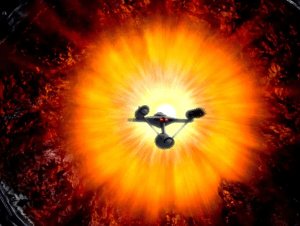 This analogy captures the unsettling shift occurring in software development, where the gravitational advantage of existing codebases is rapidly diminishing.
For years, O'Toole maintained rqlite, an MIT-licensed distributed database built on SQLite. Like many open-source maintainers, he operated under an unspoken assumption: the true moat wasn't proprietary code, but the sheer weight of accumulated work embedded in a functional system. Features lingered on rqlite's backlog not from technical ignorance, but because the effort required seemed disproportionate to the payoff. The database's real defense against competition lay in the years of embedded knowledge—architecture decisions, edge-case handling, and production-tested reliability. Replicating that foundation from scratch represented such monumental effort that contributing to rqlite remained the logical path for anyone needing SQLite-based distributed functionality.
This dynamic shifted dramatically when O'Toole integrated tools like Claude Code Copilot CLI into his workflow. Features previously deemed impractical suddenly became achievable in fractions of the time. "Work that felt tedious became almost light," he observes, describing how years-long backlog items began shipping rapidly. Yet this productivity surge revealed a darker corollary: if AI could accelerate changes to existing systems, it could equally accelerate the creation of new ones. The gravitational advantage of mature codebases—their primary defensive moat—was eroding.
The implications are structural. Where once the existence of a working system like rqlite created natural inertia against competitors, AI tools substantially lower the activation energy required to build alternatives. Distributed systems remain complex, and production experience retains value, but the cost differential between extending an established project and creating a competitive alternative has narrowed alarmingly. The threat is no longer feature parity through forking, but displacement through entirely new systems developed at unprecedented speed.
This paradigm cuts both ways. While maintainers gain accelerated development capabilities, they simultaneously face heightened competitive pressure. Features delayed too long may now emerge faster in rival projects powered by the same AI tools. O'Toole acknowledges this dual reality: rqlite progresses faster than ever, yet the comfort of inherent project security has evaporated. The enduring value shifts toward the maintainer team's velocity and judgment—their ability to leverage these tools more effectively than potential competitors.
What emerges is a redistribution of advantage from accumulated code to accelerated execution. The Star Trek metaphor resonates precisely because it illustrates the sudden obsolescence of what appeared permanent. As O'Toole concludes, the protective force of pre-written code—that once-formidable moat—no longer holds its ground against tools capable of replicating years of labor in compressed timeframes. This transformation redefines open-source competition, replacing the security of legacy code with the imperative of continuous innovation.
Comments
Please log in or register to join the discussion