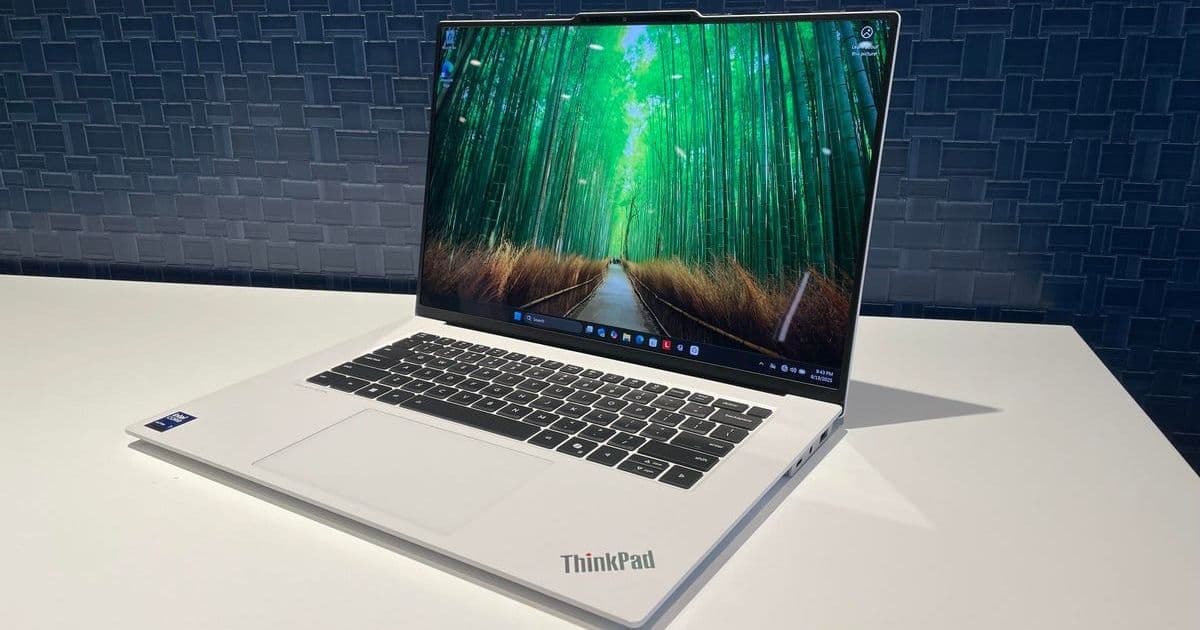
Lenovo unveiled a stunning Glacier White variant of its boundary-pushing ThinkPad X9 at IFA 2025, coupled with critical storage upgrades and a pivot to software-based sharing. The new ThinkPad P1 and P16v mobile workstations, featuring Nvidia's Blackwell GPUs, promise transformative performance for AI and engineering workloads. These releases signal a strategic blend of bold design innovation and raw computational power for developers and creators.
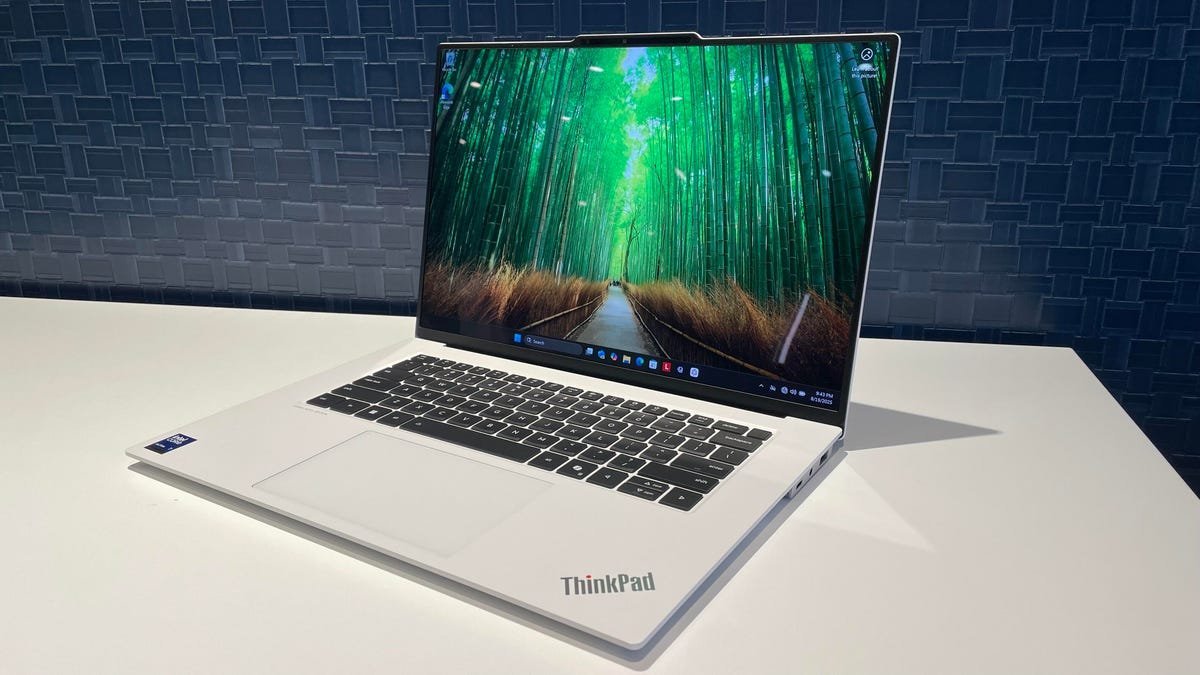
At IFA 2025, Lenovo didn't just iterate—it reimagined. The star of the show was the ThinkPad X9, now clad in a matte Glacier White finish that transforms it from a utilitarian tool into a statement piece. As Kyle Kucharski of ZDNET noted, this colorway amplifies the laptop's existing departure from traditional ThinkPad aesthetics, ditching the TrackPoint and black chassis for a sleek, ribbed design and integrated 'engine hub.' But this isn't just about looks: Lenovo addressed a major pain point by upgrading the base storage to a 1TB SSD across both 14- and 15-inch models, a critical fix for developers juggling large datasets and containerized environments. The Intel Core Ultra 7 258V processor remains, ensuring solid performance for on-the-go coding, while the abandonment of the physical tap-to-share feature in favor of Lenovo Connect software reflects a pragmatic shift toward cloud-integrated workflows.
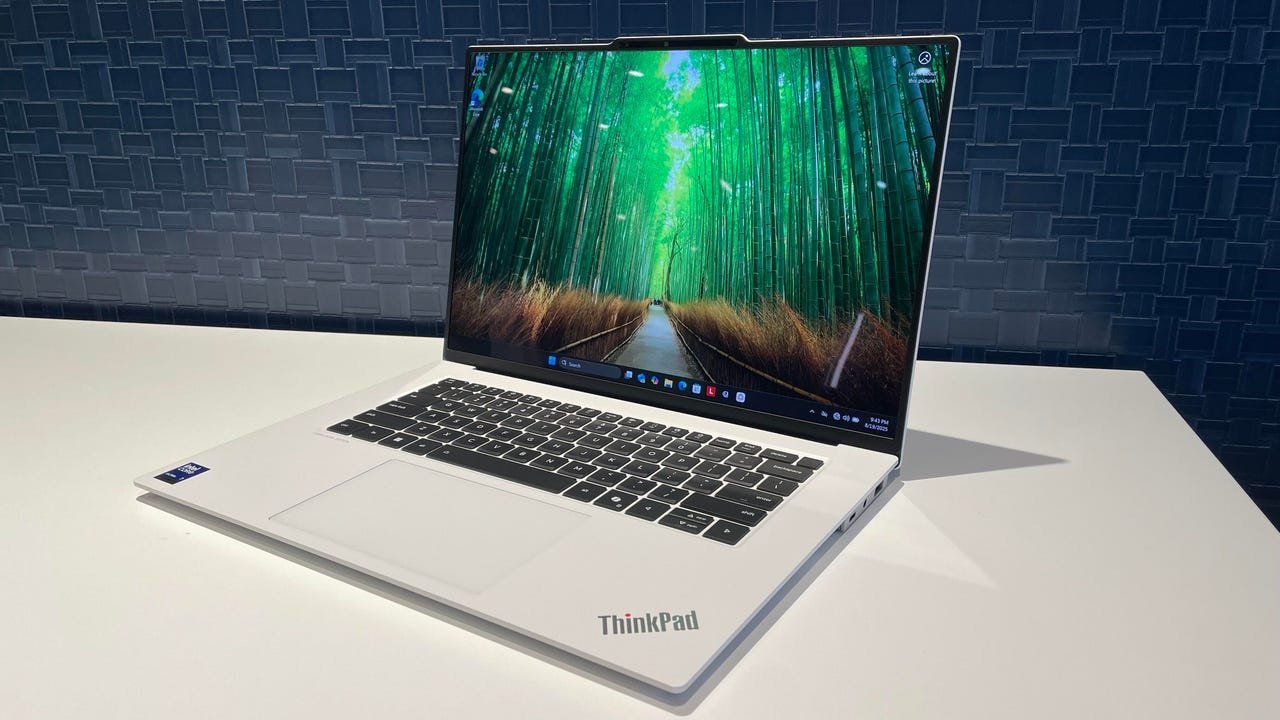 Image: Lenovo ThinkPad X9 in Glacier White (Credit: Kyle Kucharski/ZDNET)
Beyond the X9's style evolution, Lenovo doubled down on raw power with its mobile workstation lineup. The ThinkPad P1 Gen 8 and P16v Gen 3 are engineered for the computational heavyweights—think AI researchers, 3D animators, and engineers. Both feature Nvidia's RTX PRO 2000 Blackwell GPUs, which represent a generational leap over previous Ada Lovelace architecture. For context, Blackwell's tensor cores and enhanced ray tracing capabilities can accelerate local LLM inference and complex simulations, reducing reliance on cloud resources. The P1 starts at $2,819 with an Intel Core Ultra Series 2 CPU, retaining classic ThinkPad staples like the TrackPoint and robust port selection. Meanwhile, the 16-inch P16v starts at a more accessible $2,249 but packs a punch with options for a 4K OLED touchscreen and up to 96GB of RAM, ideal for memory-intensive tasks like CAD or generative AI prototyping.
"The Blackwell GPU is a game-changer for professionals who need desktop-grade performance in a mobile form factor," observed ZDNET's hands-on testing. "It redefines what's possible in fields like real-time rendering and on-device AI."
Yet, there are trade-offs. The P16v's utilitarian design comes with heft—weighing 4.6 pounds and measuring an inch thick—which could deter ultra-mobile users. Battery life is another concern; despite the 90Whr cells, Blackwell's power demands might tether users to outlets during intensive workloads. For developers, these machines highlight a growing trend: the convergence of high-performance computing and portability. The X9's storage upgrade directly responds to frustrations with undersized SSDs in thin-and-light models, while Blackwell GPUs enable complex machine-learning tasks without constant cloud dependency. As hybrid work evolves, Lenovo's strategy—balancing the X9's audacious design with workstation-grade muscle—offers a compelling roadmap for professionals seeking both inspiration and uncompromising capability.
Source: ZDNET (Kyle Kucharski and Cesar Cadenas)
Comments
Please log in or register to join the discussion