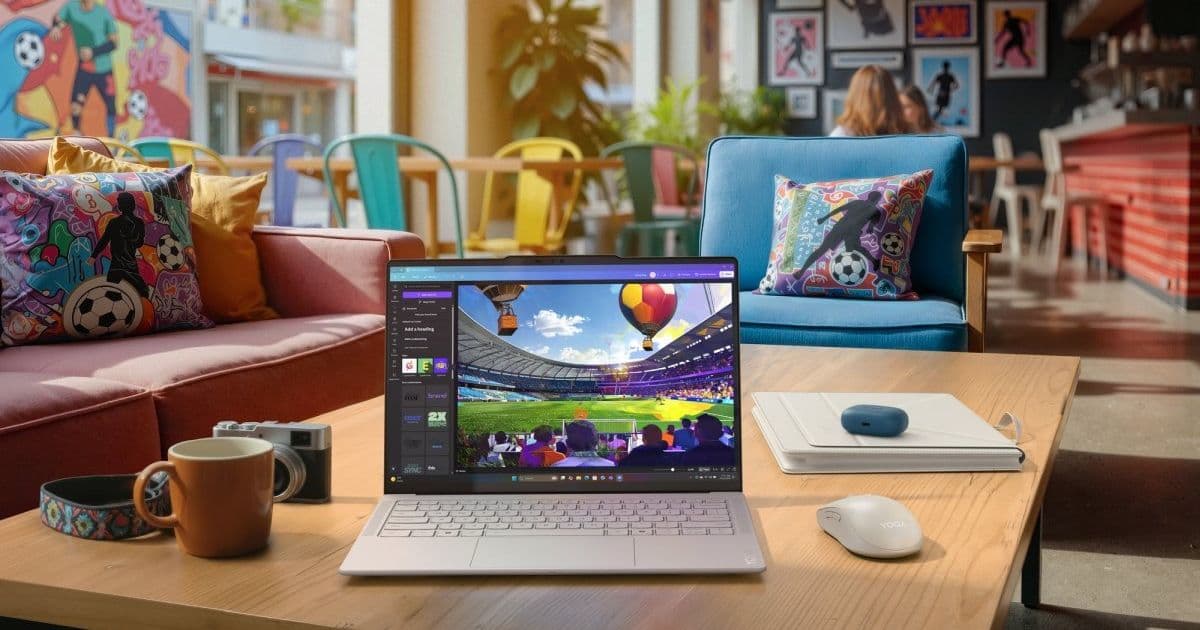
Lenovo's latest Yoga Slim combines Intel's upcoming Core Ultra X9 388H processor with a magnesium alloy chassis, targeting professionals who need workstation-class performance in an ultraportable package.
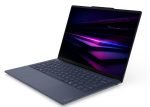
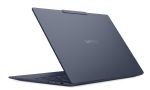
The Lenovo Yoga Slim 7i Ultra Aura Edition represents a calculated bet on where premium laptops are heading: lighter weights without the traditional performance compromises. At 975 grams (2.15 pounds) and 13.9mm thick, it joins a small but growing category of laptops that break the 3-pound barrier while still offering high-end specs.
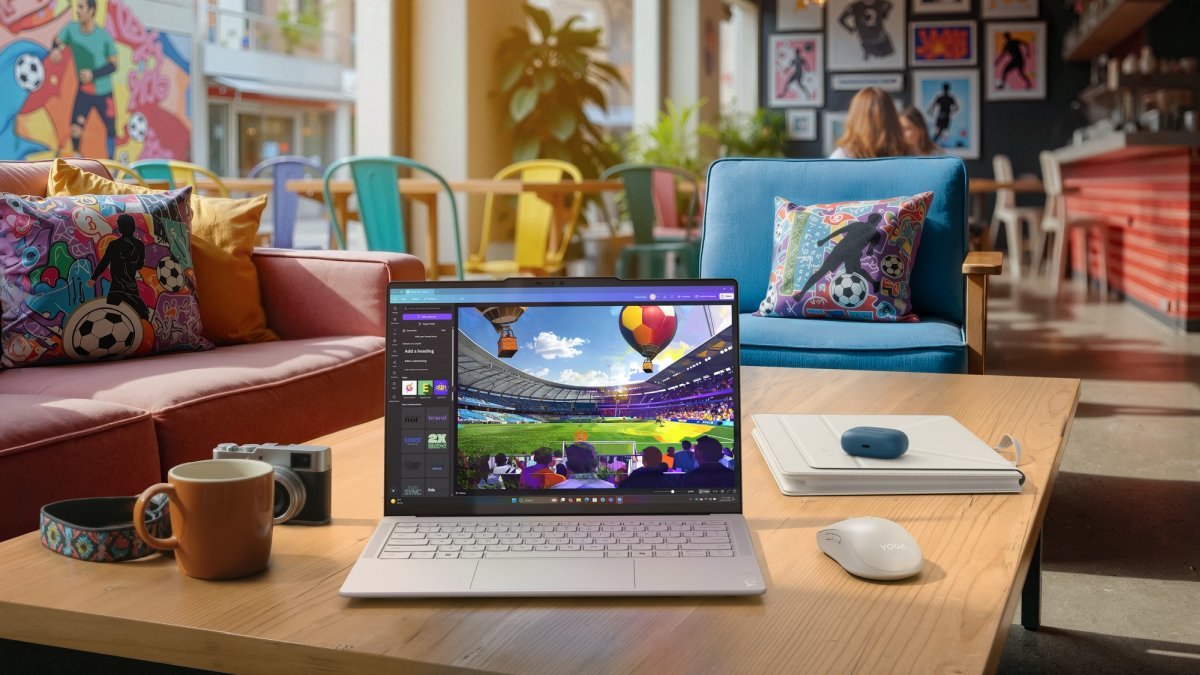
What makes this particular model interesting isn't just the weight, but the timing. The Core Ultra X9 388H is part of Intel's Panther Lake family, representing the company's first true 18A process node transition. For developers and power users, this matters because Panther Lake's architecture changes how Intel approaches the performance-per-watt equation. The 16-core CPU and 12-core Arc B390 graphics aren't just incremental improvements—they're built on a process that should theoretically allow Intel to compete more effectively with Apple's M-series chips and Qualcomm's Snapdragon Elite offerings.
Early benchmarks suggesting RTX 4050-level integrated graphics performance are particularly noteworthy. If accurate, this means the Yoga Slim 7i could handle mobile development workflows—Android emulators, iOS simulators, Docker containers, and light machine learning tasks—without requiring a discrete GPU that would add weight and reduce battery life.
The Aura Edition Context
The "Aura Edition" branding isn't just marketing fluff. Lenovo co-engineered these laptops with Intel as part of a specific program that emphasizes thin-and-light designs with AI acceleration. The partnership means Intel's AI software stack gets optimized hardware support, which matters for developers working with frameworks like TensorFlow, PyTorch, or ONNX Runtime that can leverage NPUs.
For cross-platform developers, this hardware configuration presents an interesting scenario. You're getting Thunderbolt 4 ports (three of them), which means you can connect external GPUs, multiple 4K displays, or high-speed storage arrays. The 65W charging via USB-C keeps your travel kit simple. WiFi 7 and Bluetooth 5.4 ensure you're ready for the next generation of wireless peripherals and development environments that rely on fast local networking.
Display and Input Considerations
The 14-inch 2880x1800 POLED panel at 120Hz with 1100 nits peak brightness addresses several developer pain points. High resolution means you can fit more code on screen or scale UI elements without pixelation. The 120Hz refresh rate makes scrolling through code and documentation feel responsive. OLED's perfect blacks and high contrast reduce eye strain during those marathon debugging sessions.
The 120 x 75mm glass touchpad with force touch should handle multi-finger gestures reliably, which matters for developers who prefer trackpad navigation over carrying a mouse. The backlit keyboard is standard for premium laptops, but the key travel and actuation force will determine whether it's suitable for extended typing sessions.
Memory and Storage Configuration
Up to 32GB of LPDDR5x-9600 memory is generous for an ultraportable, though it's soldered as is typical for this class. For mobile development, 32GB should comfortably handle running multiple simulators, IDE instances, and background services. The LPDDR5x-9600 speed ensures the integrated Arc graphics have sufficient memory bandwidth, which is often a bottleneck for integrated GPU performance.
Storage options weren't specified in the announcement, but given the premium positioning, expect PCIe 4.0 NVMe SSDs with capacities starting at 512GB. For developers working with large codebases or container images, the speed of storage I/O can significantly impact productivity.
Port Limitations and Workarounds
The three Thunderbolt 4 ports are both a blessing and a curse. On one hand, they provide 40 Gbps data transfer, native display output, and up to 100W power delivery. On the other hand, you'll need adapters or a dock for any non-USB-C peripherals. This is increasingly standard for ultraportables, but it means budgeting for accessories:
- A USB-C to HDMI/DisplayPort adapter for external monitors
- A USB-C hub with USB-A, Ethernet, and SD card readers
- Potentially a Thunderbolt dock for a desktop setup
For developers who need to connect to legacy hardware—serial ports for embedded development, USB-A devices, or wired networking—this port strategy requires planning.
Cross-Platform Development Implications
The Yoga Slim 7i Ultra Aura Edition sits at an interesting intersection for cross-platform developers. The Intel architecture means you can run Windows or Linux natively, with full support for development toolchains. If you're building iOS apps, you'll still need a Mac for final builds and App Store submissions, but the Yoga Slim can handle the bulk of your React Native, Flutter, or Xamarin development.
For Android development, the combination of Panther Lake's performance and 32GB RAM should make Android Studio and emulators run smoothly. The Arc B390 graphics, if they truly approach RTX 4050 performance, could accelerate emulator rendering and even some Unity/Unreal Engine work for mobile game development.
The AI acceleration capabilities open doors for developers working with on-device ML. Intel's OpenVINO toolkit and support for ONNX Runtime mean you can develop and test models that will eventually run on Intel-based edge devices or servers.
Battery and Thermal Reality
The 75Wh battery is respectable for a 2.2-pound laptop. Combined with Panther Lake's efficiency improvements, you should expect full-day development sessions away from power outlets. However, the 65W charging limit means recharging will be slower than laptops that accept 100W+ input. For developers who work in bursts—coding for a few hours, then presenting to clients—this might not be an issue. For those who continuously compile and test, you'll want to keep the charger handy.
Thermal management in a 13.9mm chassis with high-performance components is always a challenge. Lenovo's cooling solution will determine whether the Core Ultra X9 388H can maintain its boost clocks during sustained workloads like compiling large projects or running multiple virtual machines.
Pricing and Availability
Starting at $1500 in Q2 2026 positions this as a premium ultraportable. For comparison, current Yoga models with similar specs but previous-generation processors typically range from $1200-$1800. The question for developers is whether the Panther Lake performance gains and weight reduction justify the premium over existing options.
If you're currently using a 3-4 pound laptop and want to reduce travel weight without sacrificing performance, the Yoga Slim 7i Ultra Aura Edition makes a compelling case. If you're already using a modern ultraportable, the upgrade calculus depends on whether your specific development workflows benefit from the new architecture.
Developer Workflow Considerations
For mobile developers specifically, this laptop addresses several key requirements:
Build Performance: The 16-core CPU should significantly reduce compile times for large projects, especially if you're working with Swift, Kotlin, or TypeScript codebases that benefit from parallel compilation.
Emulator Performance: Android emulators with hardware acceleration can be demanding. The combination of fast memory and capable integrated graphics should provide smooth emulator experiences, even with multiple device profiles running.
Container Development: If you're using Docker or Podman for local development environments, 32GB RAM gives you headroom for multiple containers without swapping.
UI Design Work: The high-resolution OLED display with accurate colors makes it suitable for UI/UX design work in tools like Figma or Adobe XD.
Testing: The Thunderbolt 4 ports support external capture devices if you need to test with physical hardware.
The Competitive Landscape
This laptop enters a market where Apple's M-series MacBooks set the standard for performance-per-watt in ultraportables. Intel's Panther Lake needs to demonstrate that it can compete on battery life while delivering the x86 compatibility that many development tools still require.
For developers tied to Windows-specific tools or who prefer native Linux development environments, the Yoga Slim 7i Ultra Aura Edition offers an alternative to Apple's ecosystem. The question isn't whether it's powerful enough—it almost certainly is—but whether the total package (performance, weight, battery, ports) aligns with your specific workflow needs.
The real test will come when independent reviews confirm the performance claims and battery life. Early benchmarks are promising, but development workloads can expose weaknesses that synthetic tests don't reveal. For now, the Yoga Slim 7i Ultra Aura Edition represents Intel and Lenovo's vision of what premium mobile development hardware should look like in 2026: light enough to forget you're carrying it, powerful enough to forget you're not at your desk.
Comments
Please log in or register to join the discussion