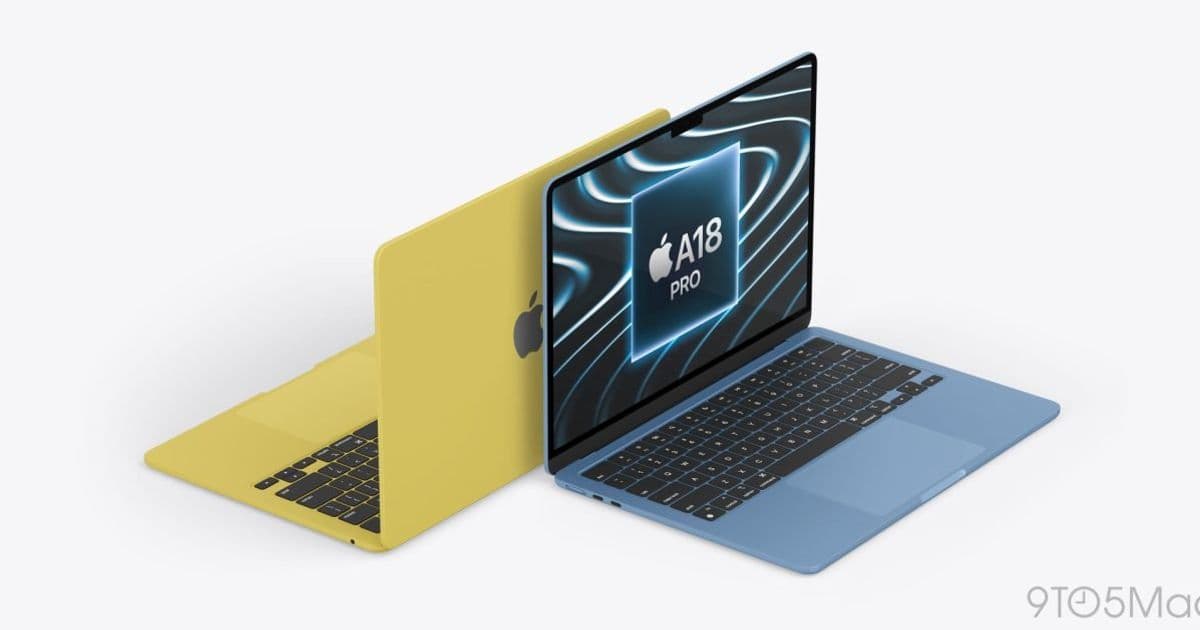
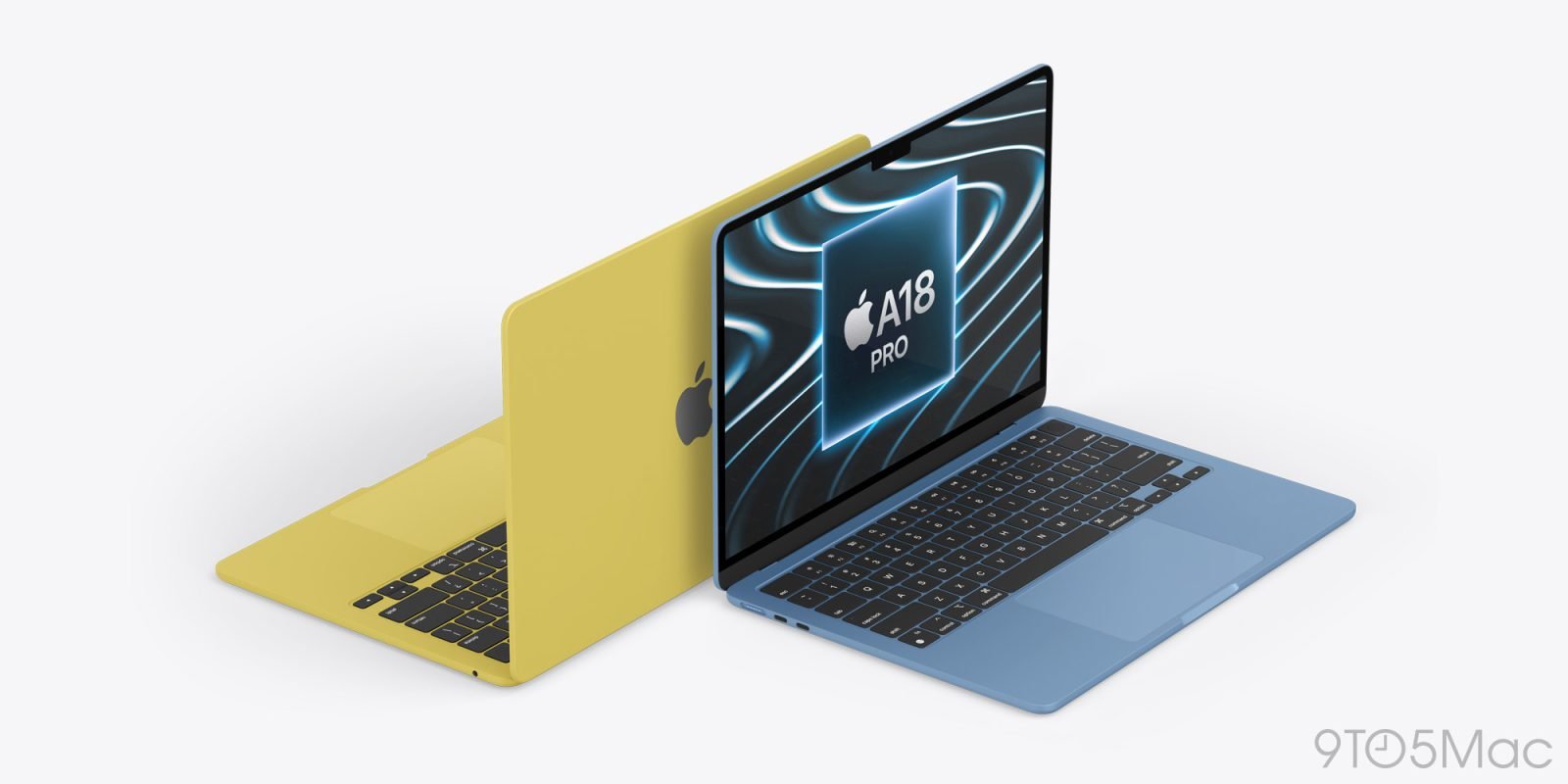
Apple's rumored low-cost MacBook may have several compromises, but which ones would actually stop you from buying?
Apple clearly needs some way of distinguishing the upcoming low-cost MacBook from the more expensive MacBook Air. We'd wondered whether color might be sufficient to limit cannibalization, but it's been suggested that the new machine may have a number of compromises.
9to5Mac readers aren't really the target market for an entry-level machine, but some might consider it as a second Mac, while others might recommend it to family and friends. However, would any of the rumoured compromises be a deal-breaker?
While some might be dismissive of a MacBook powered by an iPhone chip, we've already noted that is unlikely to be too much of a drawback. The first Apple Silicon MacBook Air model was powered by the M1 chip. This was widely praised for its combination of performance and power efficiency. The A18 Pro chip is remarkably similar to the M1, as the benchmarks show. My own experience demonstrated that even six years later, it is still a very capable device.
However, a report earlier this week claimed the machine would have a number of arguably more significant compromises. To be clear, the source is unproven, so the suggested specs may or may not be accurate. But if the limits listed prove real, would you consider any of them to be unacceptable – even on a machine reputedly set to list at around $700 and likely sell for less from the likes of Best Buy?
If all of the compromises are accurate, then you might consider the totality to rule out the machine as a reasonable buy. But a more interesting question to me is whether there is any single item on the list that you'd consider to be a deal breaker. In other words, if that were the only compromise, you would still say that the machine should be avoided?
Please take our poll, and share your reasons in the comments. The poll allows you to select multiple items, but please only choose any you would consider a deal-breaker all on its own.
Would any single compromise be a deal-breaker?
- No
- Doesn't support high-impedance headphones
- Doesn't have a True Tone display
- Doesn't have P3 wide-gamut color
- Lower max display brightness than the MacBook Air's 500-nit display
- Doesn't support fast charging of any sort
- Uses a MediaTek Wi-Fi and Bluetooth chip, not the N1
- Doesn't have a backlit keyboard
- Slower SSD speeds compared to the MacBook Air
- 8GB RAM
The rumored compromises for Apple's low-cost MacBook represent a fascinating case study in product positioning and market segmentation. At a reported $700 price point, this device would sit in an interesting spot between premium MacBooks and Chromebooks, forcing Apple to make difficult trade-offs to protect its higher-margin products.
The most contentious compromise appears to be the use of an A18 Pro chip rather than a full M-series processor. While some might view this as a significant step down, the reality is more nuanced. The A18 Pro shares architectural similarities with the M1, which powered the original Apple Silicon MacBook Air to critical acclaim. For many users, especially those in the target market for a budget laptop, the performance difference may be imperceptible in day-to-day use.
However, other compromises could have more tangible impacts on user experience. The absence of a backlit keyboard, for instance, would be a significant regression for anyone who works in varied lighting conditions or types in low-light environments. Similarly, the reported use of a MediaTek Wi-Fi and Bluetooth chip instead of Apple's proprietary N1 solution could affect connectivity reliability and performance, particularly in environments with many competing wireless signals.
The display specifications raise particular concerns. A maximum brightness below the MacBook Air's 500-nit standard could make the device difficult to use outdoors or in brightly lit rooms. The absence of True Tone technology would eliminate the automatic color temperature adjustment that many users have come to expect, while the lack of P3 wide-gamut color support would limit the display's accuracy for creative work.
Storage performance often gets overlooked in spec comparisons, but slower SSD speeds could significantly impact everyday usability. Applications would load more slowly, file transfers would take longer, and the overall system responsiveness would suffer. This is particularly problematic given that 8GB of RAM would already limit the machine's ability to handle multiple applications simultaneously.
The absence of fast charging support represents another practical limitation. In an era where many users expect to quickly top up their devices during short breaks, being limited to standard charging speeds could be frustrating for mobile users.
Perhaps most surprisingly, the reported lack of high-impedance headphone support could alienate a segment of users who rely on professional-grade audio equipment. While this may seem like a niche concern, it demonstrates how even seemingly minor compromises can have outsized impacts on specific user groups.
The broader question is whether Apple can successfully position this device in a market where Windows laptops and Chromebooks offer increasingly compelling features at similar price points. The company's brand strength and ecosystem integration provide significant advantages, but the reported compromises suggest Apple may be testing how much it can reduce costs without completely undermining the Mac experience.
For many potential buyers, the decision will likely come down to use case. A student primarily using web-based applications and light productivity software might find the device perfectly adequate, while a professional requiring color-accurate displays, reliable connectivity, and consistent performance across multiple applications would likely find the compromises unacceptable.
The $700 price point is crucial context here. At this level, some compromises become more understandable, though not necessarily acceptable. The question isn't whether the device is better than a MacBook Air, but whether it provides sufficient value compared to alternatives in the same price bracket.
What makes this particularly interesting is that Apple appears to be walking a fine line between creating a truly accessible Mac and protecting its premium product lineup. The compromises seem carefully chosen to create meaningful differentiation without completely undermining the macOS experience.
For developers and power users, the most concerning aspect might be the long-term implications. If Apple successfully sells a significant volume of these devices, it could signal a broader shift toward more aggressive cost-cutting across the Mac lineup. This raises questions about the future of the Mac platform and whether Apple will continue to prioritize performance and features or increasingly focus on profitability.
The most revealing aspect of this situation is how it highlights the complex trade-offs involved in creating affordable technology. Every cost reduction represents a compromise somewhere, and the art lies in choosing which compromises users will accept. Apple's challenge is determining which features are essential to the Mac experience and which can be sacrificed to reach a lower price point.
As the rumored specifications suggest, Apple may have already made those decisions. The real test will be whether consumers agree with those choices when the device finally ships. The poll results and subsequent discussion will provide valuable insight into which compromises users find most problematic and whether Apple has struck the right balance between affordability and functionality.
For now, the question remains: which single compromise would be a deal-breaker for you? The answer likely depends as much on your specific needs and expectations as it does on the absolute severity of any individual limitation. In a device positioned at this price point, perfection is clearly not the goal – but determining the minimum acceptable standard for a Mac remains a subject of intense debate among potential buyers.
Comments
Please log in or register to join the discussion