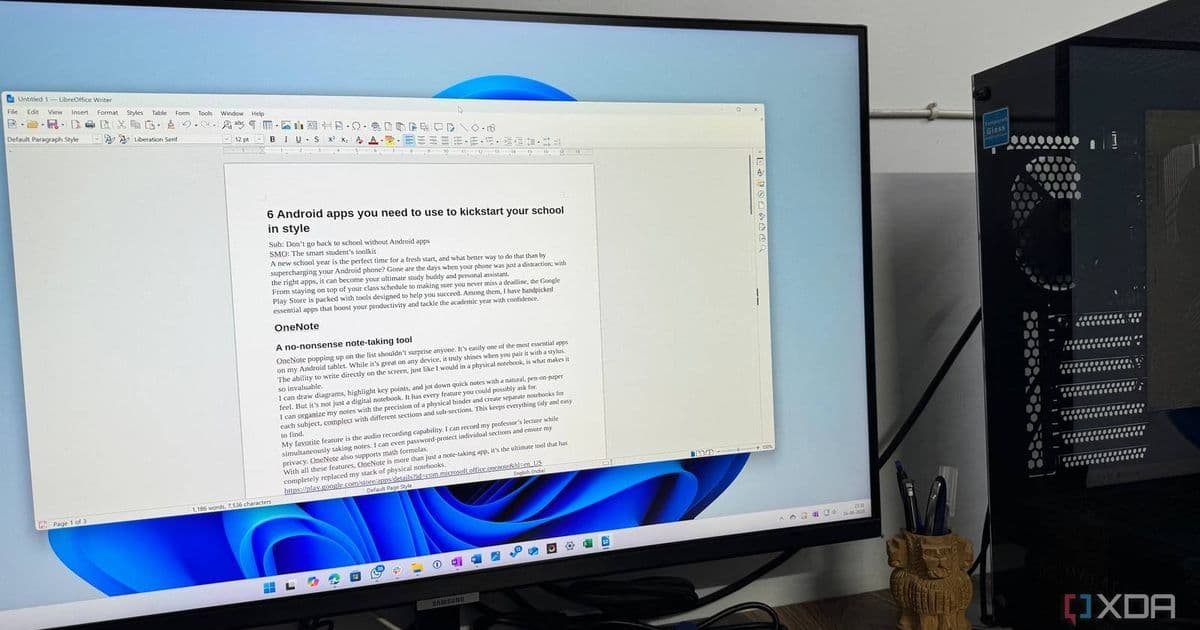
The Document Foundation is reviving its web-based office suite, LibreOffice Online, with a new development team and roadmap for 2026-2027.
The Document Foundation has announced the resumption of development on LibreOffice Online, its self-hosted web-based office suite that aims to provide an open-source alternative to Google Docs and Microsoft Office Online. After a period of limited development, the project is now receiving renewed attention with a dedicated team and clear roadmap for the coming years.
LibreOffice Online allows organizations and individuals to run their own web-based office suite on their servers, offering word processing, spreadsheets, and presentations through a browser interface. Unlike cloud-based alternatives that store documents on third-party servers, LibreOffice Online keeps data under the user's control while providing the convenience of online document editing.
Why LibreOffice Online Matters
The revival of LibreOffice Online addresses growing concerns about data privacy and vendor lock-in with mainstream cloud office suites. For businesses, educational institutions, and privacy-conscious users, having a self-hosted alternative means maintaining control over sensitive documents while still enabling collaborative features.
The project had seen limited development in recent years, but The Document Foundation has now assembled a development team focused on bringing the platform up to modern standards. This includes improving the user interface, enhancing compatibility with Microsoft Office formats, and optimizing performance for web-based use.
Development Roadmap and Features
According to the announcement, the development team is working on several key improvements:
- Enhanced User Interface: Modernizing the web interface to provide a more intuitive experience comparable to commercial alternatives
- Format Compatibility: Improving support for Microsoft Office file formats to ensure seamless document exchange
- Performance Optimization: Reducing load times and improving responsiveness for larger documents
- Mobile Responsiveness: Better support for editing on tablets and smartphones
- Real-time Collaboration: Enhanced features for multiple users working on the same document simultaneously
The foundation has outlined a development timeline extending through 2026 and 2027, with regular updates planned to keep the community informed of progress.
Technical Implementation
LibreOffice Online is built using the same core engine as the desktop version of LibreOffice, but with a web interface layer that allows documents to be edited through a browser. It uses the LibreOfficeKit API to provide document rendering and editing capabilities.
Installation typically requires a Linux server environment, though the foundation is working to simplify deployment. Organizations can choose to run it on-premises or through a hosting provider that supports the necessary infrastructure.
Competition and Market Position
LibreOffice Online enters a competitive space dominated by Google Workspace and Microsoft 365. However, it offers distinct advantages for certain use cases:
- Privacy: Documents remain on the user's servers
- Cost Control: No per-user subscription fees after initial setup
- Open Source: Full transparency and customization options
- Format Independence: Native support for OpenDocument Format (ODF)
For organizations already using LibreOffice on desktop, the online version provides a natural extension of their workflow without requiring a shift to proprietary ecosystems.
Getting Started
Organizations interested in trying LibreOffice Online can find installation packages and documentation on the official LibreOffice website. The foundation recommends having IT expertise available for initial setup, though they're working on making deployment more accessible to non-technical users.
Community involvement remains crucial for the project's success. Developers can contribute to the codebase, while users can help with testing, documentation, and providing feedback on the user experience.
The revival of LibreOffice Online represents a significant investment in open-source office productivity tools and provides a viable alternative for those seeking to maintain control over their document workflows while enjoying the benefits of web-based collaboration.
Comments
Please log in or register to join the discussion