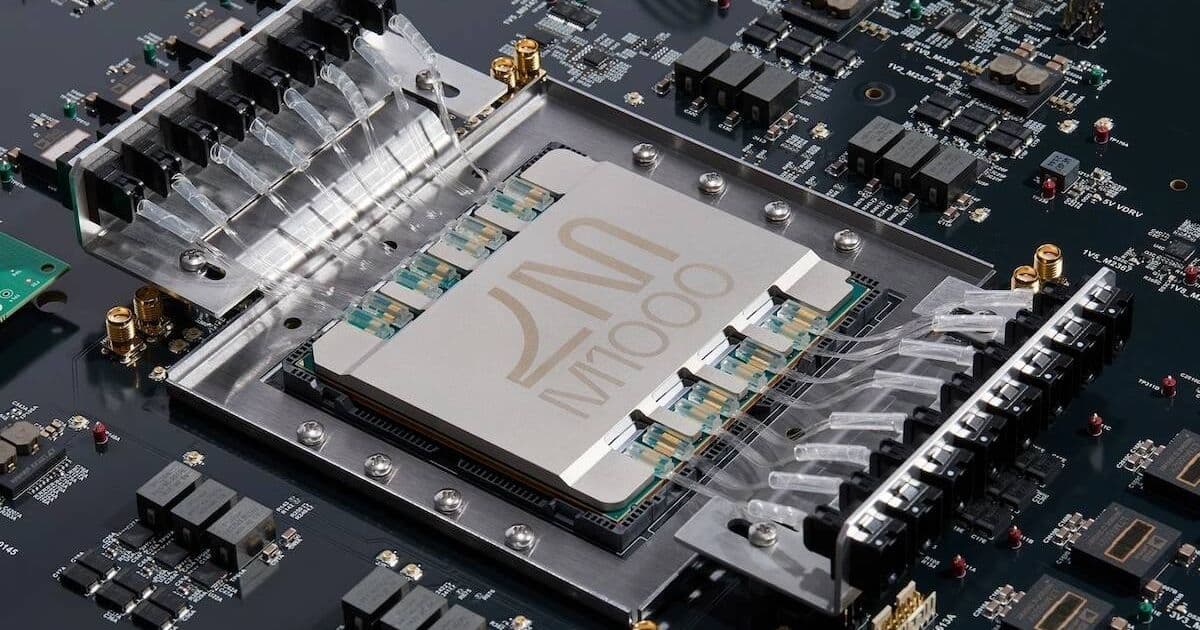
Lightmatter unveils Passage L20 optical engine that cuts fiber usage in half through bidirectional signaling, offering a near-package alternative to co-packaged optics for hyperscalers wary of permanent integration.
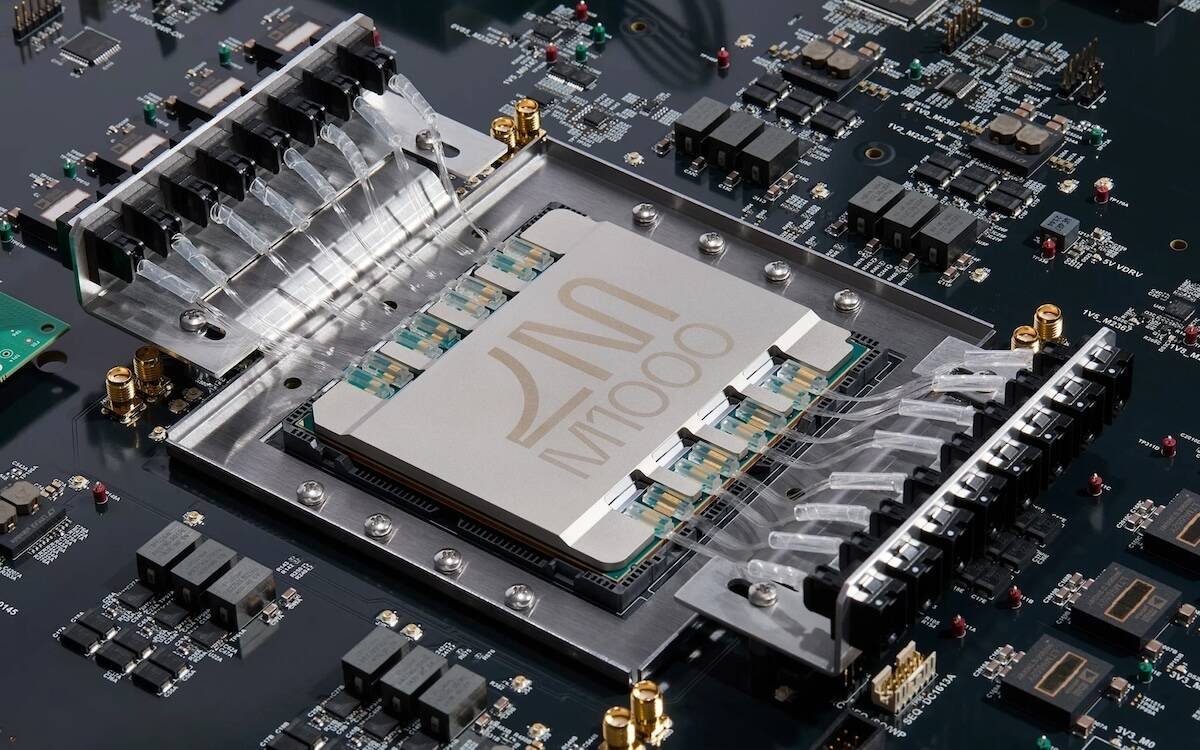
Lightmatter, a photonics startup, has unveiled its latest optical engine that promises to cut datacenter fiber usage in half while offering a compelling alternative to co-packaged optics. The Passage L20, announced ahead of OFC 2026, represents a significant advancement in datacenter networking technology that could reshape how hyperscalers approach high-performance computing infrastructure.
The Fiber Problem in Modern Datacenters
Datacenters are facing an escalating fiber crisis. As AI workloads and high-performance computing demands continue to grow exponentially, the amount of fiber required to connect switches, accelerators, and GPUs has become a major bottleneck both in terms of cost and physical space. Traditional pluggable transceivers require one fiber per lane for each direction, meaning a 200 Gbps connection needs two fibers - one for transmit and one for receive.
This doubling of fiber requirements has led to massive infrastructure costs. When you consider that a single 102.4 Tbps switch might require 512 individual 200 Gbps pluggable modules, the fiber count - and associated costs - quickly becomes astronomical. Meta's recent $6 billion deal with Corning for fiber infrastructure illustrates just how significant this expense has become.
How Lightmatter's Passage L20 Changes the Game
Lightmatter's Passage L20 optical engine tackles this problem through bidirectional (BiDi) signaling. Instead of requiring separate fibers for transmit and receive, each fiber in the L20 system carries both signals simultaneously. This simple but revolutionary approach effectively cuts the fiber count in half.
The math is compelling: just 16 L20 modules can replace 512 individual 200 Gbps pluggable transceivers in a 102.4 Tbps switch. But the benefits extend beyond just fiber savings. Each L20 module consumes approximately 30 watts of power, compared to the 10+ watts typically required by individual pluggable modules. When you multiply that across hundreds of connections, the power savings become substantial.
Near-Package Integration: The Middle Ground
What makes the Passage L20 particularly interesting is its positioning between traditional pluggable modules and full co-packaged optics (CPO). Rather than integrating the optics directly into the switch ASIC like Nvidia or Broadcom have done with some of their latest switches, Lightmatter has optimized the L20 for near-package integration.
This means the optical engine can be integrated directly onto the switch board or attached as a modular mezzanine card located just a couple of inches from the switch or compute die. This proximity provides many of the benefits of co-packaged optics - reduced latency, higher bandwidth density, and improved power efficiency - without the permanence and risk of full integration.
Why Hyperscalers Are Cautious About CPO
Lightmatter's CEO Nick Harris notes that many hyperscalers are interested in near-package optic (NPO) solutions for the 2027 timeframe, but remain cautious about fully committing to co-packaged optics. The concern is understandable: co-packaged optics require permanently attaching the photonics to the logic. If even one chip is faulty, an entire GPU or switch could become a paperweight.
This risk aversion is driving demand for NPO solutions that offer a stepping stone toward full CPO integration. Harris believes this will be a short-lived market, predicting that CPO will see high-volume ramp in 2028, making the Passage L20 potentially the last generation where optical engines and transceivers exist as separate components from the GPU research.
The vClick Innovation
Alongside the Passage L20, Lightmatter also unveiled vClick, a surface-attach fiber array compatible with advanced packaging technologies like TSMC's CoWoS-S or CoWoS-L. This innovation addresses one of the key challenges in co-packaged optics: the difficulty of testing and validating photonics before packaging.
Advanced packaging processes like mold or grind typically obscure the top layer of the chip, making it challenging to test the assembly before singulation and packaging. vClick enables light to emit from the surface of the wafer, allowing for wafer-level testing before the components are packaged onto the substrate.
This capability is crucial for preventing faulty photonics from rendering expensive XPUs (xPU - the broader category of processing units beyond just CPUs and GPUs) into expensive paperweights. It also enables higher bandwidth density since the optical traces can remain within silicon rather than transitioning to PCB or organic substrates.
The Road Ahead
Lightmatter expects to begin sampling Passage L20 chips in late 2026, positioning the technology perfectly for the anticipated 2027 demand for NPO solutions. While the company acknowledges that CPO represents the future, the Passage L20 offers a pragmatic solution for hyperscalers who want to reduce fiber costs and improve efficiency without taking the full plunge into co-packaged optics.
The implications are significant. If widely adopted, Lightmatter's technology could reduce the $6 billion fiber infrastructure investments to $3 billion, while also cutting power consumption and improving overall system performance. For datacenters grappling with the physical and economic constraints of scaling AI and high-performance computing, solutions like the Passage L20 represent a crucial bridge to the next generation of optical integration.
The photonics revolution in datacenters is accelerating, and Lightmatter's latest innovations demonstrate that the path forward may involve multiple stages of integration rather than a single leap to full co-packaged optics. For now, the ability to cut fiber costs in half while maintaining flexibility and reducing risk makes the Passage L20 a compelling option for forward-thinking datacenter operators.
Comments
Please log in or register to join the discussion