A new open-source book provides a structured, hands-on approach to learning FreeBSD device driver development, addressing the steep learning curve that has historically limited contributions to the FreeBSD Project.
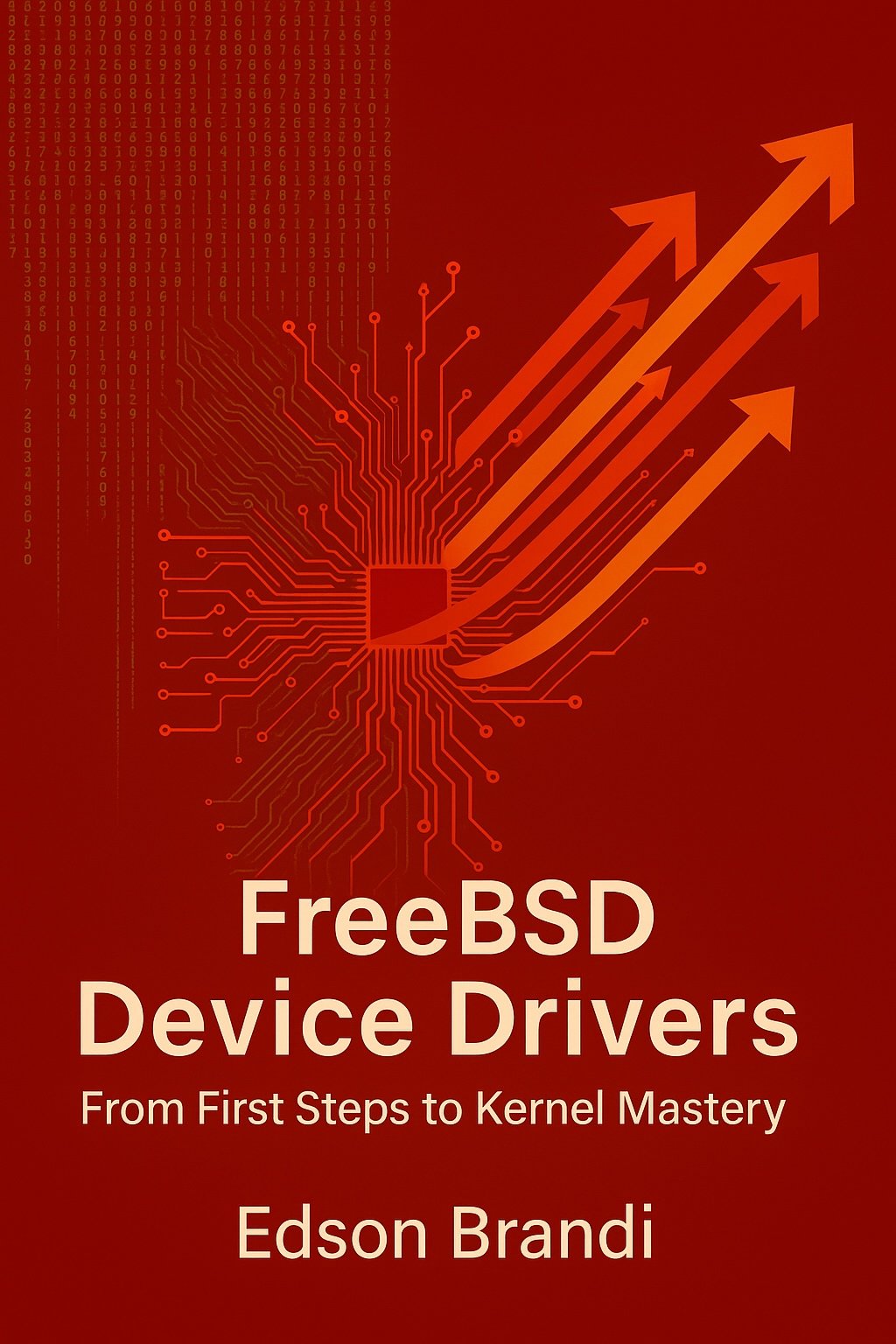
The FreeBSD ecosystem has gained a significant educational resource with the release of 'FreeBSD Device Drivers: From First Steps to Kernel Mastery' by Edson Brandi. This comprehensive open-source book aims to lower the barrier to entry for kernel development by providing a guided path from zero experience to writing production-quality FreeBSD drivers.
The book addresses a critical need in the FreeBSD community. While excellent kernel references exist, they often assume prior knowledge of UNIX, C programming, and kernel internals. This book begins with the fundamentals, teaching UNIX, C, and the FreeBSD environment before introducing any kernel code, making it accessible to true beginners.
"The FreeBSD Project needs new contributors, and the path into kernel and driver work has always been steeper than it should be," explains Brandi. "Most existing material assumes you already know UNIX, already know C well, already know what a bus is, and already know how to read a kernel source tree. That works for the people who are already most of the way there. It does very little for the curious developer who wants to start."
Structured Learning Experience
The book is organized into seven parts that build progressively:
- Foundations: FreeBSD, C, and the Kernel
- Building Your First Driver: Character drivers, device files, read/write, I/O
- Concurrency and Synchronization: Threads, mutexes, condvars, timers, taskqueues, semaphores
- Hardware and Platform-Level Integration: PCI, interrupts, MSI/MSI-X, DMA, power management
- Debugging, Tools, and Real-World Practices: Tracing, KGDB, advanced debugging, performance tuning
- Writing Transport-Specific Drivers: USB, serial, storage/VFS, network drivers
- Mastery Topics: Special Scenarios and Edge Cases
What sets this book apart is its hands-on approach. Roughly half of the recommended study time involves labs that compile and load on a real FreeBSD 14.x system. The book builds one driver across the entire text, showing how it evolves from a simple "Hello Kernel Module" to a fully-featured driver with synchronization, hardware access, interrupts, and DMA.

Targeting FreeBSD 14.x
Every API, example, and lab in the book was verified against the FreeBSD 14.3 source tree. This specificity allows the book to be precise about function signatures, header locations, and behavior, while still teaching concepts that will remain relevant for years to come.
"Targeting a specific release lets the book be precise about function signatures, header locations, and behavior," Brandi notes. "The concepts will outlive 14.x by many years; the exact line numbers and small API details will not, and the book is honest about that."
Accessibility and Open Source
The book is available in multiple languages and formats:
- English (original)
- Brazilian Portuguese (AI-translated)
- Spanish (AI-translated)
Formats include PDF, EPUB, HTML, and the raw Markdown source. The English version is considered authoritative, while the translations are provided to make the material more accessible, though they may contain translation errors that will be addressed through community review.
Comprehensive but Approachable
At over 4,500 pages, the book is substantial, but it's designed to be approached gradually. The recommended pace is one chapter per week at roughly five hours of weekly study, putting the entire book within reach across an academic year.
"The book is huge. Where should I start?" Brandi addresses this concern directly: "Start at Chapter 1 unless you have a reason not to. The book is cumulative; later chapters lean on vocabulary and habits established earlier. If you already know C, UNIX, and the general shape of an OS kernel, the fast-path notes inside Part 1 tell you what to skim."
Beyond Technical Skills
The book doesn't just teach technical skills; it also covers the social workflow of contributing to FreeBSD. Chapter 37 details the full submission process: preparing patches, using Phabricator for code review, finding a committer to sponsor your work, responding to feedback, and shepherding a driver into the FreeBSD tree.
"The earlier chapters build the technical skill; Chapter 37 builds the social workflow. Both matter," Brandi emphasizes.
Community-Driven Development
The book itself is developed with community input. Contributions are welcome in various forms: content additions, technical reviews, translation improvements, and bug reports. The repository structure includes directories for content, examples, translations, and build scripts.
"Contributions of every kind are welcome, including corrections, clarifications, new examples, translations, and reviews from FreeBSD developers and learners alike," Brandi states.
For those interested in diving into FreeBSD kernel development, this book provides a comprehensive, structured path that acknowledges the complexity of the subject while making it approachable for dedicated learners. The hands-on labs and progressive approach to building a driver throughout the text offer a practical learning experience that could significantly increase the pool of qualified FreeBSD contributors in the coming years.
You can access the book and its source code at the official GitHub repository. The book is released under the MIT License, making it free to read, share, and build upon.
Comments
Please log in or register to join the discussion