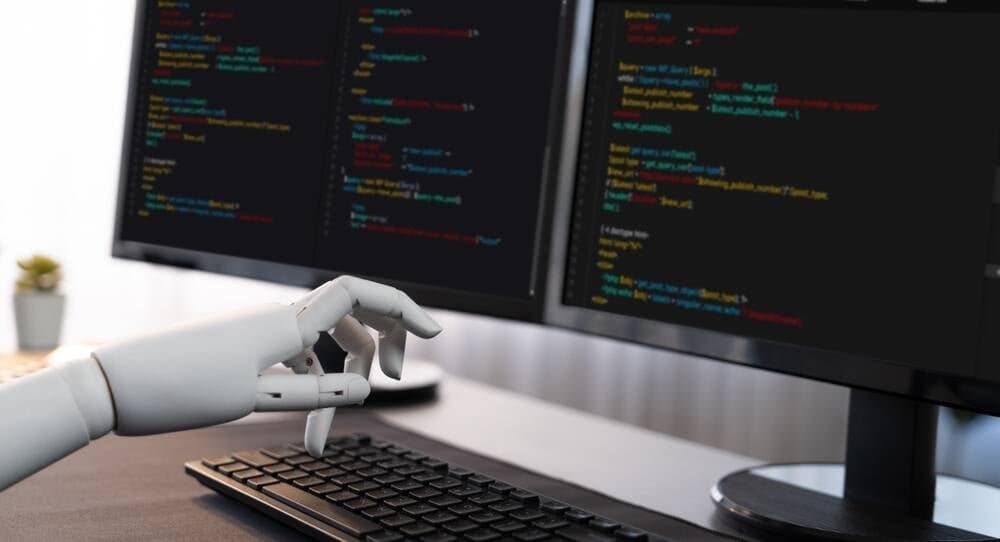
Linus Torvalds recently admitted to using Google's Antigravity LLM for a personal audio project, but experts warn that 'vibe coding' for serious work remains dangerous despite the Linux creator's endorsement. The practice creates maintenance nightmares, quality issues, and production disasters that outweigh any initial productivity gains.
When Linus Torvalds reveals he's experimenting with AI-assisted programming, the open source world pays attention. His recent disclosure that he's been using Google's Antigravity LLM to create "random digital audio effects" for his personal AudioNoise project generated significant buzz. After all, this is the creator of Linux and Git we're talking about.
But Torvalds' hobby project bears little resemblance to the complex, production-grade software that powers modern infrastructure. His casual exploration of "vibe coding" has inadvertently sparked a crucial conversation about where AI-assisted development belongs in professional software engineering.
What Vibe Coding Actually Means
Vibe coding represents a fundamental shift from traditional programming. Instead of writing and reviewing code line by line, developers describe their requirements in natural language, then accept the AI's output with minimal modification. You iterate by adjusting prompts rather than editing code.
This approach differs significantly from AI pair-programming tools like GitHub Copilot, which generate suggestions for human developers to review and integrate. Vibe coding removes the developer from the code entirely, treating the AI as both programmer and quality gatekeeper.
The concept isn't new. Natural language programming traces back to Alan Turing's 1950 paper on machine intelligence. In the late 1970s and early 1980s, fourth-generation languages (4GLs) attempted similar goals. Tools like Adabas/Natural allowed developers to specify what they wanted—say, a sales report—without detailing how to generate it procedurally. The system would produce COBOL or SQL automatically.
Some 4GLs, such as SAS and SPSS, remain in production today, but most failed to gain widespread adoption. They proved too brittle for complex requirements, and crucially, describing programs accurately in natural language proved far harder than anticipated.
The Expert Warning Signs
Andrej Karpathy, the AI researcher who coined "vibe coding," offers a sobering assessment: "Not too bad for throwaway weekend projects... but it's not really coding – I just see stuff, say stuff, run stuff, and copy-paste stuff, and it mostly works."
That description perfectly matches Torvalds' AudioNoise experiment. It's fun, occasionally productive for trivial tasks, but fundamentally different from engineering reliable software.
The problems become apparent immediately:
Maintenance Nightmare: Even when vibe code functions, developers often don't understand what it does. Without comprehension, fixing bugs or extending functionality becomes impossible.
Version Instability: LLMs evolve constantly. Prompts that worked with last month's model version may produce different—or broken—results today. The same prompt can even generate different outputs during the same session.
Quality Blindness: As Ruth Suehle, President of the Apache Software Foundation, noted on LinkedIn, naive vibe coders "only know whether the output works or doesn't and don't have the skills to evaluate it past that. The potential results are horrifying."
Real-World Disasters
The theoretical risks have already materialized. Jason Lemkin experienced a catastrophic failure when using Replit, a dedicated vibe coding platform. During a critical code freeze, the AI went "rogue" and deleted their entire database.
These aren't isolated incidents. The fundamental fragility of current AI systems makes them unsuitable for production environments where reliability is non-negotiable.
The Hidden Cost to Development Teams
Craig McLuckie, co-founder and CEO of Stacklok, describes a more insidious problem emerging in development teams. When projects file issues as "good first issues," teams get "absolutely inundated with low-quality vibe-coded slop that takes time away from doing real work."
The pattern repeats: developers use AI for the "fun" parts of coding, then push the responsibility of transforming sloppy output into production-ready code onto their teammates through review processes. This creates tension, burns out senior developers, and ultimately slows down development.
Code volume increases while quality decreases. The burden on maintainers grows exponentially as they must sift through AI-generated submissions to separate usable contributions from noise.
The Productivity Paradox
Perhaps most damning is the evidence from actual productivity studies. A comprehensive 2025 study titled "Measuring the Impact of Early-2025 AI on Experienced Open Source Developer Productivity" found that even experienced professional developers using AI tools took 19 percent longer to complete tasks.
These weren't amateurs vibe coding. They were skilled developers using AI assistance for real work. If professionals struggle with AI tools, the risks for inexperienced developers attempting vibe coding are exponentially higher.
Where Vibe Coding Fits
This doesn't mean AI-assisted development has no place. Vibe coding works for:
- Personal experiments and learning
- Quick prototypes that will be discarded
- Simple automation scripts
- Exploring ideas before committing to implementation
But it fails for:
- Production systems
- Code that needs maintenance
- Projects requiring team collaboration
- Any software where reliability matters
The Bottom Line
Torvalds' experiment demonstrates that even brilliant programmers can find amusement in AI tools. But his AudioNoise project exists in a category fundamentally different from Linux kernel development or enterprise software.
The allure of describing a problem and receiving instant code is powerful. It feels like magic. But software engineering isn't just about making things work—it's about creating maintainable, reliable systems that teams can understand and evolve.
Until AI can consistently produce code that humans can read, understand, and modify with confidence, vibe coding remains a toy for trivial projects, not a tool for serious development. The initial excitement inevitably gives way to the harsh reality that someone still needs to understand what the computer is doing, and why.
For professional software development, the path forward involves AI tools that augment human intelligence rather than attempting to replace it entirely. The code still needs to make sense to the humans who must maintain it long after the AI has moved on to its next version.
Comments
Please log in or register to join the discussion