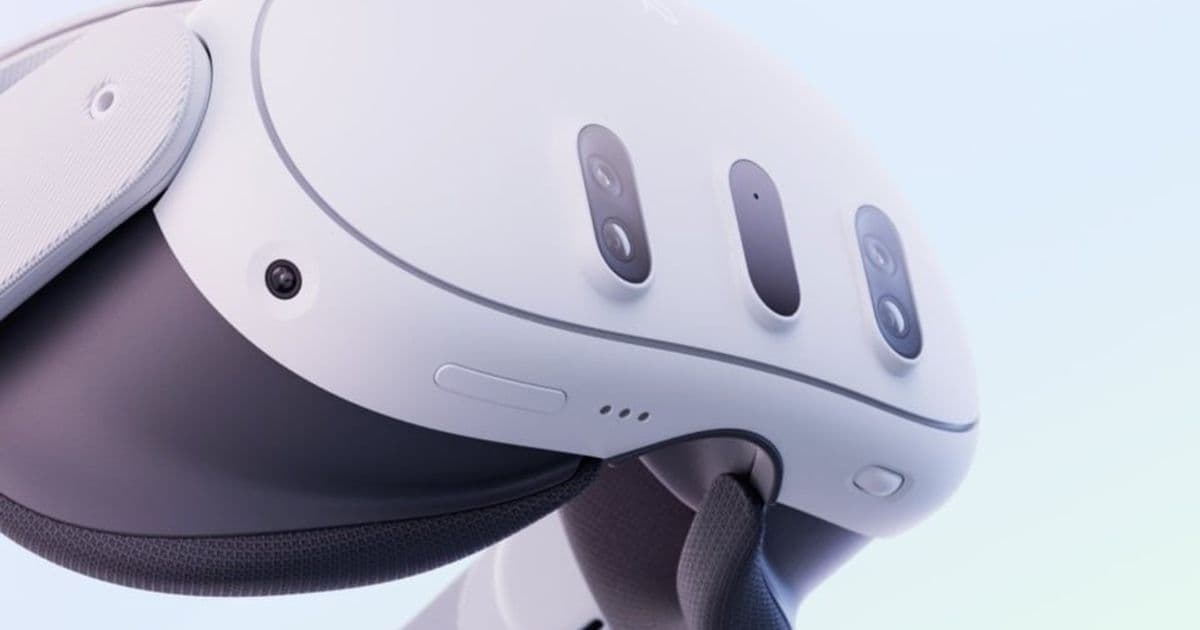
Meta is dismantling its Reality Labs division after a $4.2 billion quarterly loss, ending sales of Quest headsets to businesses and discontinuing Horizon Workrooms. The move signals a strategic pivot from the metaverse to AI as VR demand falters.
Meta is executing a significant retreat from its metaverse ambitions, announcing the end of commercial sales for its Meta Quest headsets and the discontinuation of its Horizon Workrooms virtual reality conferencing system. This decision follows a $4.2 billion loss in the first quarter of 2025 for Meta's Reality Labs division, which was responsible for the company's virtual and augmented reality projects.
The company confirmed that sales of Meta Horizon managed services and commercial SKUs of Meta Quest will cease effective February 20, 2026. For existing business customers, Meta Horizon services licenses will become free of charge, and those with Meta Quest 3 and 3S headsets will retain access to the services until January 4, 2030. Meanwhile, Meta Horizon Workrooms, a virtual reality conferencing platform launched in 2021, will be discontinued, with users given until February 16 to make alternative arrangements.
This strategic pivot comes amid a broader industry-wide cooling of interest in virtual reality. Market data from 2025 indicates a marked decrease in consumer appetite for VR headsets, with even Apple's premium Vision Pro devices struggling to gain traction despite their $3,500 price tag. The once-hyped metaverse concept, which prompted Mark Zuckerberg to rebrand Facebook as Meta in 2021, has failed to achieve mainstream adoption.
The Reality Labs division has been a significant financial burden for Meta, with cumulative losses exceeding $60 billion since 2020. The recent $4.2 billion quarterly loss has accelerated the company's decision to reduce its workforce in this area, reportedly affecting approximately 1,000 positions. This restructuring reflects a broader shift in Meta's strategic priorities toward artificial intelligence, which has become the company's primary focus area.
Horizon Workrooms, introduced as a flagship application for Meta's VR platform, never achieved widespread adoption. When it launched, industry observers criticized its lack of innovation and practical value. The service's discontinuation underscores the challenges Meta faced in creating compelling business use cases for VR technology. The virtual worlds that Zuckerberg envisioned as the future of social interaction now appear increasingly distant.
The retreat from commercial VR sales indicates that Meta is narrowing its focus to consumer applications, where it sees more potential for growth. However, even in the consumer space, the company faces significant headwinds. The bulky form factor of current VR headsets, combined with limited content and use cases, has hampered mass adoption. Meta's decision to end business sales suggests it no longer believes the enterprise market can sustain its VR ambitions.
This development follows similar moves by other tech giants. Microsoft has scaled back its Mesh platform, and other companies have reduced their metaverse investments. The broader industry appears to be acknowledging that the metaverse revolution promised several years ago has not materialized as anticipated.
Meta's pivot to AI represents a significant strategic realignment. The company has been investing heavily in AI research and development, with particular focus on large language models and generative AI capabilities. This shift aligns with broader industry trends, where AI has captured both investor interest and practical applications across various sectors.
For businesses that have invested in Meta's VR solutions, the transition period provides some runway. The free licensing of existing services until 2030 gives organizations time to evaluate alternative platforms. However, the discontinuation of Horizon Workrooms specifically may force companies to seek other virtual collaboration tools.
The implications extend beyond Meta's immediate business decisions. The company's retreat from the metaverse represents a significant validation of market skepticism toward virtual reality as a near-term platform. While VR technology continues to find applications in specific niches like gaming, training, and design, the vision of a fully immersive digital world accessible through headsets appears to be receding.
Meta's experience highlights the challenges of betting on emerging technologies before they reach maturity. The company invested billions in building a metaverse ecosystem, only to find that consumer and business adoption lagged far behind expectations. This pattern of over-investment in unproven technologies is not unique to Meta but represents a common risk in the fast-moving tech industry.
Looking ahead, Meta's focus on AI may yield more immediate returns. The company has already integrated AI features across its social media platforms and is developing more sophisticated AI assistants. Unlike the metaverse, which required significant hardware investment from users, AI applications can be delivered through existing devices and platforms.
The reduction in Reality Labs staff also raises questions about the future of VR hardware development at Meta. While the company continues to support existing consumer Quest devices, the end of commercial sales suggests a scaling back of ambitions. Future VR development may be more limited in scope, focusing on core consumer applications rather than broader enterprise solutions.
This strategic shift may have ripple effects across the VR industry. Meta has been one of the largest investors in VR technology, and its reduced commitment could impact the broader ecosystem of developers and hardware manufacturers. However, it may also create opportunities for other companies to fill the gap in enterprise VR solutions.
The metaverse concept, while diminished, is not entirely abandoned. Some applications in gaming, social interaction, and specialized professional fields continue to show promise. However, the grand vision of a unified virtual world replacing physical interaction has clearly been scaled back.
Meta's experience serves as a cautionary tale about the risks of technological hype cycles. The company's rebranding to Meta in 2021 was seen as a bold bet on the future of digital interaction. Four years later, that bet appears to have been premature, if not misguided. The resources devoted to the metaverse could have been invested in other areas, including AI, which is now delivering tangible results.
For investors and industry observers, Meta's pivot represents a maturation of the company's strategic thinking. The ability to recognize when a major initiative is not working and to redirect resources accordingly is a sign of disciplined management. However, the scale of the losses incurred will take years to recoup.
The broader lesson for the tech industry is the importance of balancing visionary thinking with practical market realities. While innovation requires taking risks, not all technological possibilities will find immediate adoption. The metaverse may yet have a future, but it will likely be more limited and specialized than originally envisioned.
Meta's focus on AI also reflects the changing competitive landscape. With companies like Google, Microsoft, and OpenAI making significant strides in artificial intelligence, Meta cannot afford to be left behind. The company's social media platforms provide vast amounts of data that can be used to train AI models, giving it a potential advantage in this domain.
The transition from metaverse to AI represents more than just a change in technology focus. It reflects a shift in how Meta views the future of digital interaction. Rather than creating entirely new virtual worlds, the company is now focused on enhancing existing digital experiences through intelligent assistance and content generation.
For users of Meta's VR products, the changes mean continued support for existing hardware but a clear signal that new developments will be limited. The company's resources will be directed elsewhere, which may affect the pace of innovation in VR software and content.
The metaverse dream may not be dead, but it has certainly been deferred. Meta's retreat marks a significant moment in the evolution of virtual reality technology, suggesting that the path to mainstream adoption will be longer and more challenging than many had hoped. In the meantime, the tech industry's attention has shifted to artificial intelligence, where the next chapter of digital innovation is being written.
Comments
Please log in or register to join the discussion