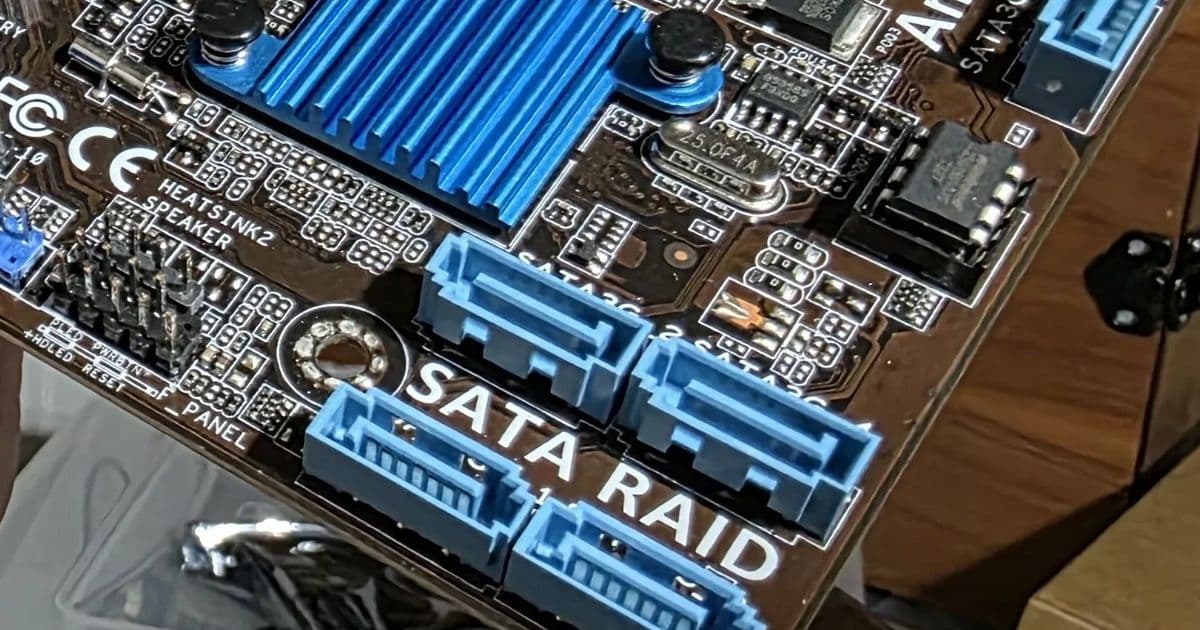
A critical regression in the Linux kernel's ATA subsystem, present since version 6.14, has been fixed. The bug prevented ATAPI devices like optical drives from entering low-power states, which in turn blocked the CPU from reaching its deepest idle C-states, causing unnecessary power consumption increases of up to 4 Watts on affected systems.
The Linux kernel's ATA subsystem, which handles storage controllers and drives, typically sees incremental updates. However, a significant regression that has plagued systems for the better part of a year was finally addressed with the merge of patches for Linux 6.19. This issue directly impacted power management, a critical consideration for both desktop enthusiasts and homelab builders monitoring every watt.
The Core Problem: Broken Link Power Management
The regression, introduced in kernel 6.14, specifically affected the SATA Link Power Management (LPM) feature. LPM allows the SATA link between the host controller and the drive to enter low-power states when idle, reducing both drive and system power consumption. The bug report detailed a scenario where a user's Intel Core i5 "Raptor Lake" desktop with an AHCI SATA controller saw SATA Link Power Management forcibly disabled after upgrading from a pre-6.14 kernel.
This single change had a cascading effect. When the SATA link cannot enter a low-power state, the system's CPU package cannot transition into its deepest idle C-states (C-states are power-saving modes where parts of the CPU are turned off). The result was a measurable increase in idle power consumption—approximately 4 Watts—for the affected desktop. For a server running 24/7, this translates to over 35 kWh of wasted energy annually, a tangible cost and thermal management concern.
Root Cause: ATAPI Devices and Dummy Ports
The issue was traced back to how the kernel handled ATAPI (ATA Packet Interface) devices, such as CD, DVD, and Blu-ray drives, and controllers with "DUMMY" ports. A dummy port is a physical port on a controller that is not connected to any actual device.
According to the patch series author, Niklas Cassel, the investigation revealed two key problems:
ATA_QUIRK_NOLPM Not Applied: A kernel quirk named
ATA_QUIRK_NOLPM, which is used to disable LPM for specific devices known to have issues with it, was not being correctly applied to ATAPI devices. This meant problematic drives could be left in a state where they couldn't properly enter low-power modes, blocking the entire link.Invalid Port Access: The kernel was attempting to read the per-port area for unimplemented (dummy) ports. The AHCI specification explicitly forbids this, as accessing memory-mapped registers for non-existent ports can lead to undefined behavior and system instability.
These two flaws combined to prevent the SATA controller from achieving a low-power state, keeping the entire subsystem active and blocking CPU C-state transitions.
The Fix and Its Implications
The resolved patch series, merged into the Linux 6.19 Git tree, directly addresses these issues. It ensures the ATA_QUIRK_NOLPM quirk is properly applied to ATAPI devices and stops the kernel from reading the register space of dummy ports.
For users, the fix is straightforward but impactful:
For Desktops and Laptops: Systems with optical drives or other ATAPI devices will now correctly manage SATA link power, allowing the CPU to reach deeper idle states. This translates to lower idle power draw, reduced heat output, and potentially longer battery life on mobile devices.
For Homelabs and Servers: While optical drives are less common in servers, the fix is relevant for any system with an AHCI controller that has unused ports. Ensuring proper power management across the entire storage subsystem is a key part of optimizing a server's efficiency. A 4-Watt reduction might seem minor, but for a rack of servers, it adds up to significant savings in power and cooling costs.
Availability and Back-Porting
The patches are now part of the mainline kernel as of Linux 6.19. Given the severity of the regression (a persistent power leak affecting a wide range of hardware), it is highly probable that these fixes will be back-ported to the stable kernel branches (e.g., 6.18.x, 6.17.x, etc.). Users experiencing this issue should monitor their distribution's kernel update channels for the patched version.
For those who want to track the technical details, the original bug report and patch discussion can be found on the Linux Kernel Mailing List (LKML). The fix is a prime example of the kernel community's ongoing effort to maintain system stability and efficiency, even for subsystems that seem mature and stable. It underscores the importance of thorough testing, especially when changes in one area (like SATA power management) can have unintended consequences for another (CPU power states).
Comments
Please log in or register to join the discussion