
The seventh release candidate for Linux 6.19 includes a new kernel continuity plan, an AMDGPU revert to address stability issues, scheduler performance regressions, and a five-year-old page fault handling bug fix, setting the stage for a stable release on February 8th.
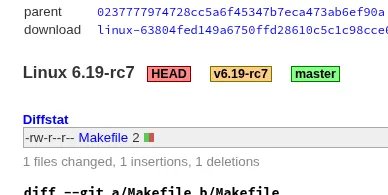
The Linux 6.19 kernel development cycle is entering its final stretch, with the release of 6.19-rc7 today. While typically this would be the last release candidate, Linus Torvalds has confirmed an additional rc8 is scheduled due to the holiday season, pushing the stable release to February 8th. This extra week is proving valuable, as rc7 is notably larger than usual for this stage in the cycle, though not alarmingly so.
A New Layer of Kernel Continuity
One of the most significant changes merged this week is the establishment of a formal kernel continuity plan. This initiative addresses a critical, albeit unlikely, scenario: what happens if Linus Torvalds' official upstream Git repository becomes inaccessible or other unforeseen circumstances disrupt the kernel's primary development pipeline? The plan, detailed in the kernel's documentation, outlines procedures for maintaining development continuity, ensuring that the kernel's evolution doesn't hinge on a single point of failure. This is a pragmatic move for a project of Linux's scale, where the repository is the single source of truth for thousands of contributors worldwide.
Critical Fixes and Reverts
This release candidate is packed with important fixes, many of which address regressions or long-standing issues:
AMDGPU Stability Revert: A significant revert was applied to the AMDGPU driver to address various issues reported since the merge window opened for 6.19. While the specifics of the regressions aren't detailed in the announcement, this type of revert is common when new features introduce instability. Users with AMD graphics hardware experiencing crashes or performance drops on earlier 6.19 builds should see improvements with rc7.
NEXT_BUDDY Scheduler Disabled: The
NEXT_BUDDYscheduler functionality, which was introduced to improve cache locality by hinting at the next likely CPU for a task, has been disabled for the 6.19 release. Benchmarks revealed it was causing performance regressions in certain workloads. The decision to disable it rather than fix it mid-cycle highlights the kernel community's commitment to stability over new features when regressions are detected. Michael Larabel has been running comparison benchmarks on the 6.19 Git tree and will publish those results soon, providing concrete data on the impact.Five-Year-Old Page Fault Handling Bug: A subtle but important fix addresses a bug in the kernel's page fault handling code that has been present for approximately five years. Page faults are fundamental to memory management, and while the bug was "subtly wrong," its long-standing nature suggests it was a corner case that didn't manifest often. This fix improves the correctness of a core subsystem.
ATA Power Management Regression Fix: A fix for a power management regression that has plagued some ATAPI devices for the past year is included. This bug prevented affected CPUs from entering low-power C-states, leading to increased power consumption and potentially higher temperatures. For users with specific optical drives or other ATAPI devices, this fix should restore proper power management behavior.
Expanded Hardware Support
The cycle continues to expand hardware compatibility, with more ASUS laptops gaining support through the ASUS Armoury driver. This driver, which was merged via the x86 platform driver subsystem at the start of the 6.19 cycle, allows for control of features like fan speeds and performance profiles directly from the kernel, a boon for Linux users on these popular gaming and productivity laptops.
Release Timeline and What to Expect
In his announcement, Linus Torvalds noted that the release is proceeding smoothly, with the usual mix of driver updates (networking and GPU being the most active areas), architecture fixes, VM updates, Rust driver base fixes, and filesystem work. The decision to add an rc8 is purely a timing adjustment for the holiday season, not a response to any critical issues.
With two weeks remaining, the focus will be on final stabilization. The Linux 6.19 feature overview provides a comprehensive look at all the changes slated for this release, which includes significant updates across the board. For homelab builders and performance enthusiasts, the key takeaways from rc7 are the stability fixes for AMD GPUs and the resolution of the long-standing power management bug, both of which can directly impact system reliability and efficiency.
The stable Linux 6.19 kernel is now targeted for release on February 8, 2026.
Comments
Please log in or register to join the discussion