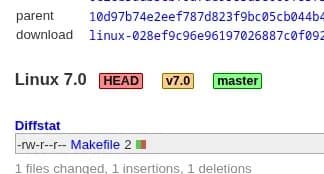
The Linux 7.0 kernel has been officially released, featuring extensive hardware support for Intel Nova Lake and AMD graphics, performance optimizations, self-healing XFS capabilities, and standardized I/O error reporting.
The Linux 7.0 kernel has officially been released, marking a significant milestone in the open-source operating system's development. As expected, Linus Torvalds bumped the major version number after reaching the 6.19 release, following his preference for major version increments at this point in the development cycle rather than waiting for a single groundbreaking feature.

Hardware Support and Enablement
Linux 7.0 brings substantial improvements in hardware support, particularly for next-generation processors and graphics solutions. The kernel includes expanded enablement for Intel Nova Lake processors, which are expected to power many upcoming systems. Additionally, developers have made progress on bringing up Intel's Crescent Island accelerator, which promises to enhance AI and machine learning workloads on compatible hardware.
AMD graphics users will also benefit from this release, as Linux 7.0 enables new IP blocks for AMD's latest graphics architectures. These additions ensure that users with cutting-edge AMD hardware will have full support and optimized performance from the kernel level.
Self-Healing XFS File System
One of the most notable features in Linux 7.0 is the introduction of self-healing capabilities for the XFS file system. This enhancement represents a significant advancement in file system reliability and data integrity. The self-healing functionality allows XFS to automatically detect and repair certain types of file system corruption without requiring manual intervention or system downtime.
This feature is particularly valuable for enterprise environments and critical systems where data integrity is paramount. The implementation uses advanced algorithms to identify inconsistencies and apply corrective measures, reducing the risk of data loss and minimizing maintenance overhead.
Performance Optimizations
Linux 7.0 includes various performance optimizations across multiple subsystems. These improvements target both general system responsiveness and specific workload types. The kernel team has focused on reducing latency in key operations, improving memory management efficiency, and optimizing I/O operations for better throughput.
Intel TSX and Transactional Synchronization
A significant change in this release is the default configuration of Intel TSX (Transactional Synchronization Extensions) to auto mode. TSX provides hardware support for transactional memory, which can improve performance in multi-threaded applications by reducing synchronization overhead. The auto mode allows the kernel to dynamically enable or disable TSX based on system conditions and workload characteristics.
Standardized I/O Error Reporting
After years of discussion and development, Linux 7.0 finally introduces standardized generic I/O error reporting for the kernel. This long-awaited feature provides a consistent framework for reporting and handling I/O errors across different storage devices and file systems. The standardization simplifies error handling for developers and improves the overall reliability of storage operations.
Security Fixes and Last-Minute Changes
The lead-up to the Linux 7.0 release included several critical last-minute patches that addressed security vulnerabilities and hardware compatibility issues. One notable fix resolved bogus hardware errors on AMD Zen 3 processors, which could have caused unnecessary system instability or performance degradation.
Another significant security fix addressed an out-of-bounds access vulnerability in the X.509 certificate code. This vulnerability, which had existed in the mainline kernel for the past three years, could be triggered by unprivileged users, potentially leading to privilege escalation or system compromise.
Additionally, the release includes updates to the ASUS Armoury driver with new device ID additions, ensuring compatibility with the latest ASUS hardware. The kernel also adds new HID (Human Interface Device) codes to support AI agent interaction keys expected on upcoming laptops, demonstrating the kernel's forward-looking approach to hardware support.
Ubuntu 26.04 LTS Integration
Linux 7.0 will serve as the foundation for the upcoming Ubuntu 26.04 LTS (Long Term Support) release. This integration ensures that Ubuntu users will benefit from all the improvements and features introduced in this kernel version, along with the stability and support guarantees that come with an LTS release.
Availability and Future Development
Linux 7.0 is now available for download from kernel.org and through distribution repositories. Users can upgrade to this version through their distribution's update mechanisms or by compiling the kernel from source.
The release of Linux 7.0 also marks the beginning of the Linux 7.1 merge window, where developers will begin submitting new features and improvements for the next kernel version. This continuous development cycle ensures that Linux remains at the forefront of operating system innovation.
Technical Details and Compatibility
For system administrators and developers planning to adopt Linux 7.0, it's important to note that while the kernel brings many improvements, some features may require updated versions of user-space tools and libraries. The kernel team has worked to maintain backward compatibility, but users should review the release notes and documentation for any potential compatibility issues with their specific workloads or hardware configurations.
The Linux 7.0 release demonstrates the ongoing commitment of the open-source community to advancing operating system technology. With its combination of hardware support, performance improvements, and reliability features, this kernel version sets a strong foundation for the next generation of Linux-based systems.
Comments
Please log in or register to join the discussion