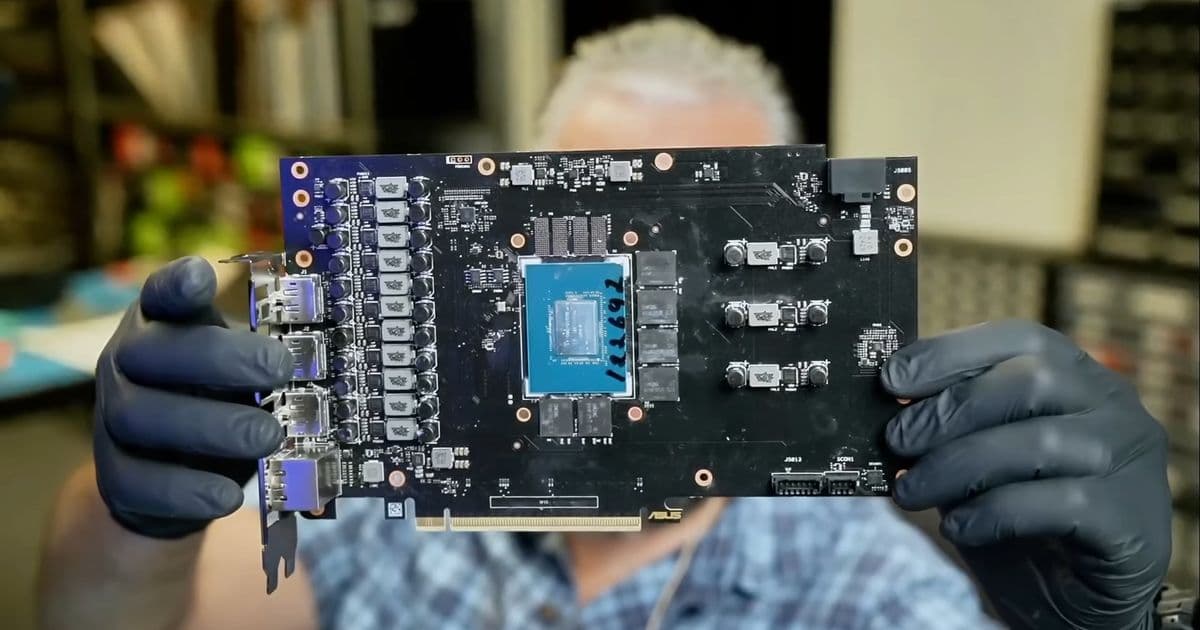
A DIY liquid metal application on an Asus TUF RTX 5070 Ti went catastrophically wrong, with TIM spreading across the PCB, shorting components, cracking the GPU core, and ultimately rendering the $600+ graphics card completely unfixable.
Liquid metal thermal compounds promise superior cooling performance for high-end GPUs, but as one unfortunate RTX 5070 Ti owner recently discovered, the consequences of improper application can be devastating. The incident, documented by repair specialists NorthridgeFix on YouTube, serves as a stark warning about the risks of applying liquid metal to GPUs not designed for it.
The Setup: A Risky DIY Modification
The victim in this case was an Asus TUF RTX 5070 Ti, a graphics card that ships with conventional thermal paste rather than liquid metal. Despite this, the owner decided to apply liquid metal thermal interface material (TIM) themselves, hoping to achieve better cooling performance. While liquid metal does offer superior thermal conductivity compared to traditional pastes, it requires meticulous application and is only recommended for GPUs specifically designed to handle it.
The Catastrophic Failure
What happened next demonstrates exactly why manufacturers are cautious about liquid metal applications. The TIM spread far beyond the GPU core, leaking out and contaminating virtually every component on the PCB. Under microscopic examination, repair technicians found liquid metal had reached into every crevice of the board.
(Image credit: NorthridgeFix on YouTube)
The damage was extensive and multifaceted:
- Microbridges formation: When liquid metal contacts tiny surface-mounted components like capacitors, it creates unintended electrical connections that can short out parts
- Power rail contamination: In worst-case scenarios, the liquid metal reached main power rails, creating shorts that could destroy critical circuitry
- Material degradation: Some liquid metal TIMs can slowly corrode aluminum components and weaken solder joints over time
- Physical displacement: The affected area showed signs of integrated circuits being knocked out of position
The Fatal Blow
Perhaps most damning was the discovery that liquid metal had seeped underneath the GPU core itself. This internal contamination caused a short within the chip, resulting in a visible physical crack along one edge of the core. This level of damage is essentially unfixable without replacing the GPU die itself.
Adding to the destruction, the 1.8V power rail was found to be shorting to ground. This indicates that liquid metal had reached a ground pad and destroyed critical circuitry. Even if the GPU core hadn't been directly contaminated, this power rail short alone would have been sufficient to destroy the card.
Memory Module Damage
The memory modules on the card were also affected, compounding the repair impossibility. With the GPU core compromised, power delivery system damaged, and memory modules potentially affected, the card was beyond economical repair.
Why Liquid Metal Is So Dangerous
Liquid metal TIMs, typically composed of gallium and other metals, offer thermal conductivity ratings of 20-40 W/mK compared to 5-10 W/mK for high-end thermal pastes. However, this performance benefit comes with significant risks:
- Electrical conductivity: Unlike thermal paste, liquid metal conducts electricity, making any leakage potentially catastrophic
- Material compatibility: Liquid metal can corrode aluminum and certain other metals it contacts
- Application precision: The margin for error is essentially zero - any excess will spread under thermal cycling
- Long-term stability: Liquid metal can pump out over time or migrate across the PCB
Manufacturer Challenges
Even large manufacturers producing $4,000 GPUs sometimes struggle with perfect liquid metal application. The precision required for factory application is immense, which is why many companies stick with conventional thermal solutions even on flagship products.
The Warranty Reality
Asus refused the RMA request for this damaged RTX 5070 Ti, which is standard practice when liquid metal is detected. Manufacturers can easily identify liquid metal application through visual inspection and chemical testing, and most explicitly void warranties for such modifications.
Performance Reality Check
Despite the risks, many enthusiasts apply liquid metal hoping for significant temperature improvements. However, non-factory-applied liquid metal jobs rarely provide meaningful temperature reductions on consumer GPUs. The potential 3-5°C improvement often doesn't justify the risk of catastrophic failure.
The Lesson
This RTX 5070 Ti's fate serves as a cautionary tale about letting enthusiasm override judgment. The owner would have been better served using high-quality silicone-based thermal paste, which would have preserved both the card's functionality and warranty. The $600+ investment was lost due to a modification that likely would have provided minimal real-world benefit.
For those considering liquid metal application, the message is clear: unless you're working with a GPU specifically designed for liquid metal cooling and you have professional-level application experience, the risks far outweigh any potential benefits. Sometimes, the factory solution really is the best solution.
Comments
Please log in or register to join the discussion